





Standing Brass Shaving Mirror
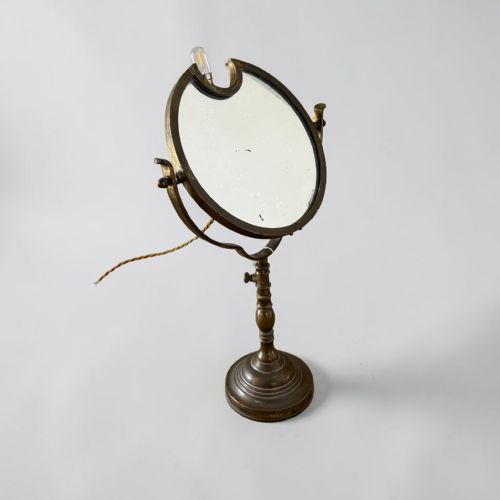
A standing brass shaving mirror is a functional vanity glass that brings period practicality and adjustable reflection to a dressing room.
Standing Brass Shaving Mirror
A standing brass shaving mirror offers a compact glass mounted on a metal frame, designed for close grooming and tabletop or floor use. When you search for a standing brass shaving mirror, you encounter examples spanning the Victorian and Edwardian eras through to the early twentieth century.
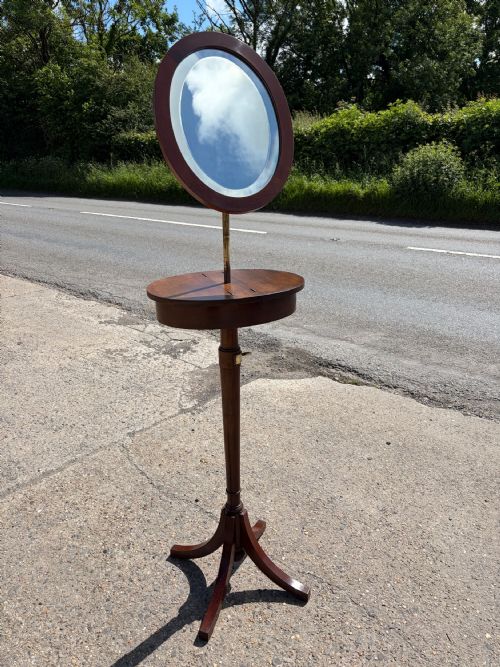
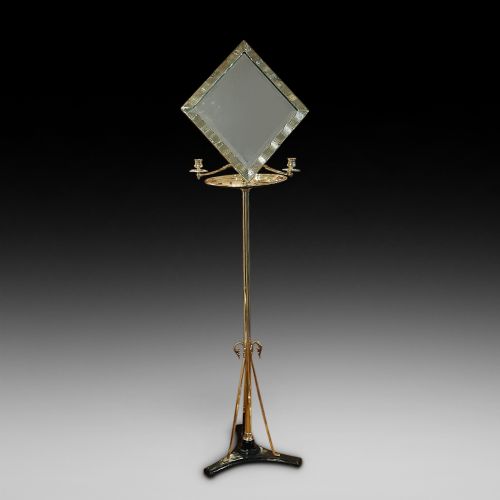
The objects on this page appear in various formats, including tabletop dressing mirrors, telescopic stands on tripod bases, and combined shaving stands. Brass forms the primary metal element, frequently paired with secondary woods like mahogany, walnut, and oak.
The most typical versions on this page combine brass framing with adjustable mechanisms for tilting the glass to suit the user. These pieces originate from nineteenth and early twentieth century workshops, reflecting the domestic habits of those periods.
Materials and construction
Makers utilised cast and sheet brass to construct the frames, mounts, and telescopic columns that support the glass. This metal work is frequently combined with turned and polished hardwoods such as mahogany and walnut for the bases and stands.
Adjustable mechanisms and optical glass form the core functional elements of these pieces, allowing the mirror plate to pivot or alter in height. Cast iron sometimes appears in the structural components of tripod bases to add stability.
Standing Brass Shaving Mirror Retail Price Guide 2026
Typical asking prices for standing brass shaving mirror among the pieces listed under this phrase on Sellingantiques today, from the lower quarter to the upper quarter. They describe what is for sale here now, not the wider market.
Some Victorian gentlemen relied on these adjustable stands to catch the exact morning light while wrestling with their daily lather.
Markers of quality
The sophistication of the mechanical adjustment separates standard items from superior pieces, particularly in smooth telescopic action and secure pivoting joints. Heavier gauge brass and dense, well-figured timber indicate a higher standard of manufacture.
The presence of specialised components, such as scientific optical glass or maker signatures, elevates the standing of an individual mirror. Proportion and the integration of mixed materials like polished oak or walnut further distinguish finer examples.
Thomas Rubergall of London
The Standing Brass Shaving Mirror Glossary
- Telescopic
- A design incorporating sliding concentric tubes that allow the height of the mirror to be adjusted vertically. This mechanism is frequently found on nineteenth century examples.
- Tripod base
- A three-legged support structure designed to provide stability for an upright telescopic column. These bases are often turned from hardwoods or cast in metal.
- Dressing mirror
- A small mirror intended to sit upon a table or chest of drawers for personal grooming. They often feature pivoting frames supported by upright arms.
- Optical glass
- High clarity glass manufactured for specialised viewing purposes. Some nineteenth century scientific mirrors utilise this material for precision reflection.
Standing Brass Shaving Mirror: Frequently Asked Questions
What is a standing brass shaving mirror?
A standing brass shaving mirror is a portable or floor-standing glass designed for personal grooming. These items use brass frames and adjustable mounts to position the mirror at a useful height.
Such pieces date primarily from the Victorian and Edwardian periods. They served a practical function in bedrooms and dressing rooms before built-in bathroom mirrors became common.
How do you use a telescopic mirror?
A telescopic mirror operates by sliding an inner rod up or down within a hollow outer column. A thumbscrew or friction collar typically secures the glass at the desired height.
The pivoting frame then allows the user to tilt the glass angle. This dual adjustment ensures the reflection can be positioned for sitting or standing use.
Where were these mirrors placed?
These mirrors were placed on dressing tables, chests of drawers, or directly on the floor depending on the base design. Tabletop versions required an existing surface, while tripod and stand models rested on the floor.
They were kept in bedrooms, dressing rooms, or wash spaces. Their portability allowed users to move them toward natural window light.
How do I date a brass mirror?
Dating a brass mirror involves examining the manufacturing techniques, materials, and overall style. Victorian and Edwardian examples often display hand-turned timber bases and specific cast brass mount designs.
Scientific or optical variants from the mid-nineteenth century frequently bear engraved maker details. Fastener types and the composition of the glass plate also offer clues to the period of production.