

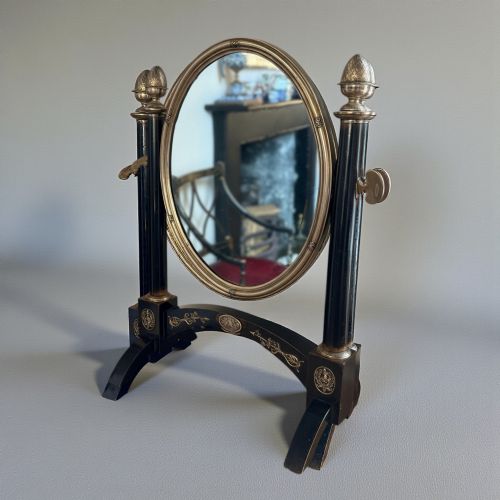
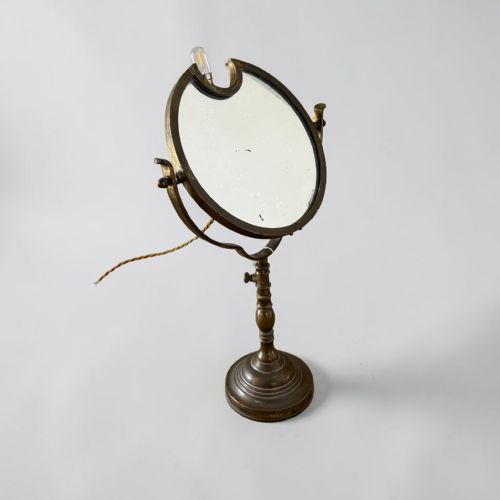
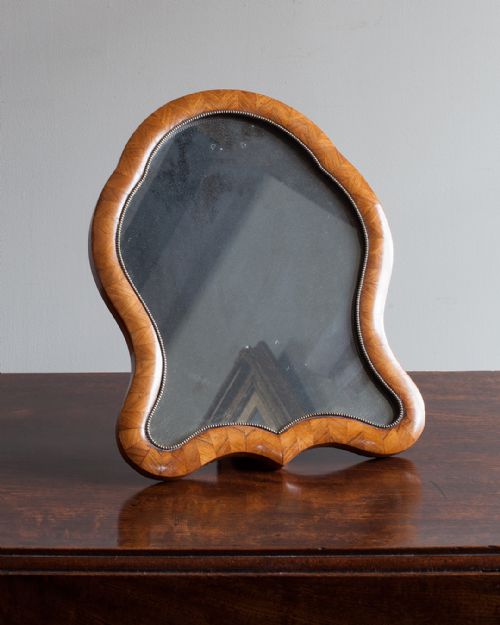
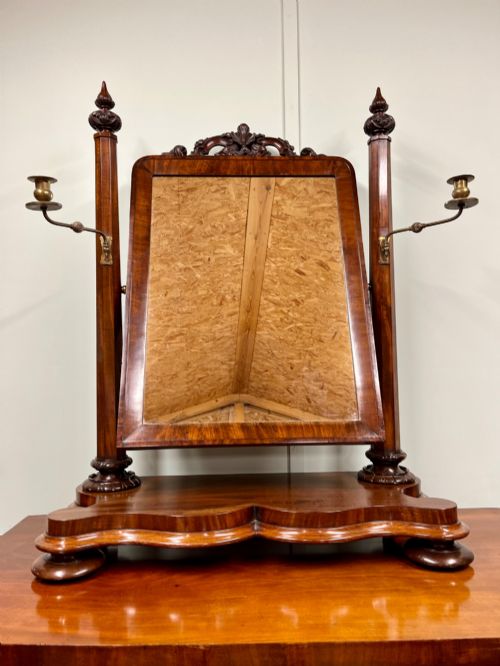


Brass Swing Table Mirror
A brass swing table mirror offers the crisp reflection and warm metal framing every dressing table needs.
Brass Swing Table Mirror
A brass swing table mirror is a tilting looking glass mounted on a freestanding frame for dressing tables and chests of drawers. These pieces provide a movable reflective surface that adjusts to catch the light in bedrooms and dressing rooms.
Buyers will most frequently encounter nineteenth century examples rendered in mahogany, walnut, and gilt bronze. The assortment spans compact toilet mirrors to larger vanity glasses supported by wooden or metal stands.
The styles range from restrained Victorian designs to ornate French Rococo Revival and Empire pieces. Many feature pivoting mechanisms that let the glass tilt smoothly within upright supports.
How they were made
Maker workshops constructed these mirrors using cast brass, gilt bronze, and silvered metal alongside hardwoods like mahogany, walnut, kingwood, and ebonised wood. Frames often incorporate detailed metal mounts and hinges that hold the glass securely at various angles.
Carpenters and metalworkers shaped the stands by turning wood on lathes or casting metal components in moulds before hand-finishing the surfaces. The glass plates sit within rebated frames, secured at the sides by adjustable pivot screws.
Brass Swing Table Mirror Retail Price Guide 2026
Typical asking prices for brass swing table mirror among the pieces listed under this phrase on Sellingantiques today, from the lower quarter to the upper quarter. They describe what is for sale here now, not the wider market.
A tiny brass thumb-screw is the small hinge of history that lets you tilt your reflection.
What varies in quality
Quality rests upon the crispness of the cast brass ornamentation, the figuring of the timber veneers such as burr walnut or mahogany, and the structural integrity of the pivoting mechanism. Finer examples display meticulous hand-chasing on the metal mounts and precise joinery on the supporting stands.
Simpler models rely on plain turned wooden frames with minimal brass hardware, whereas high-end pieces integrate complex champleve enamel work or heavy gilt bronze. The clarity of the mirror glass and the stability of the hanging arms also distinguish standard production from exceptional work.
The Brass Swing Table Mirror Glossary
- Swing mirror
- A looking glass hung on pivots between two upright posts so it tilts forward or backward. This design allows the user to adjust the viewing angle easily.
- Toilet mirror
- A smaller tabletop dressing glass traditionally placed on a chest of drawers or a dressing table for grooming. These pieces date predominantly from the nineteenth and early twentieth centuries.
- Gilt bronze
- Copper alloy cast and coated with a thin layer of gold or gold-coloured finish. This material provides a durable metallic sheen often seen on French frames.
- Champleve
- An enamelling technique where troughs are dug into a metal surface and filled with vitreous paste before firing. It decorates the metal mounts of elaborate mirrors.
- Kingwood
- A dense, richly figured Brazilian timber prized for its contrasting dark and golden brown stripes. Cabinetmakers used it for veneering high-end small furniture and mirror frames.
Brass Swing Table Mirror: Frequently Asked Questions
What is a brass swing table mirror?
A brass swing table mirror is a portable looking glass set within a frame that pivots on horizontal pins between two upright supports. It sits directly on a table or chest of drawers rather than hanging on a wall.
These pieces were designed for personal grooming and dressing, allowing the user to tilt the glass to the preferred angle. They combine functional mirrors with decorative wooden or metal stands.
How do I date a swing mirror?
Dating relies on observing the timber species, construction methods, and decorative styles typical of specific periods like the Victorian era or the Edwardian period. Examining the mirror plate itself, the backboards, and the style of the brass screw fixings helps establish the age.
Earlier nineteenth-century examples often feature solid mahogany or burr walnut frames with hand-turned supports. Later pieces from around nineteen hundred incorporate different manufacturing techniques and lighter woods.
Where should I place a table mirror?
These mirrors suit dressing tables, chests of drawers, and sideboards where they provide a practical surface for daily routines. Positioning them near a window maximises the reflected daylight in a room.
Because they are freestanding, you can move them easily between rooms to find the best light and surface pairing. Ensure the supporting furniture is deep enough to hold the base securely.
How do I maintain the brass frame?
Maintaining the metal involves dusting the brass frame gently with a soft, dry cloth to prevent the accumulation of grime. Avoid harsh chemical polishes that can strip away the aged patina or damage adjacent wood and glass.
If the pivoting mechanism loosens over time, gently tighten the side screws to restore the tension that holds the mirror at the desired angle.