

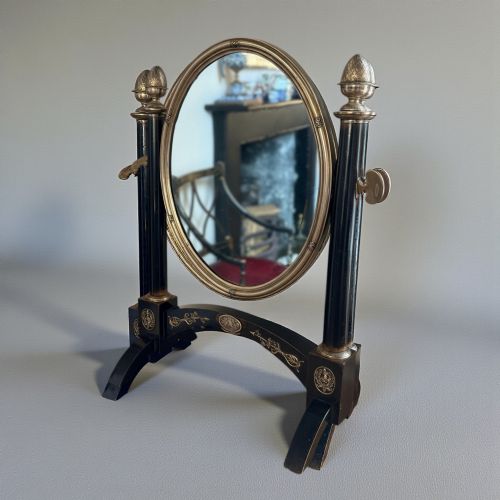
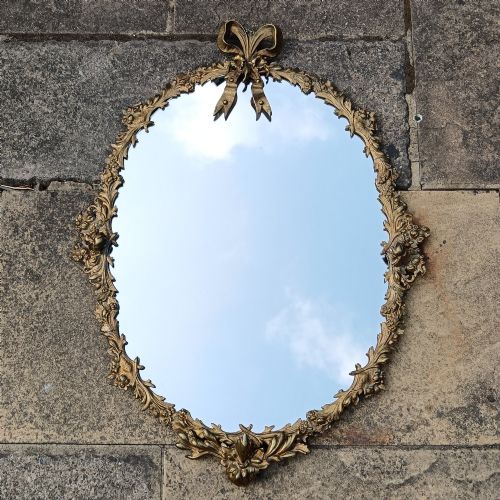
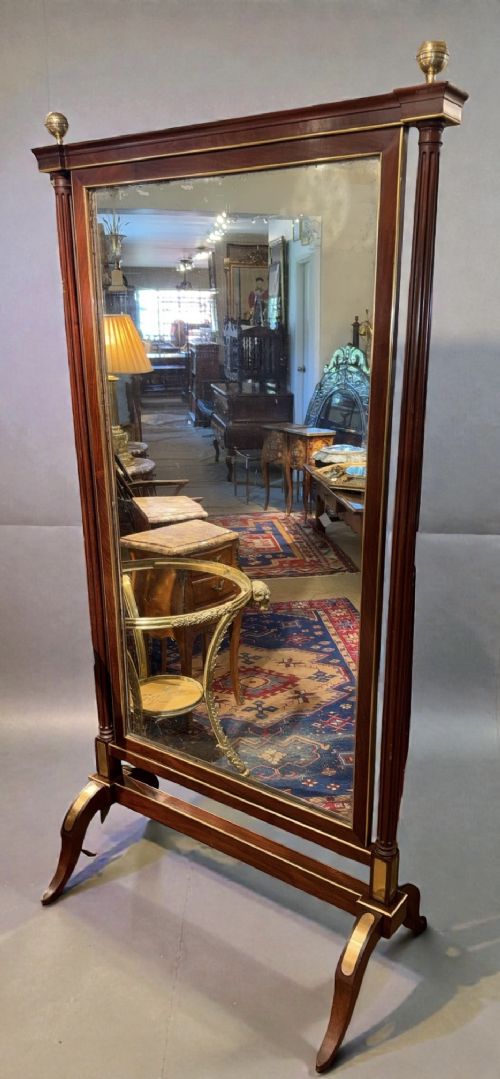


French Neoclassical Brass Mirror
These French neoclassical brass mirror pieces bring classical proportion and polished metalwork into a room.
French Neoclassical Brass Mirror
When you search for a french neoclassical brass mirror, you are looking at wall mirrors, cheval mirrors, and dressing mirrors that draw on classical motifs. The versions you are most likely to meet on this page span the eighteenth, nineteenth, and early twentieth centuries, reflecting revivals from Louis XVI through to Hollywood Regency and Art Deco periods.
The forms range from wall-hung ovals and rectangular frames to adjustable pedestal and table mirrors. Materials extend beyond brass to include gilt bronze, bronze, gilt metal, and ormolu, often paired with glass and occasionally mahogany or gesso frames.
How they were made
The construction relies heavily on cast brass, bronze, and gilt bronze, utilising metalworking techniques typical of French workshops. Frames often incorporate applied decorative elements such as rams heads and classical foliate details.
Mirrors feature bevelled glass set securely within metal or gilt frames, sometimes supported by adjustable pedestals or hanging mechanisms designed for wall placement.
French Neoclassical Brass Mirror Retail Price Guide 2026
Typical asking prices for french neoclassical brass mirror among the pieces listed under this phrase on Sellingantiques today, from the lower quarter to the upper quarter. They describe what is for sale here now, not the wider market.
Listings feature pieces spanning the eighteenth century through to the nineteen-thirties, incorporating styles from Louis XVI to Art Deco.
What varies in quality
Quality rests upon the crispness of the cast metal ornament and the depth of the chasing on the brass or bronze surfaces. Finer examples display sharp detail in motifs like rams heads and crisp framing lines.
The condition and clarity of the original glass plate, alongside the integrity of the metal structure and any gilding, separate standard production from superior pieces.
The French Neoclassical Brass Mirror Glossary
- Ormolu
- Gilded bronze, where finely ground gold is applied to a bronze base using mercury. This technique creates a rich, durable metallic finish found on finer period frames.
- Cheval mirror
- A full-length mirror hung in a frame that allows it to tilt. These freestanding pieces often stand on four legs or a pedestal base.
- Gilt bronze
- Copper alloy coated with a layer of gold. It provides a bright, lasting surface that resists tarnishing.
- Bevelled glass
- Glass with an edge cut at an angle to create a framed effect within the glass itself. This method adds depth and catches light differently than flat plate glass.
- Girandole
- A branched wall mirror or sconce designed to hold candles. The reflective glass multiplies the light in a room.
French Neoclassical Brass Mirror: Frequently Asked Questions
How do I date a brass mirror?
Dating relies on examining the construction of the frame, the backing materials, and the style of the casting work. Period characteristics often point towards specific revivals or manufacturing eras.
Clues also come from the bevel and age of the mirror plate itself, alongside any mounting hardware attached to the reverse.
Where should I hang a wall mirror?
These mirrors suit placement above a mantelpiece, in a hallway, or opposite a window to maximise natural light. The scale of the piece should match the wall space and surrounding furniture.
Ensure proper fixings are used, especially with heavier cast brass and bronze frames.
Are pedestal mirrors adjustable?
Many period dressing and pedestal mirrors feature pivots that allow the glass frame to tilt at different angles. This mechanism was designed for practical use on dressing tables or desks.
Check the pivot joints to ensure they hold the mirror steady at the desired angle.
What is the difference between brass and ormolu?
Brass is an alloy of copper and zinc, finished to a polished or patinated state. Ormolu specifically refers to gilded bronze, possessing a deeper, richer gold appearance.
Ormolu mounts generally indicate a higher tier of manufacture in French decorative arts.