
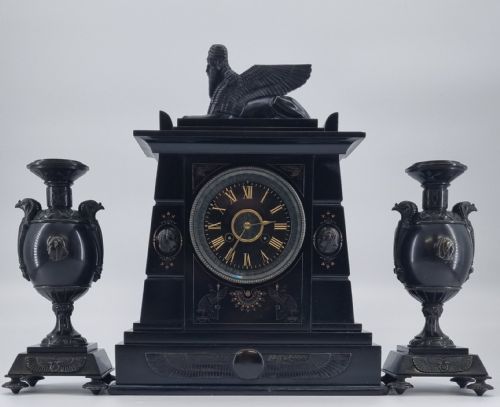


French Urn Mantel Clock
A french urn mantel clock combines monumental neoclassical design with precise horology, serving as the architectural focal point of a room.
French Urn Mantel Clock
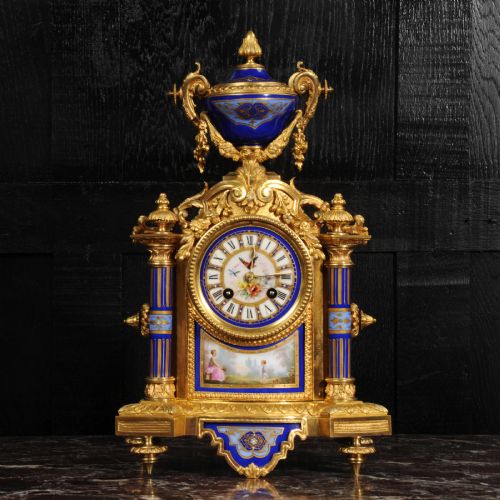
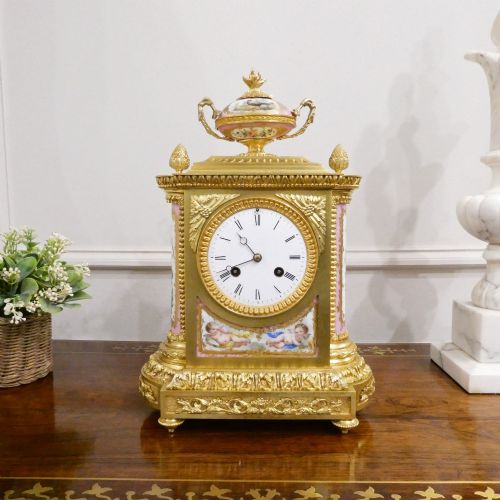
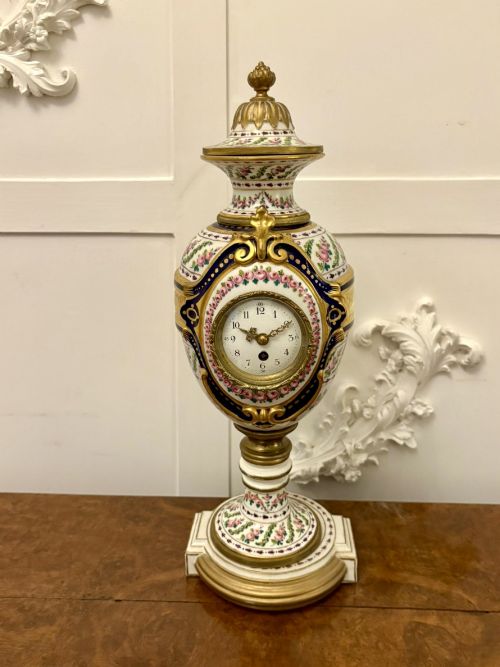
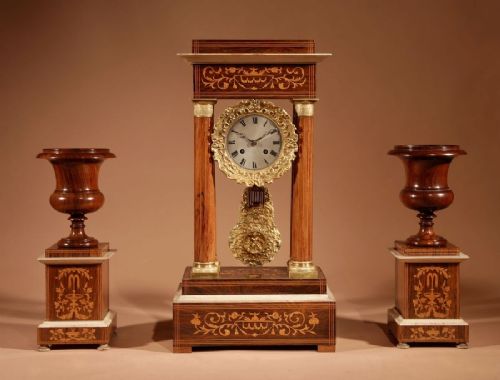
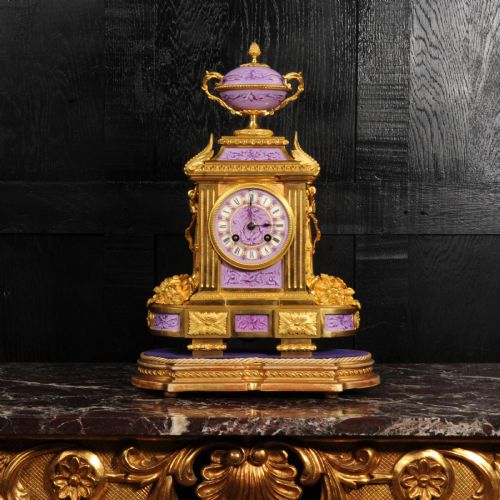
When you search for a french urn mantel clock, you are looking at domestic timepieces designed primarily during the nineteenth century in France, often presented as part of a matching garniture set with side urns or candelabra. The most common versions you will meet on this page feature porcelain or hand-painted panels, mounted within classical or revival architectural forms.
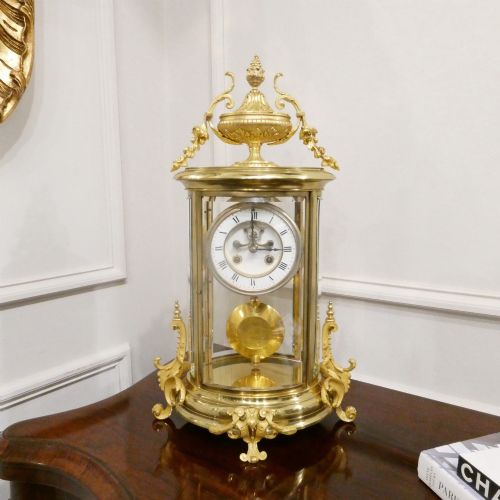
The aesthetic draws heavily on Neoclassical, Louis XVI, and Empire styles, incorporating urn-shaped vessels that double as the clock body or sit proudly above the movement. These pieces range from substantial marble and slate housings to ornate gilt bronze and ormolu constructions designed to command attention on a salon mantelpiece.
Many examples arrive accompanied by glass domes or matched side ornaments, creating a symmetrical decorative scheme typical of the Victorian era and the Second Empire. The forms vary from strict architectural porticos to fluid rococo curves, though the central urn motif remains a steadfast anchor of the design.
Materials and construction
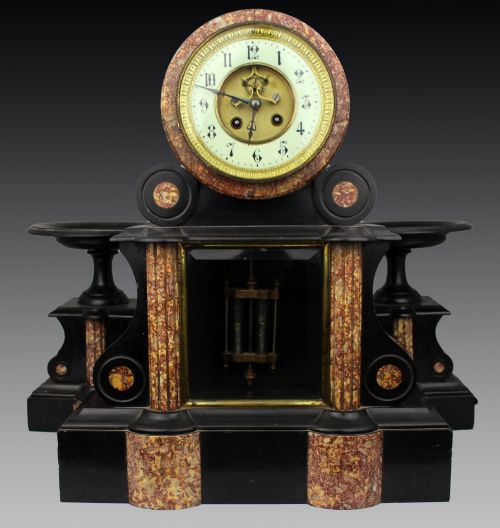
The makers relied on heavy mineral cases, utilising black slate, sienna marble, onyx, and white marble to provide a stable, weighty foundation for the precision brass movements within. These stone housings were frequently polished to a high sheen or combined with contrasting metal mounts.
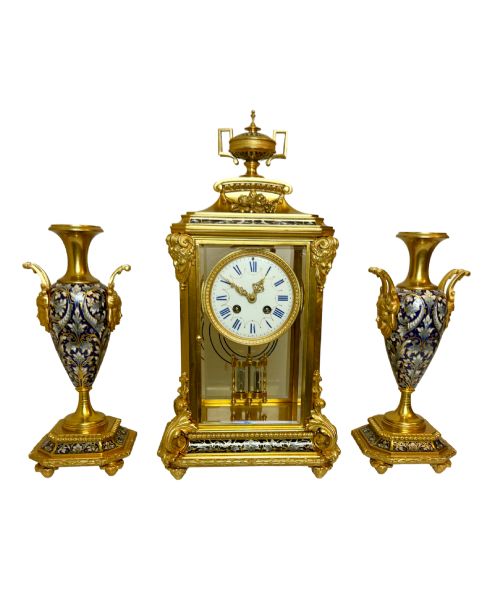
Surface enrichment involved fire gilding on bronze and brass, known as ormolu, alongside delicate champleve enamel and hand-painted porcelain panels depicting floral scenes or classical figures. Specialised foundries cast these metal mounts separately before chasing and fixing them securely to the stone or porcelain bodies.
Some nineteenth-century French clock sets include matching side urns that double as secret hiding spots for visiting calling cards.
Judging quality
The distinction between standard production and the finest work lies in the crispness of the bronze casting and the depth of the ormolu gilding. Superior examples display sharply hand-chased surface details rather than soft, mass-produced contours.
The quality of the porcelain painting and the complexity of the movement also set exceptional pieces apart, particularly those signed by renowned makers with matching numbers across the components and garniture sets.
Japy Freres·Jean-Baptiste Delettrez·Achille Brocot·Samuel Marti·Louis Goret·Sacre·Pons De Paul·KPM Berlin·A.D Mougin·Vincenti of Paris
The French Urn Mantel Clock Glossary
- Garniture set
- A matching centrepiece clock flanked by two complementary decorative objects such as urns or candelabra. These sets were designed to create a balanced display across a fireplace mantel.
- Ormolu
- Finely ground high-carat gold applied to a bronze base using a mercury amalgamation technique, common in French luxury goods. This creates a deep, lasting lustre that distinguishes antique metalwork from modern electroplate.
- Champleve
- An enamelling technique where troughs are dug into a metal surface and filled with vitreous enamel before firing. It produces vibrant, multi-coloured patterns across clock bezels and urn mounts.
- Portico clock
- A distinct architectural clock style featuring four supporting columns framing a suspended pendulum. This classical layout often incorporates marble and gilt bronze elements.
- Dial
- The face of the clock where the hours and minutes are marked, often constructed from white enamel with painted Roman or Arabic numerals. Fine dials may feature delicate pierced hands and maker signatures.
French Urn Mantel Clock: Frequently Asked Questions
What is a clock garniture?
A clock garniture is a matched set consisting of a central mantel clock accompanied by two side pieces, typically urns, vases, or candelabra. These items were designed to be displayed together on a mantelpiece to create a balanced, symmetrical decorative scheme.
The side pieces often echo the materials and decorative motifs of the main clock body, such as porcelain panels or gilt bronze mounts.
How do I wind an antique French clock?
Most of these clocks utilise an eight-day mechanical movement wound via a dedicated key inserted into winding holes on the dial face. Care must be taken not to overwind the mainsprings, stopping as soon as resistance is felt.
Matching pendulums should be secured or removed if the clock is moved to prevent damage to the delicate suspension spring behind the dial.
Are these clocks suitable for daily use?
These nineteenth-century timepieces can keep reliable time if they have been professionally cleaned, serviced, and restored. They require a stable, level surface away from direct heat and drafts to function correctly.
Many owners choose to run them regularly while others maintain them primarily as decorative art objects with occasional striking.
How can I tell the period of a clock?
Dating relies on stylistic clues, maker marks stamped on the movement backplates, and the choice of materials like black slate or gilt bronze. Neoclassical and Empire pieces tend to show strict symmetry and classical motifs, while later Victorian revivals often blend multiple historical styles.
Maker stamps often correspond to specific operational dates, helping to narrow the window of manufacture.