





Red Marble Table Clock
These red marble table clock examples bring weighty rouge stone and cast metal into domestic interiors, offering a bold focal point for a mantelpiece.
Red Marble Table Clock
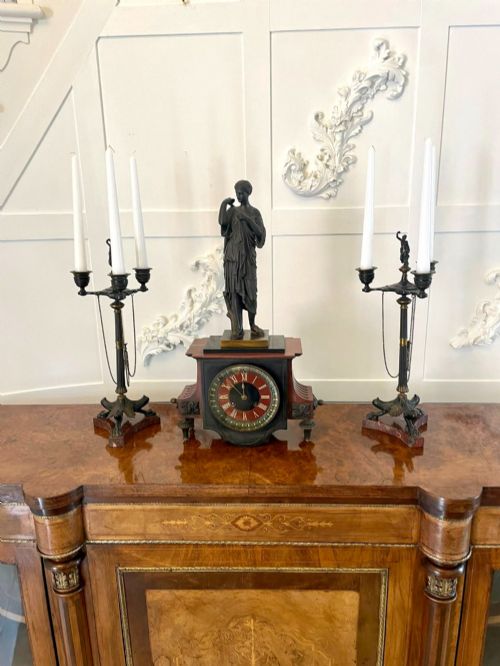
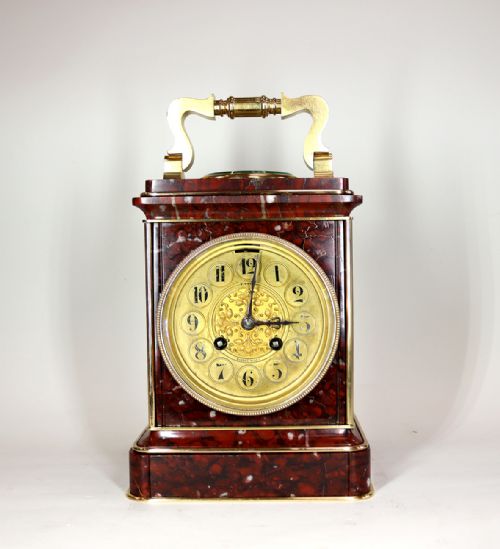
A red marble table clock combines dense rouge stone architecture with metallic mounts, taking forms such as large mantel pieces, garnitures, and carriage clocks. These domestic timepieces emerge from nineteenth-century workshops, spanning Victorian productions and later Art Deco iterations.
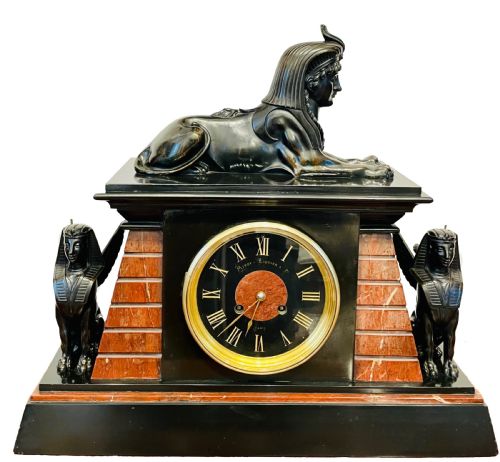
The version most commonly met on this page is the French mantel clock, often paired with bronze, ormolu, and enamel dials. Examples range from classical revival styles to architectural Egyptian influences and astronomical themes.
Victorian and nineteenth-century periods dominate the selection, bringing substantial stone bodies and ornate cast details to the table. Earlier mid-century pieces utilise silk suspension movements alongside specimen marble and gilt bronze.
How they were made
Makers shaped dense rouge marble into architectural housings, turning solid stone blocks into columns, plinths, and urn shapes. These heavy marble bodies provide a permanent housing for mechanical clockwork.
Bronze and ormolu mounts were cast and applied to the stone surface, adding gilded accents, figures, and bezels around enamel dials. Glass covers protect the face while brass and bronze components drive the interior movement.
Red Marble Table Clock Retail Price Guide 2026
Typical asking prices for red marble table clock among the pieces listed under this phrase on Sellingantiques today, from the lower quarter to the upper quarter. They describe what is for sale here now, not the wider market.
An astronomical clock on this page tracks the heavens while sitting quietly on a red marble plinth.
What varies in quality
The precision and weight of the stone cutting separate standard productions from superior works, particularly where complex moulding and fitted bronze mounts meet the marble. Finer examples integrate cast gilt bronze figures and detailed mounts that fit seamlessly against the polished stone.
Movement sophistication and dial execution also distinguish the range, from standard mechanical setups to early silk suspension systems and painted enamel dials with delicate numerals.
A. D. Mougin
The Red Marble Table Clock Glossary
- Ormolu
- Gilt bronze created by applying a mercury and gold amalgam to a bronze base, then heating the piece to drive off the mercury. This technique produces a durable golden finish on decorative mounts.
- Silk Suspension
- A delicate mechanism where the pendulum hangs from a fine silk thread rather than a metal spring. It appears in earlier nineteenth-century clocks.
- Garniture
- A set consisting of a central clock flanked by matching decorative objects such as urns or candelabra. These sets were designed to sit together on a mantelpiece.
- Clock Garniture
- An alternative term for a matching set of mantel ornaments centred around a timepiece. The accompanying pieces echo the materials and style of the main clock.
Red Marble Table Clock: Frequently Asked Questions
What is a red marble table clock?
A red marble table clock is a heavy domestic timepiece housed in polished rouge stone and decorated with metal mounts. These pieces date primarily from the nineteenth century and earlier twentieth century.
They sit on mantelpieces or tables, combining mechanical clockwork with sculptural stone architecture and gilded bronze details.
How do I identify Victorian periods?
Victorian clocks often display heavy cast mounts, enamel dials, and architectural stone housings reflecting revival styles of the period. Makers combined rouge marble with bronze and ormolu during this era.
Examining the movement style, dial construction, and mounting techniques helps connect a piece to mid or late nineteenth-century production standards.
What are clock garnitures used for?
Clock garnitures were placed on mantelpieces as a matching ensemble, with the central clock flanked by companion pieces like urns. This arrangement created a balanced decorative display in formal rooms.
The matching side pieces share the same red marble and bronze materials as the main clock.
How do I care for marble clocks?
Marble clocks require stable placement on sturdy surfaces due to their considerable weight. Dust the stone gently and avoid harsh chemical cleaners that can damage the polished surface.
Metal mounts and glass bezels should be cleaned with dry cloths to protect the original gilt and bronze patination.