


French Slant Front Desk
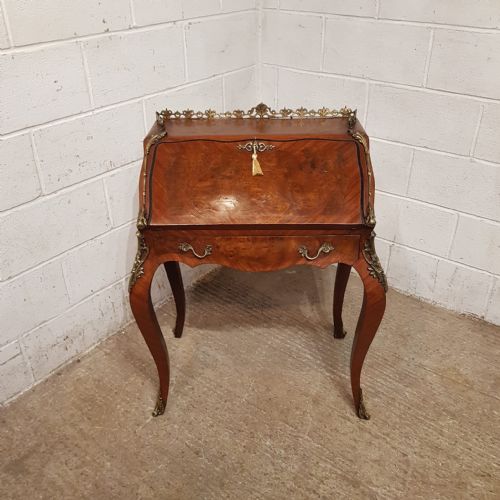
A french slant front desk offers concealed storage and a fitted writing surface, bringing refined continental craftsmanship into a study or drawing room.

French Slant Front Desk
A french slant front desk encompasses several distinct forms designed for correspondence and private writing, including traditional bureau de dame models and larger secretaire variants. These pieces originate predominantly from nineteenth-century revivals of earlier reigns, alongside select eighteenth-century examples.
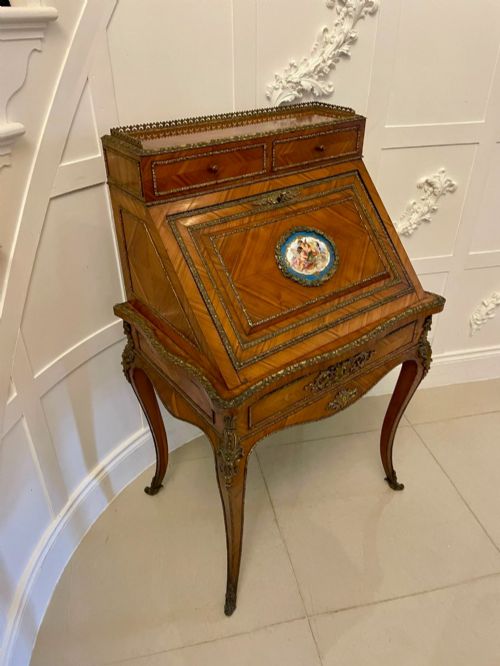
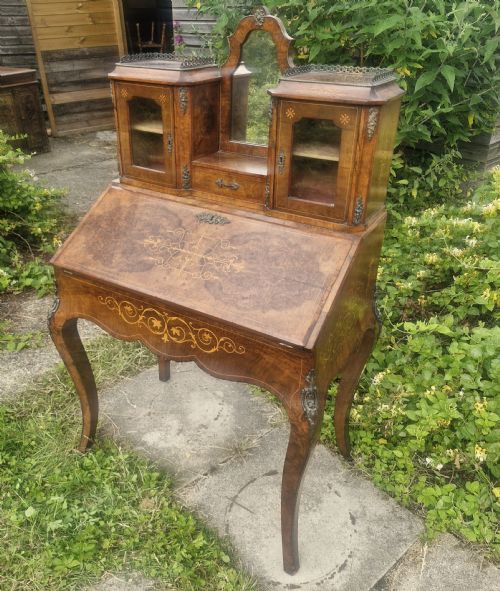
The bureau de dame and bonheur du jour appear frequently across this selection, combining a sloping writing flap or flat top with delicate proportions suited to domestic quarters. Walnut, kingwood, and rosewood form the primary carcasses of these writing desks.
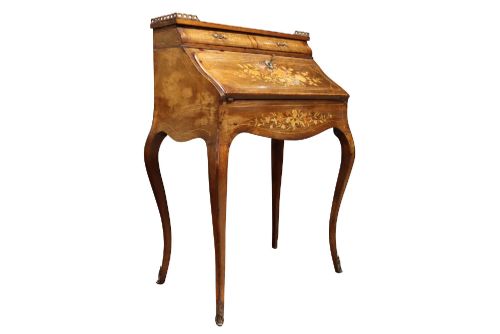
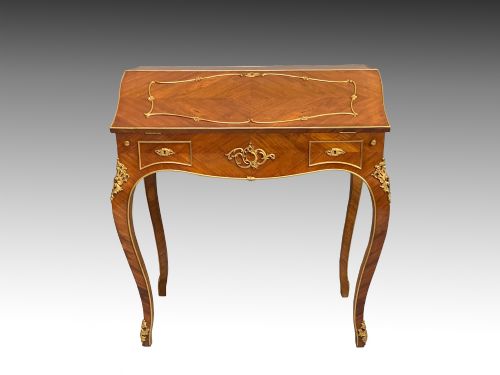
Makers drew heavily upon Louis XV styles and rococo revival motifs, incorporating serpentine fronts and cabriole supports. Mid-eighteenth-century prototypes also emerge, reflecting the enduring influence of cabinetmakers such as BVRB.
Materials and Technique
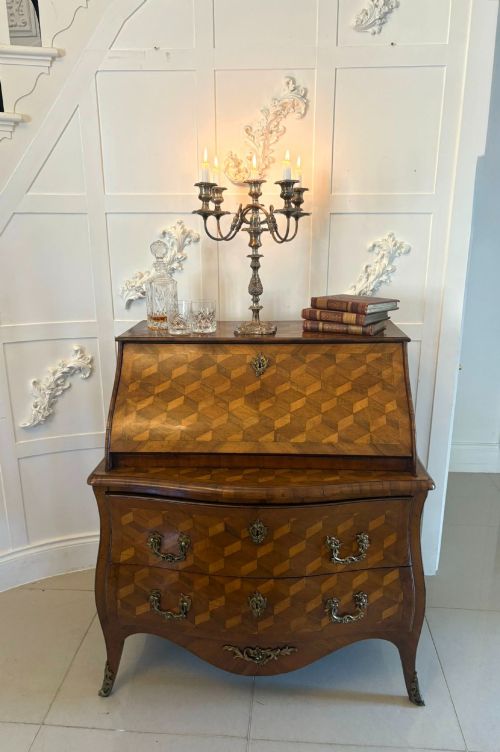
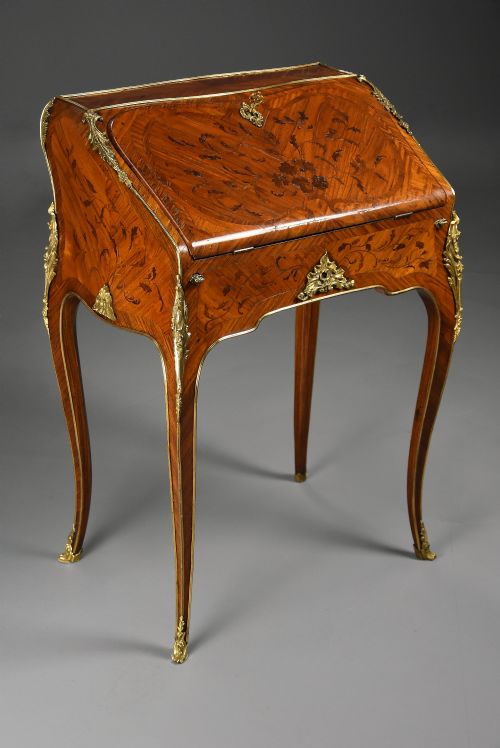
Cabinetmakers utilised dense hardwoods like walnut, kingwood, tulipwood, and rosewood as the structural foundation, often applying elaborate marquetry and parquetry veneers across the exterior surfaces. Geometric and floral patterns demonstrate precise timber selection and cutting.
Ormolu and gilt metal mounts frame the edges, protect vulnerable corners, and accentuate the contours of the writing slopes and drawers. Selected pieces integrate porcelain plaques alongside these brass and gilt enrichments.
The listings span walnut, kingwood, and rosewood finishes across nineteenth-century revival and eighteenth-century periods.
Design and Execution
The distinction between tiers rests upon the precision of the marquetry inlay and the casting quality of the ormolu mounts. Finer examples display meticulous grain matching and hand-chiselled bronze enrichments rather than mass-produced cast metal.
Structural integrity of the sloping fall-front and the complexity of the interior pigeonholes and small drawers dictate the grade of a bureau. Superior items maintain rigid joints and harmonious proportions across every elevation.
Paul Sormani·BVRB
The French Slant Front Desk Glossary
- Bureau de dame
- A small ladies writing desk, frequently fitted with a sloping fall-front or an upper superstructure.
- Bonheur-du-jour
- A light day-table featuring a small cabinet or set of drawers resting upon the main writing surface.
- Ormolu
- Gilt bronze mounts applied to furniture for decorative enrichment and edge protection.
- Marquetry
- Decorative veneer work forming pictures or patterns using various coloured woods.
- Parquetry
- Geometric mosaic woodwork arranged in repeating patterns across panels.
French Slant Front Desk: Frequently Asked Questions
What is a french slant front desk?
A french slant front desk is a writing cabinet featuring an angled lid that lowers to create a flat writing surface, concealing inner compartments. These pieces derive largely from nineteenth-century revival periods.
They serve as compact workspaces and decorative furnishings within domestic interiors, housing stationery and correspondence.
How do I identify Louis XV style?
Louis XV style pieces exhibit asymmetrical curves, floral marquetry, and prominent cabriole legs without straight lines. Ormolu mounts often trace the scrolling outlines.
This aesthetic prioritises lightness and serpentine forms over heavy architectural symmetry.
Where should I place a bureau de dame?
A bureau de dame suits principal reception rooms, studies, or quiet corners where its finished back and detailed marquetry remain visible. Freestanding placement highlights the parquetry.
Keep these items away from direct sunlight and strong heat sources to protect the delicate rosewood and kingwood veneers.
What woods were used in these desks?
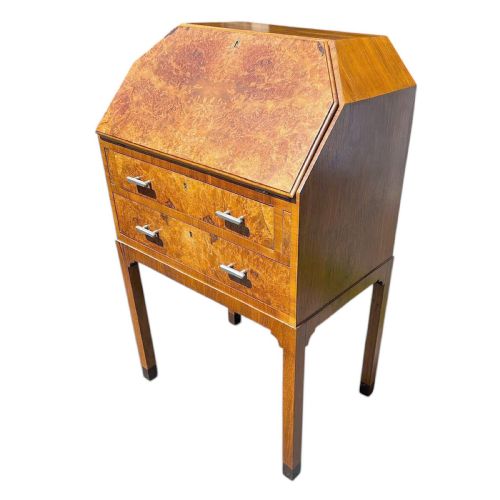
Cabinetmakers employed exotic and native hardwoods including walnut, kingwood, rosewood, tulipwood, and amboyna. Burr walnut provides distinctive figuring on drawer fronts and writing flaps.
Veneers are laid over solid secondary timbers to achieve complex geometric and floral patterns.