

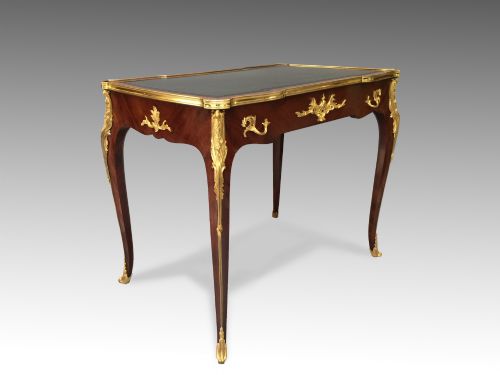
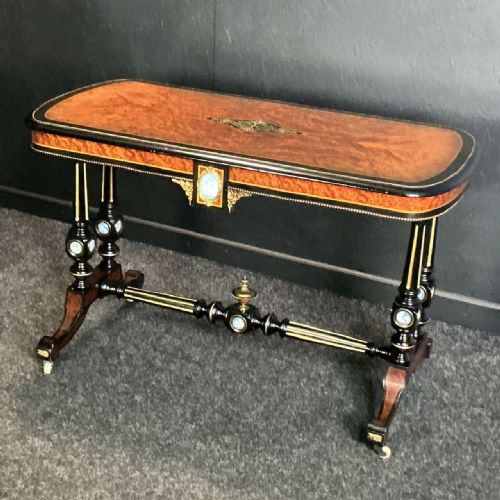
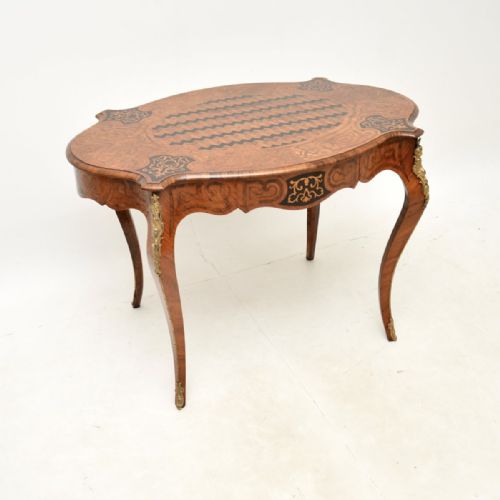
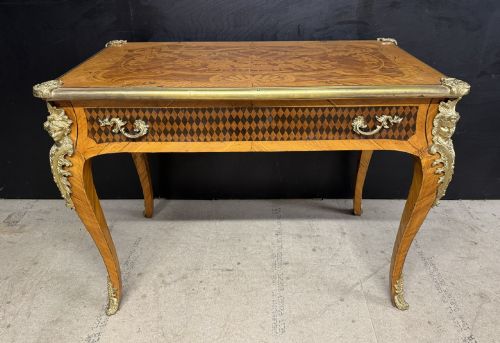
French Ormolu Writing Desk
A french ormolu writing desk combines opulent gilt mounts with fine cabinet woods to provide a functional and decorative surface for correspondence.
French Ormolu Writing Desk
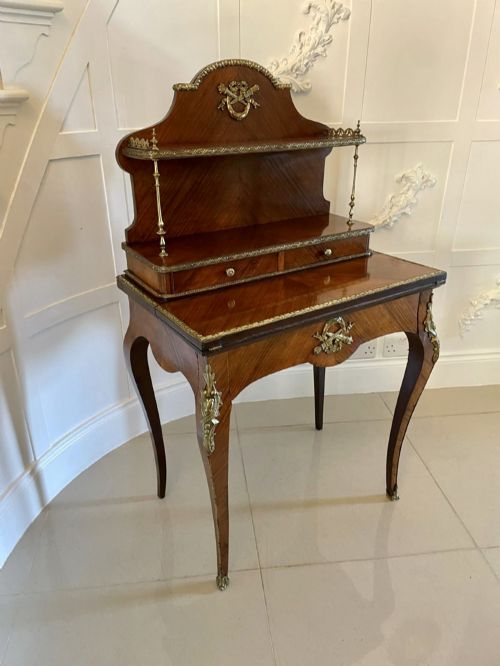
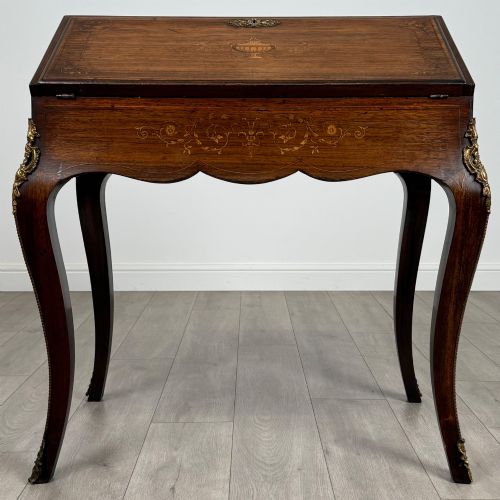
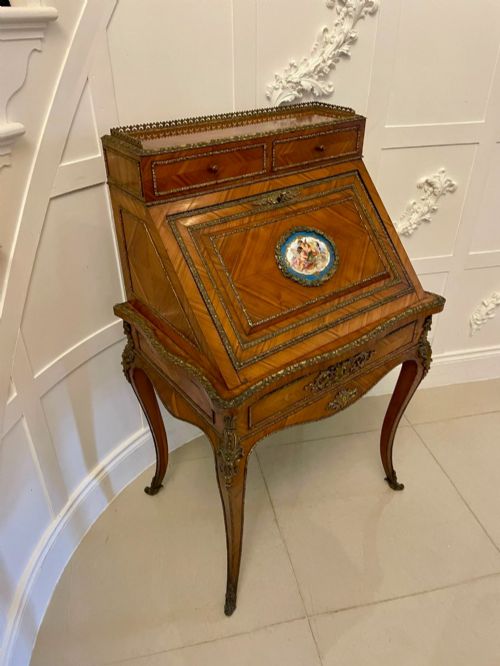
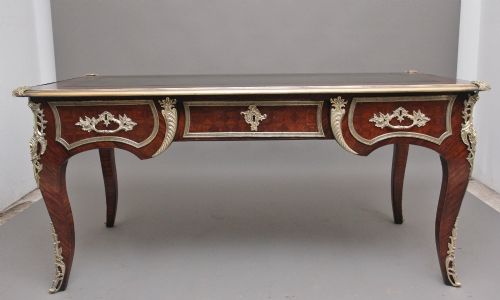
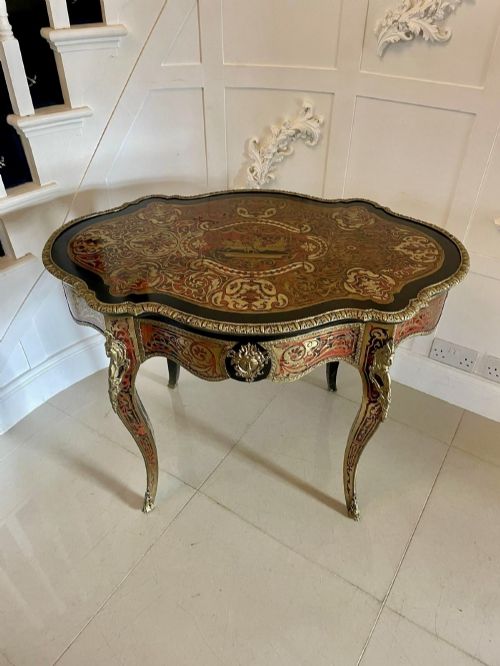
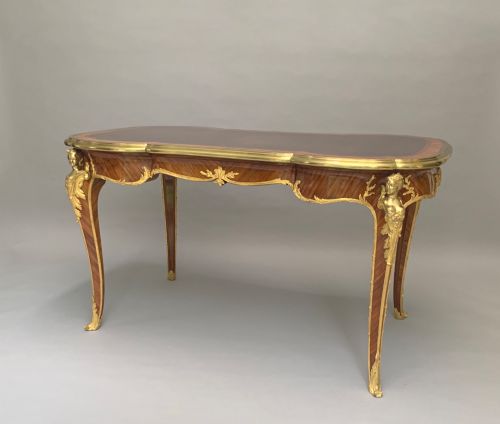
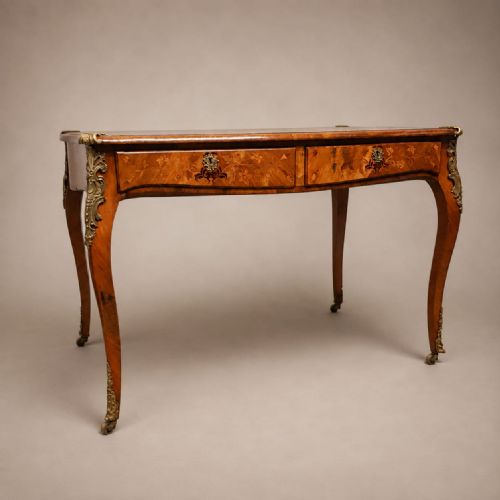
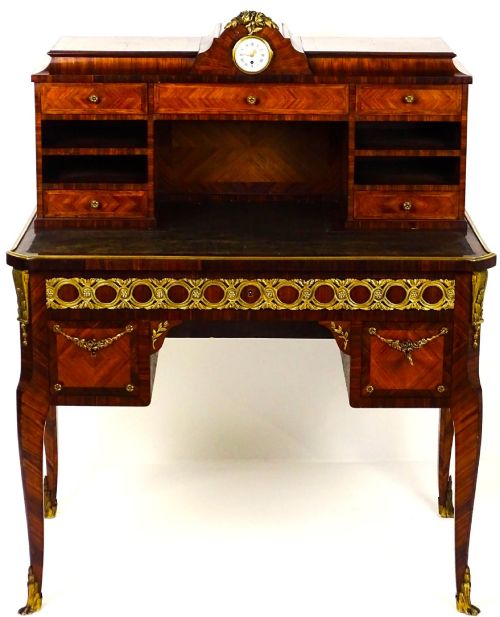
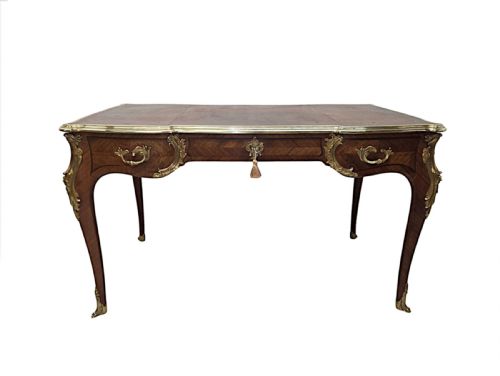
A french ormolu writing desk typically appears as a bureau plat, a freestanding centre table, or a writing cabinet originating from the nineteenth century.
The pieces on this page span revival styles including Louis XV and Louis XVI, reflecting nineteenth-century interpretations of earlier court furniture.
Makers and retailers such as François Linke, Edwards and Roberts, and Paul Sormani frequently produced these sophisticated items for domestic interiors.
How they were made
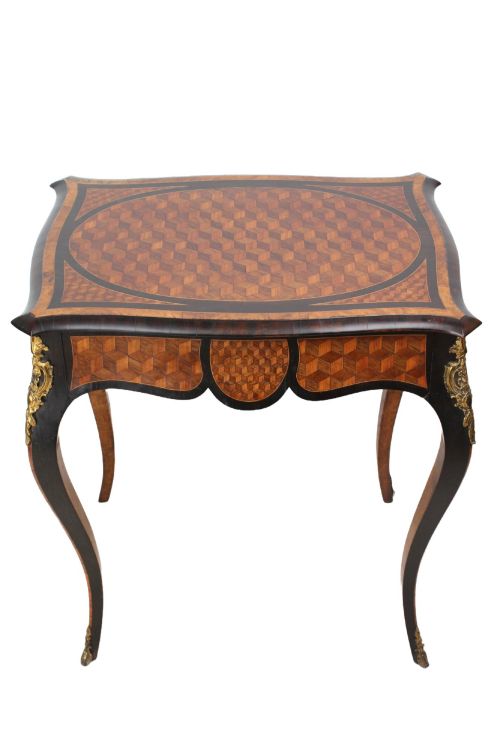
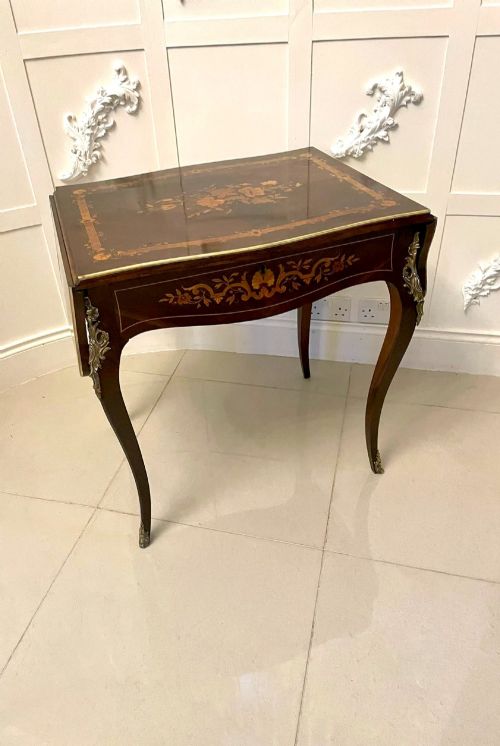
Cabdinetmakers constructed carcases from hardwoods such as mahogany, walnut, and kingwood, often applying intricate parquetry and marquetry veneers in geometric or floral patterns.
Cast and chased ormolu or gilt bronze mounts were meticulously fitted to protect corners, frame drawers, and accentuate cabriole legs.
Writing surfaces were frequently inset with tooled leather, whilst some specialised desks incorporated marble tops or porcelain plaques.
What varies in quality
The refinement of the ormolu casting dictates the visual impact, where crisply chased details on mounts demonstrate superior workmanship compared to softer, simpler castings.
Cabinetmaking skill is evident in the precision of the marquetry and the seamless integration of veneers across serpentine and kidney-shaped carcases.
The reputation of the maker, with workshop signatures or stampings by known firms elevating certain desks above unmarked examples.
JAS Shoolbred·Francois Linke·Edwards And Roberts·Paul Sormani·Maison Krieger·CH Jeanselme And Co·Alphonse Tahan
The French Ormolu Writing Desk Glossary
- Ormolu
- Gilt bronze applied as decorative mounts to furniture. The technique involves a mercury gilding process on cast bronze.
- Bureau Plat
- A freestanding double-sided writing table fitted with one or more drawers in the frieze. These desks were traditionally placed in the centre of a room rather than against a wall.
- Marquetry
- Decorative patterns formed by fitting together thin veneers of various coloured woods. Artisans use this technique to create pictorial or abstract designs across the top and sides.
- Parquetry
- Geometric wood inlay forming repetitive patterns such as cubes, lozenges, or squares. It provides a structured decorative surface on writing desks and tables.
- Bonheur de Du Jour
- A small ladies writing desk featuring a small cabinet or set of drawers on top of the writing surface. This form gained popularity during the eighteenth century and saw a revival in the nineteenth century.
French Ormolu Writing Desk: Frequently Asked Questions
Where should I place a bureau plat?
A bureau plat is designed as a freestanding piece with finished decoration on all sides, making it suitable for the centre of a room.
Positioning it away from the wall allows the ormolu mounts and veneered surfaces to be viewed from every angle.
How do I care for leather writing inserts?
Leather writing surfaces require gentle cleaning with a slightly damp cloth followed by a suitable leather cream to maintain flexibility.
Avoid using harsh chemical cleaners or excess water that might stain the surrounding wood veneers or corrode the ormolu mounts.
What distinguishes Louis XV from Louis XVI style?
Louis XV revival pieces feature flowing serpentine lines, asymmetry, and prominent cabriole legs with naturalistic floral motifs.
Louis XVI revival desks introduce neoclassical symmetry, straighter fluted legs, and architectural or geometric ormolu ornaments.
Are these desks suitable for daily writing use?
Many nineteenth-century writing desks provide sturdy surfaces and functional drawer space well suited for contemporary writing tasks.
Careful consideration of the antique leather and delicate wood veneers helps preserve the finish during regular use.