



French Ormolu Tazza
A french ormolu tazza brings gilded weight and classical form to a table, combining cast metal with porcelain, glass or stone.
French Ormolu Tazza
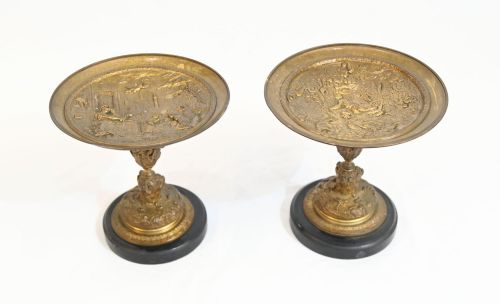
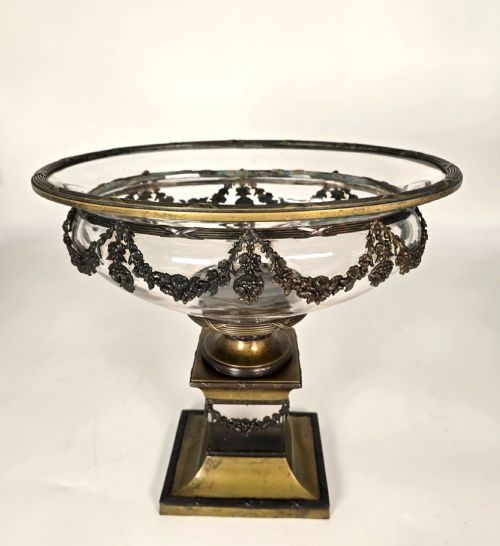
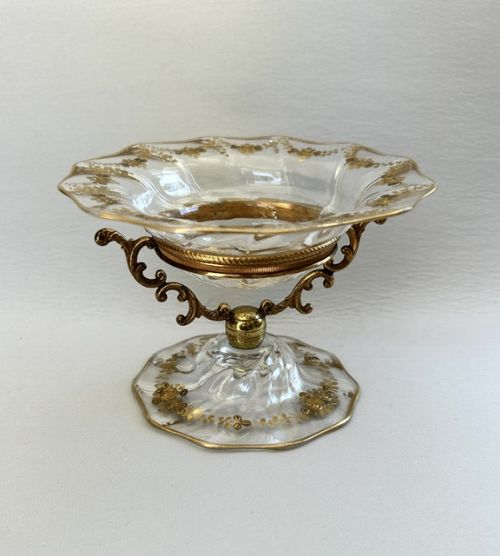
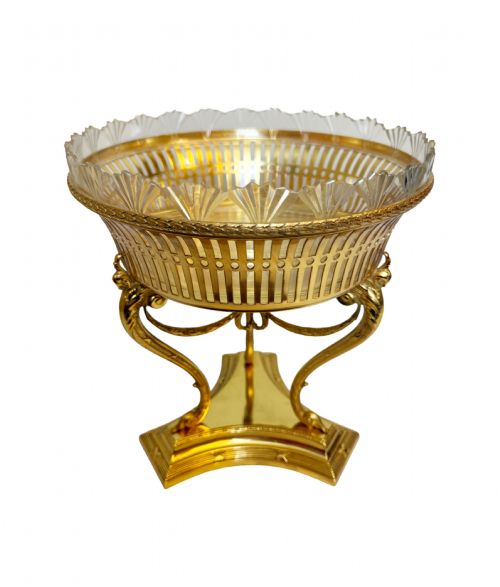
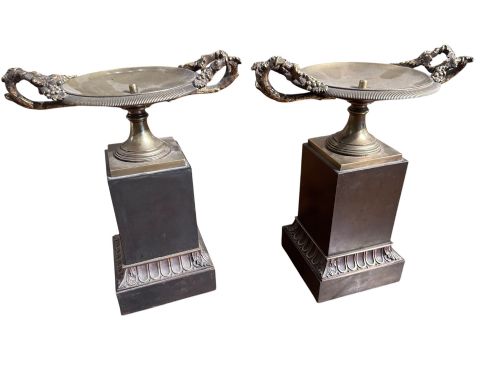
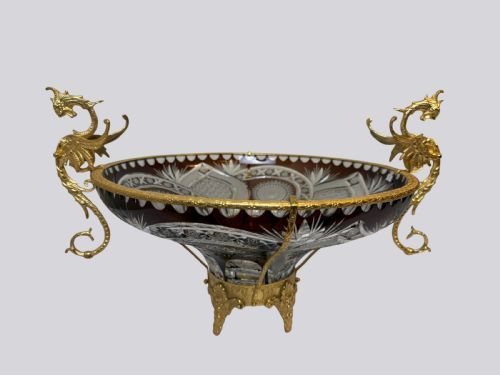
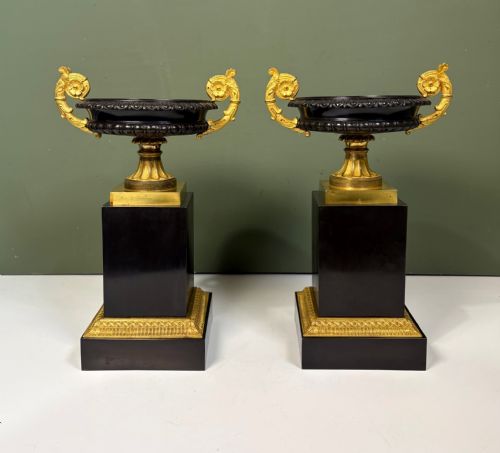
When you search for a french ormolu tazza, you encounter elevated decorative bowls and centrepieces designed for nineteenth-century interiors. These pieces take the form of shallow dishes, comports and trays raised on pedestals, serving as ornamental centrepieces for tables and sideboards.
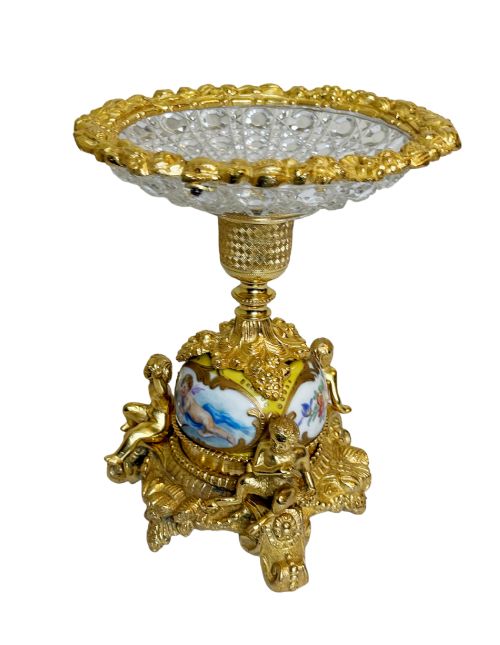
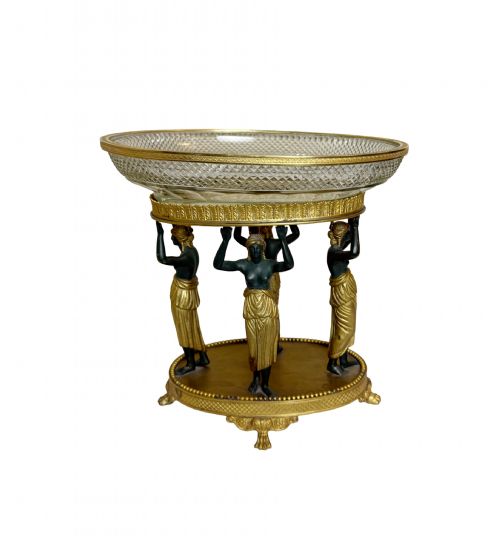
The selections on this page span the nineteenth century and the early twentieth century, drawing on French Rococo Revival, French Empire, Neoclassical and Regency styles. Makers combined gilded bronze and ormolu mounts with materials like Sevres style porcelain, marble, onyx and cut crystal.
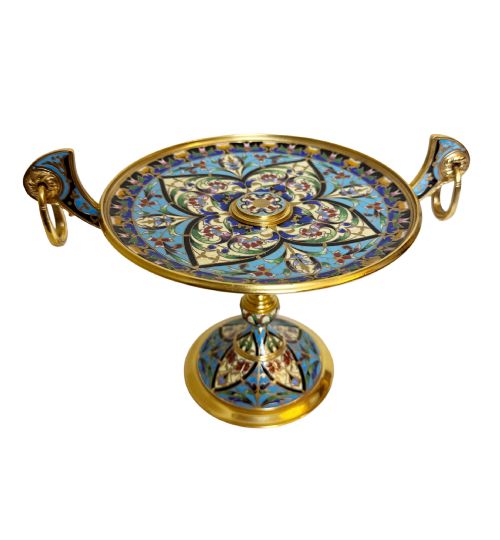
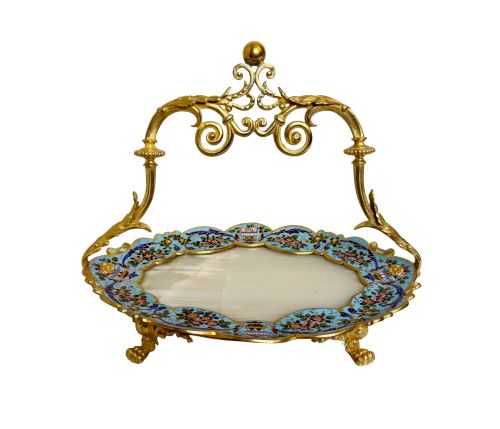
Many examples incorporate figural detailing such as cherubs and mermen, alongside champleve enamel and Limoges plaques. You find single tazzas, matching pairs and larger centrepiece bowls originating from French workshops.
How They Were Made
Artisans produced these objects by casting bronze, which was subsequently mercury gilded to create the characteristic ormolu finish. Metal mounts and frames secure inset bowls and plaques made from coloured glass, cut crystal, abalone shell and green onyx.
Workers integrated ceramic elements by mounting Sevres style porcelain dishes and Limoges enamel panels into the bronze framework. Detailed decoration often includes champleve enamel work and patinated bronze contrasting with the bright gilded surfaces.
Listings feature French ormolu tazzas incorporating various materials including green onyx, champleve enamel, Sevres style porcelain, cut crystal, marble and abalone shell.
What Varies in Quality
The standard of a french ormolu tazza rests upon the crispness of the bronze casting and the depth of the gilding. Superior examples display sharply defined figures, clean chasing and securely fitted inserts of marble, onyx or porcelain.
Artistic ambition sets the finer pieces apart, seen in complex designs featuring multi-material construction like combined champleve enamel and natural stone bases. The harmony between the cast ormolu mounts and the central bowl dictates the overall success of the composition.
Christofle Paris·Louis Pierre Malpass
The French Ormolu Tazza Glossary
- Ormolu
- Gilded bronze, where a layer of gold amalgam is applied to a bronze base and heated. This technique creates a durable golden surface seen on nineteenth-century French mounts.
- Tazza
- A shallow bowl or dish raised on a stem and foot. These vessels served as ornamental centrepieces on dining tables and consoles.
- Champleve
- An enamelling technique where troughs or cells are hollowed out of a metal surface and filled with vitreous enamel before firing. It decorates many nineteenth-century bronze frames.
- Comport
- A pedestal dish used for serving fruit or sweets, often synonymous in nineteenth-century contexts with a large tazza. They frequently feature Sevres style porcelain bowls.
- Giallo Antico
- A yellow antique marble prized by classical sculptors and utilised for the bases of nineteenth-century decorative pieces. It provides a dense, colourful foundation for bronze mounts.
French Ormolu Tazza: Frequently Asked Questions
What is a french ormolu tazza used for?
These elevated vessels functioned as decorative centrepieces on dining tables, mantelpieces and salon sideboards during the nineteenth century. They held fruit, sweets or simply displayed fine materials like porcelain and glass.
Today, they serve the same decorative purpose in interior styling. Collectors place them on tables or consoles to add height and texture to a room.
How do you date a french ormolu tazza?
Dating relies on stylistic clues, material combinations and manufacturing techniques. Pieces from the early nineteenth century often follow French Empire or Regency designs, while later nineteenth-century examples lean towards Rococo Revival and incorporate champleve enamel.
Examining the casting quality and the style of any porcelain inserts, such as Sevres style plates, helps narrow the decade of production. Many pieces date specifically from the 1850s to the end of the century.
What materials are combined with ormolu?
Maker workshops paired gilded bronze with a wide array of decorative substances. Common materials include Sevres style porcelain, Limoges enamel plaques, cut crystal and coloured glass.
Stones also feature prominently in the design of these bowls and trays. Workshops utilised green onyx, white marble, rouge marble, malachite, Blue John and giallo antico for bases and inserts.
How should I care for ormolu?
Gilded bronze requires gentle treatment to preserve the delicate gold surface. Dusting with a soft, dry cloth prevents the accumulation of grime without abrading the metal.
Avoid chemical polishes, abrasives and moisture, which can strip or damage the mercury gilding. If the piece includes glass, porcelain or stone inserts, clean those areas separately according to their specific material needs.