


Antique Bronze Comport
An antique bronze comport brings formal nineteenth-century display to a table, combining cast metalwork with porcelain, marble, or glass.
Antique Bronze Comport
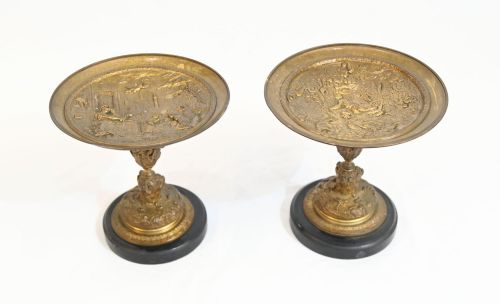
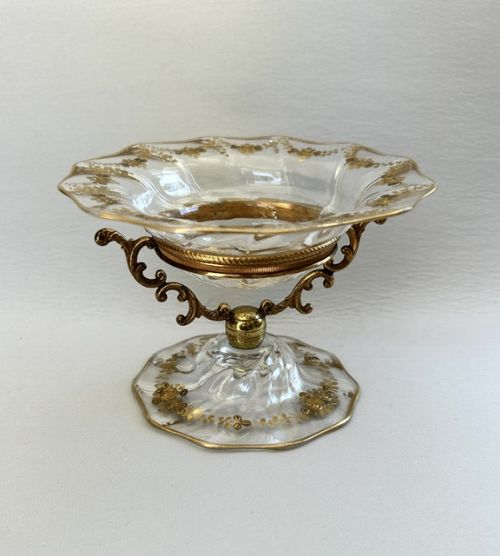
An antique bronze comport is a raised decorative dish or tazza designed for grand nineteenth-century tables, drawing upon French Rococo Revival and Neoclassical styles. These elevated vessels served as centrepieces for fruit or sweets, resting upon elaborate stands.
The versions most frequently met on this page date from the nineteenth century, including pieces produced around eighteen eighty and eighteen ninety. They frequently pair cast or gilded bronze with Sevres style porcelain bowls, marble bases, or mother-of-pearl dishes.
Makers and workshops often drew inspiration from French chateau aesthetics, resulting in ornate ornamentation such as cherub figures, Limoges enamel plaques, and classical mounts. Their forms bridge the gap between functional tableware and sculptural decorative art.
How they were made
Comports of this period often incorporated mixed media, combining cast metal stands with contrasting materials like white marble bases or iridescent mother-of-pearl dishes. Artisans embellished specific examples with painted porcelain panels and fired enamel plaques.
Some nineteenth-century makers decided that bronze fruit bowls simply needed chubby little cherubs clinging to the stems for structural support.
What varies in quality
Quality rests upon the crispness of the metal casting and the depth of the gilding, where finely chased details on ormolu mounts separate superior examples from simpler production. The harmonious integration of disparate materials, such as a well-fitted porcelain bowl within a bronze frame, dictates overall refinement.
The weight and stability of the supporting base, whether sculpted marble or heavy cast bronze, indicate the original ambition of the piece. Hand-painted ceramic elements and specialised additions like Limoges enamel plaques elevate certain comports above standard decorative items.
The Antique Bronze Comport Glossary
- Comport
- A raised dish or bowl used on a dining table for serving fruit or sweets, functioning as a centrepiece. These vessels stand upon a central stem or a structured foot.
- Ormolu
- Gilt bronze produced by applying a mercury-gilding mixture to cast bronze, creating a rich golden surface. This technique was widely utilised in nineteenth-century French metalwork.
- Tazza
- A shallow bowl or cup mounted on a stem and foot, originating from classical forms. It serves a similar decorative purpose to a comport.
- Limoges Enamel
- Coloured vitreous enamel fused to a metal plate, famed for intricate pictorial scenes. These plaques frequently embellish the centres of decorative metal stands.
- Rococo Revival
- A nineteenth-century design style reviving the asymmetrical scrolls, natural motifs, and C-curves of the eighteenth century. It heavily influences the ornamentation found on these comports.
Antique Bronze Comport: Frequently Asked Questions
What is an antique bronze comport?
An antique bronze comport is a raised decorative vessel from the nineteenth century featuring a cast metal stand and a bowl made of porcelain, glass, or stone.
They were designed primarily as formal dining table centrepieces rather than for everyday domestic use.
How were comports used originally?
In nineteenth-century dining rooms, these raised dishes held fruit, nuts, or sweetmeats during formal dessert courses.
Placed in the centre of the table, they added height and visual interest to the table setting.
What styles are common for these pieces?
The listings show a strong presence of French Rococo Revival and Neoclassical designs from the nineteenth century.
These styles feature ornate cast mounts, cherubs, and classical motifs typical of French chateau decoration.
How do I care for a bronze comport?
Metal stands require gentle dusting with a soft cloth to protect the gilt or ormolu surface from abrasion.
Porcelain or glass bowls should be cleaned separately using mild soap and water without submerging mixed-material joints.