
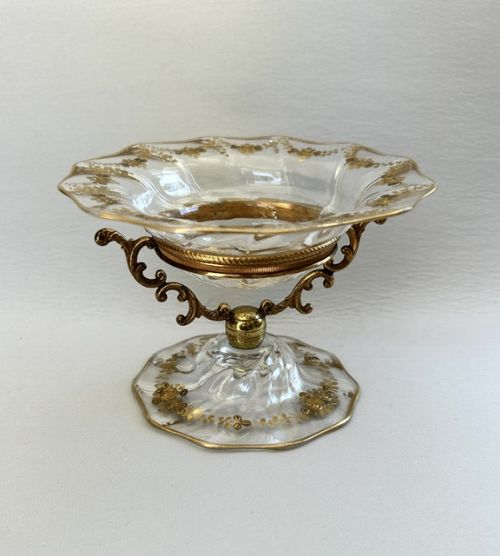


Antique Gilt Comport
An antique gilt comport elevates a dining table with sculptural metalwork and hand-painted porcelain.
Antique Gilt Comport
An antique gilt comport stands as a raised display vessel or serving piece, frequently encountered as a footed dish, tazza, or centrepiece intended for fruit and sweetmeats. The form combines shallow bowls or baskets with elevated stands, placing decorative surfaces at eye level on the dining table or sideboard.
Most examples appearing here belong to the nineteenth and early twentieth centuries, spanning Regency, Victorian, and Edwardian periods. Makers deployed classical motifs, floral painting, and Rococo Revival curves across porcelain and gilt bronze.
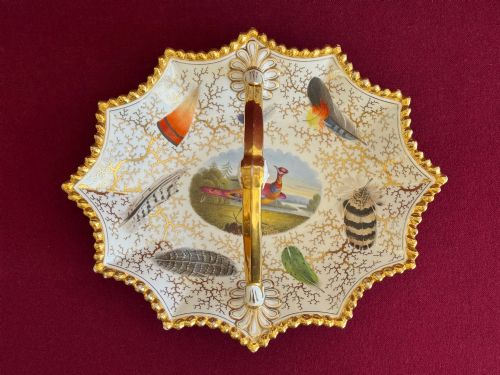
The category encompasses both porcelain dishes mounted in gilded frames and heavy bronze pieces wholly gilded or finished in ormolu. Buyers encounter English factories like Worcester and Swansea alongside French Sevres style works and German porcelain manufactures.
Materials and construction methods
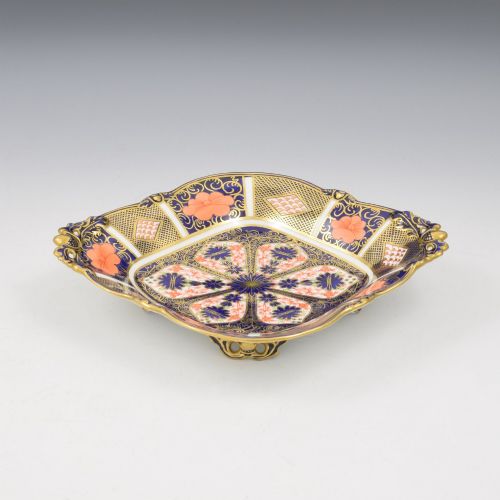
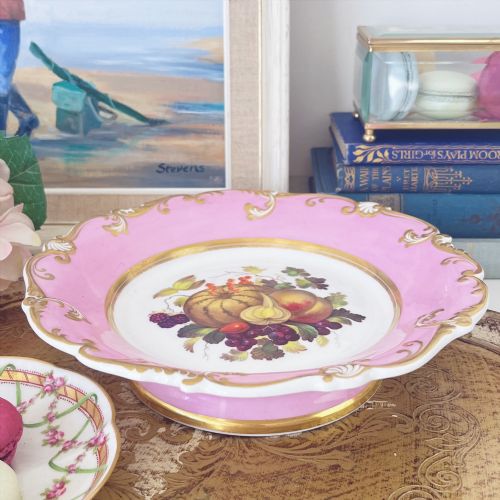
Potters shaped hard-paste and soft-paste porcelain into baskets, shells, and flat dishes, applying hand-painted botanicals, Chinoiserie scenes, and Imari patterns before firing. Gilding was brushed on as gold leaf or liquid gold and subsequently burnished to a high shine.
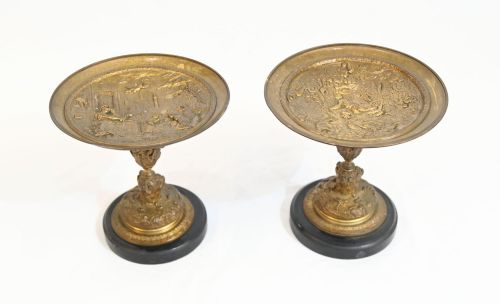
Metal components relied on bronze or brass cast via the lost-wax method, then finished with mercury gilding or ormolu to achieve a bright golden surface. Certain French pieces combined these cast metal mounts directly with white marble bases.
Enamel plaques, such as those from Limoges, were fused to metal supports through repeated kiln firings to produce rich pictorial reserves inset within the broader gilt structure.
Listings feature porcelain, ormolu, marble, and gold leaf, spanning the Regency, Victorian, and Edwardian eras.
Assessing craftsmanship and design
The distinction between ordinary production and superior work rests upon the precision of the hand-painting and the crispness of the metal casting. Finely chased ormolu displays sharp botanical and figurative detail rather than soft, blurred edges from worn moulds.
Porcelain quality reveals itself in the delicacy of pierced trelliswork, the accuracy of hand-applied enamel colours, and the heavy application of genuine gold leaf burnished by hand. Superior examples integrate the ceramic bowl and gilt mount into a unified, stable composition.
Flight Barr and Barr·H and R Daniel·Schierholz Plaue·Thomas Moorcroft·Royal Crown Derby·Royal Worcester·Wedgwood·Swansea
The Antique Gilt Comport Glossary
- Comport
- A raised dish or bowl on a stem, used for serving fruit or sweets at formal dining tables. It shares its function with the tazza and the centrepiece.
- Ormolu
- Finely ground high-carat gold applied to a bronze base using a mercury amalgamation technique. The method creates a durable, luminous golden finish characteristic of French decorative objects.
- Tazza
- A shallow saucer-like dish mounted on a stem and foot, originating in classical antiquity. Collectors prize them for displaying painted porcelain panels and gilt bronze mounts.
- Imari
- A style of ceramic decoration featuring underglaze blue and iron red, highlighted with gold. English and continental factories frequently copied these Japanese export designs during the nineteenth century.
- Chinoiserie
- European artistic interpretations of Chinese and East Asian artistic traditions. These patterns appear in hand-painted motifs on porcelain bowls and dishes.
Antique Gilt Comport: Frequently Asked Questions
What was an antique gilt comport used for?
These vessels served fruit, sweetmeats, and dessert courses during formal nineteenth-century dining. Hosts placed them at the centre of the table or on sideboards to display wealth and taste.
Beyond dining use, they functioned purely as decorative ornaments. Their elevated stature brought colour and sculptural form into drawing rooms and formal parlours.
How do I clean a gilt metal mount?
Dust metal surfaces gently with a soft, dry brush to prevent accumulation in recessed chasing. Avoid commercial metal polishes, which strip away thin gold leaf and historic ormolu.
Keep moisture away from any exposed bronze or gilding. Water and chemical cleaners can react with underlying metals and permanently damage the finish.
How do I distinguish French from English pieces?
French objects frequently combine heavy cast ormolu mounts with white marble bases and Sevres style porcelain plaques. Their styling leans heavily toward classical symmetry and ornate Rococo revival curves.
English pieces tend to showcase domestic porcelain bodies from factories like Worcester, Derby, or Swansea. Their decoration often emphasises botanical illustration and Imari patterns rather than heavy cast bronze frames.
Can I use these comports for serving food?
Historic glazes and older ceramic bodies may contain lead or absorb oils from modern foods. It is wiser to treat them as decorative display items rather than functional tableware.
Hand-painted enamels and delicate gilt highlights wear down easily with regular washing. Preserving the surface requires keeping them away from daily culinary use.
How do I date an antique comport?
Examine the base for factory marks, pattern numbers, and registration stamps. Reference books connect these ciphers to specific operational years of British and continental potteries.
Stylistic shifts offer secondary clues, moving from Regency classical austerity through ornate Victorian revivalism to Edwardian refinement. Construction marks on bronze mounts also help narrow the decade of manufacture.