

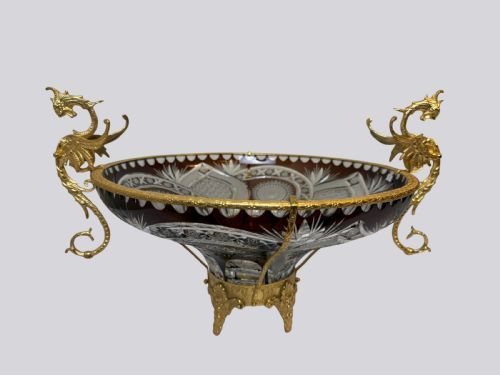


French Bronze Dish
A French bronze dish brings classical weight and gilding to a table, combining cast metal with porcelain, marble or cut crystal.
French Bronze Dish
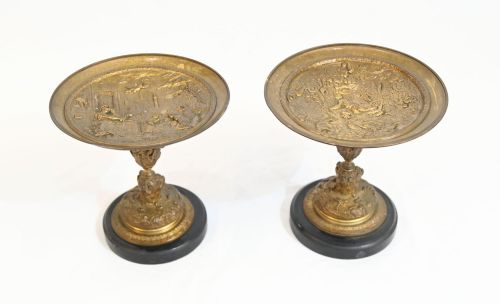
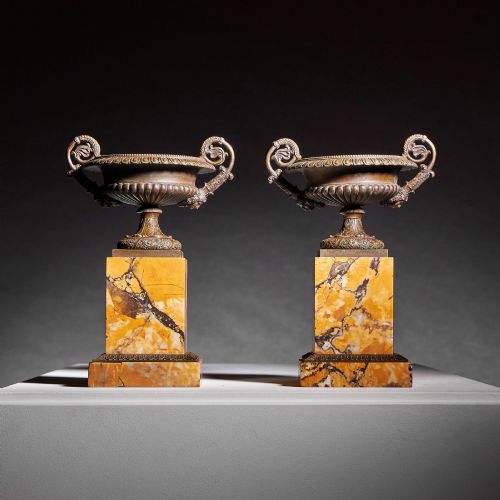
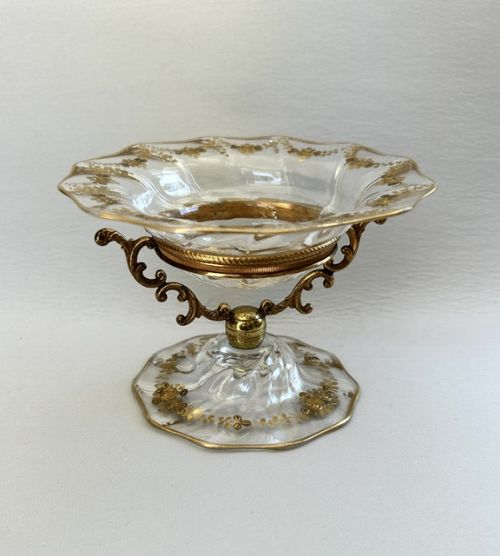
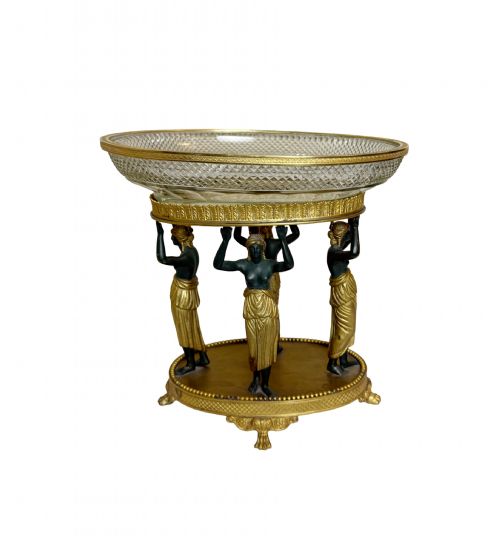
A French bronze dish encompasses tazzas, centrepieces, comports and vide poches originating mainly across the nineteenth century. These serving and display vessels reflect revivalist tastes including French Rococo, Empire and Neoclassical styles.
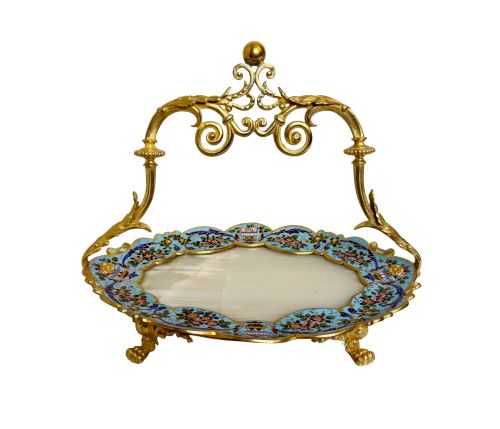
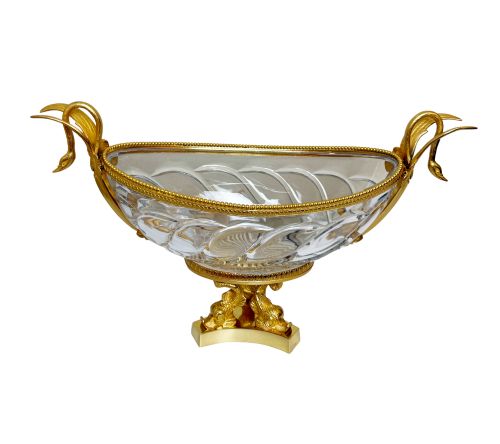
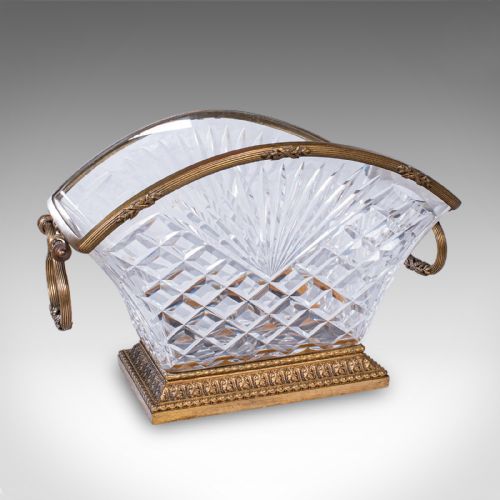
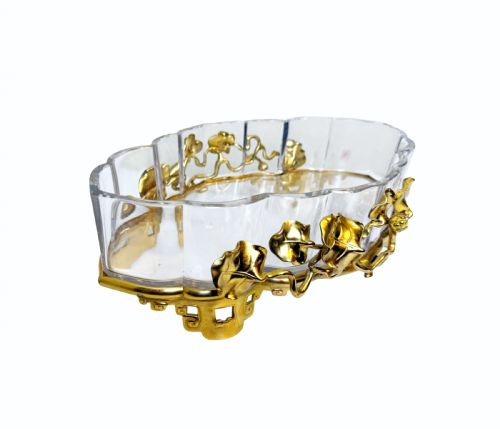
The version most likely to appear combines patinated or gilded bronze with cut glass, champleve enamel or porcelain bowls. Makers mounted metal frames around mineral bases or ceramic plates to create decorative focal points for tables and sideboards.
How they were made
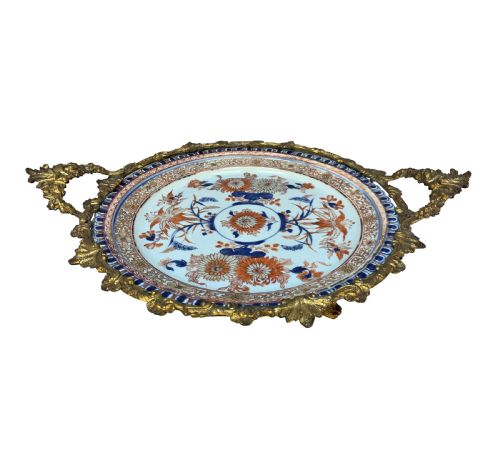
Foundry workers cast bronze and ormolu into ornate mounts, figures and handles, employing mercury gilding or electroplating to achieve a brilliant metallic finish. These metal frameworks required precise fitting to support fragile inserts like Sevres porcelain, Imari plates or cut crystal bowls.
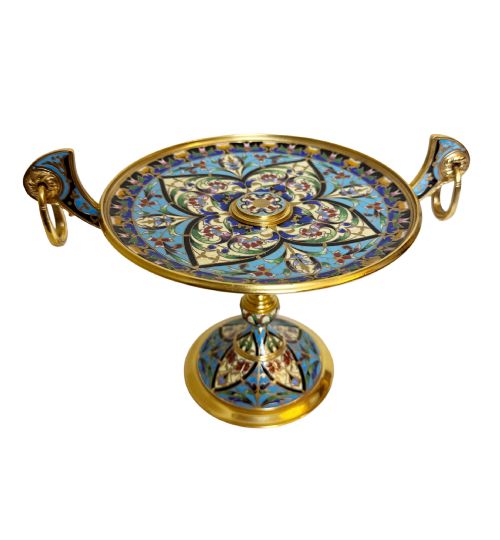
Craftsmen combined diverse materials in single items, securing bronze mounts to marble plinths, onyx bases or crystal bodies using threaded screws and pins. Champleve enamel and Limoges plaques added colourful surface detail through fired glass pastes set into recessed metal channels.
Listings feature 19th century pieces spanning the Victorian era, incorporating cut crystal, Sevres porcelain, marble and champleve enamel.
What varies in quality
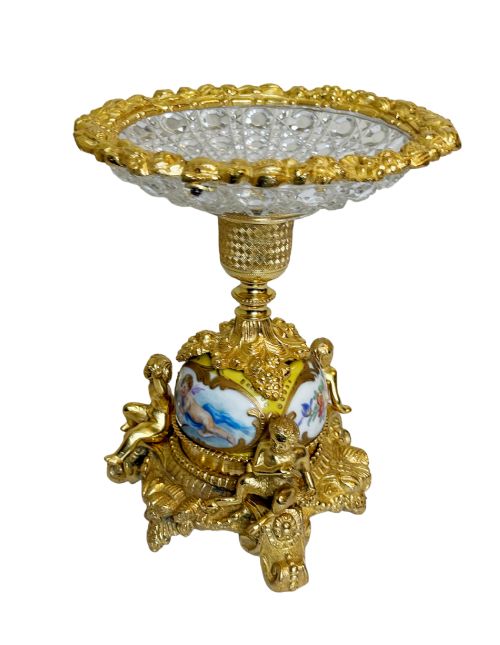
The definition and depth of the metal chasing separate standard production from superior examples. Finely finished cast cherubs, mermen and acanthus scrolls display crisp hand-chiselled details rather than soft, rounded edges from worn moulds.
The selection of secondary materials dictates overall calibre, with heavy marbles, solid onyx, rich malachite and thick cut crystal elevating a piece. Integrated elements like hand-painted Limoges plaques or intricate champleve enamel work indicate higher workshop standards.
Louis Pierre Malpass
The French Bronze Dish Glossary
- Ormolu
- Gilded bronze produced by applying a mercury and gold amalgam to a bronze base and heating it. This technique creates a durable, bright golden surface found on nineteenth century French mounts.
- Tazza
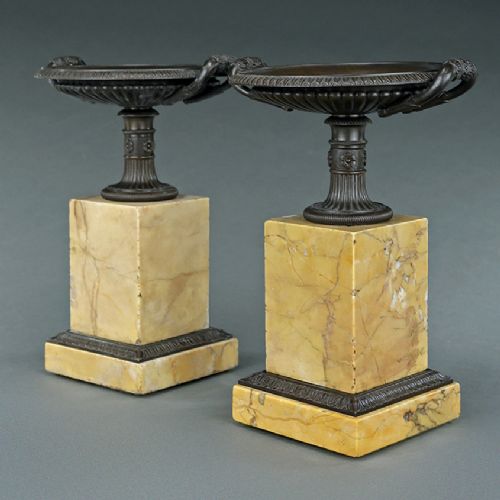
- A shallow ornamental bowl raised on a stem and foot. These vessels frequently feature cast bronze handles and marble bases.
- Champleve enamel
- A technique where troughs are dug into the surface of a metal object and filled with vitreous enamel powder before firing. The resulting coloured patterns decorate the bronze frames of nineteenth century trays and centrepieces.
- Vide poche
- A small tray or dish designed for emptying pockets of coins and keys. French examples often incorporate gilt bronze mounts and porcelain or enamel plaques.
- Comport
- A decorative stand or dish used for serving fruit or sweets at dessert. Victorian and nineteenth century versions pair cut glass bowls with bronze or ormolu pedestals.
French Bronze Dish: Frequently Asked Questions
What is a French bronze dish used for?
These vessels served as decorative centrepieces, fruit bowls or serving dishes on grand dining tables and sideboards. Smaller versions functioned as pin trays or vide poches for holding personal items in hallways and drawing rooms.
Today they operate primarily as decorative display objects. Their mixed materials and gilt surfaces add textural contrast and period character to modern interiors.
How do I date a 19th century tazza?
Dating relies on stylistic clues, casting methods and material combinations. Pieces reflecting strict symmetry and military motifs usually point to the earlier part of the century under Empire influence, while asymmetrical curves and naturalistic cherubs align with later Rococo revival periods.
The joining techniques also help establish age, as hand-threaded screws and heavy mercury gilding generally indicate earlier nineteenth century manufacture. Maker marks or workshop stamps hidden beneath mounts provide definitive chronological anchors.
What is the difference between bronze and ormolu?
Bronze is an alloy of copper and tin used as the structural metal base for these decorative items. It can be left with a dark patinated finish or polished to a warm metallic tone.
Ormolu specifically refers to bronze that has received a gold application, historically through mercury gilding. This gives the metal a distinct yellow-gold lustre that resists tarnishing over time.
How do I care for a gilt bronze centrepiece?
Clean gilt bronze and ormolu surfaces gently with a dry, soft microfibre cloth to remove dust. Avoid chemical polishes, abrasives or water, which can strip thin gilding or damage vulnerable enamelled and ceramic components.
If the dish incorporates cut crystal or porcelain inserts, remove them for separate washing with lukewarm soapy water. Ensure all parts are thoroughly dry before reassembling the object on its metal mount.