




French Decorative Tazza
A french decorative tazza brings classical proportion and elaborate metalwork to a table, offering a stately pedestal display for fruit or flowers.
French Decorative Tazza
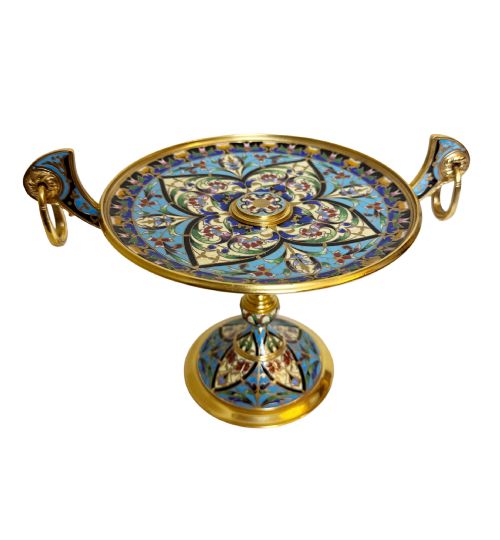
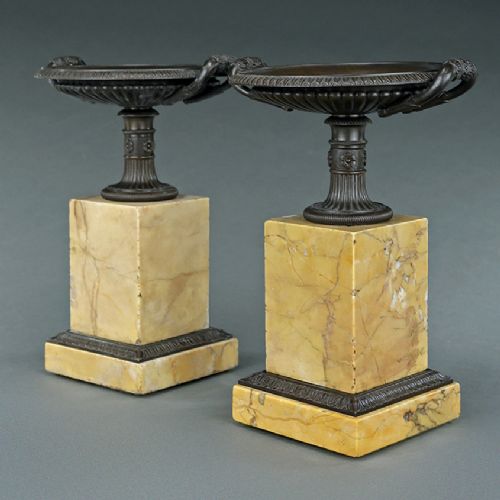
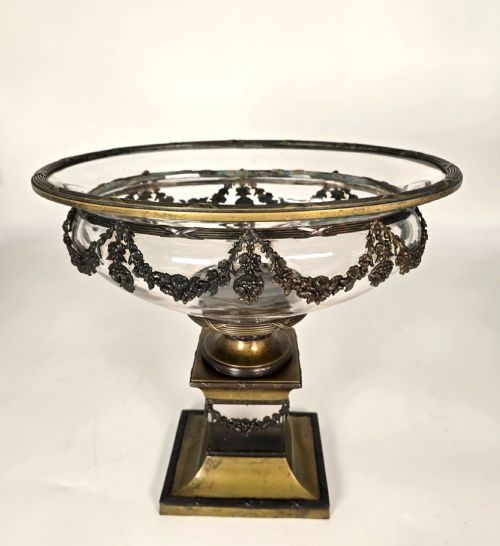
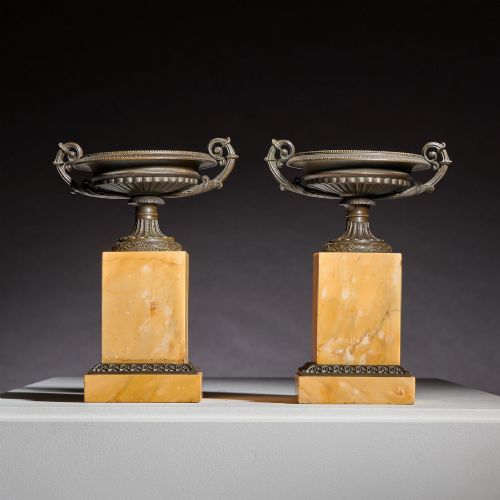
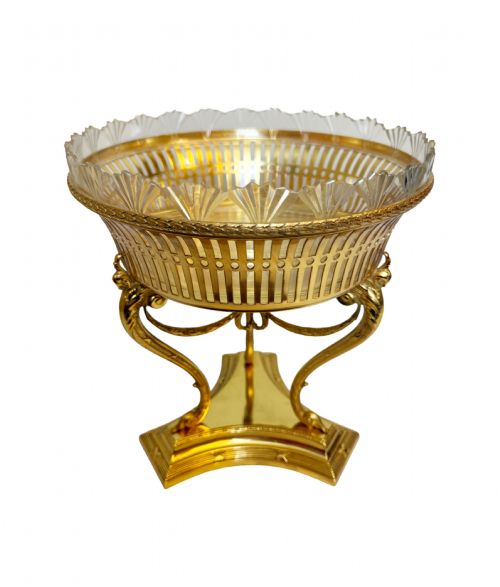
A french decorative tazza sits on a raised pedestal foot, presenting a shallow dish or bowl that functions as a centrepiece for a table or mantelpiece. These pieces appear frequently in 19th Century styles, ranging from Regency and French Empire to the later Belle Epoque and 1920s.
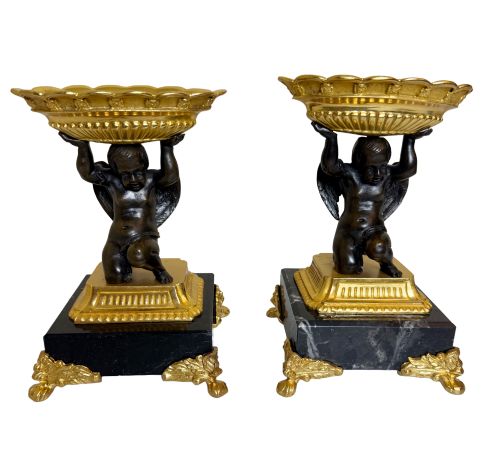
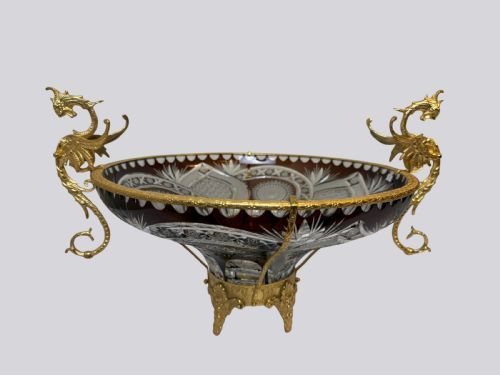
Makers shaped these items as circular dishes, footed trays, and centrepiece bowls flanked by figural mounts or winged cherubs. The selections span grand architectural designs and smaller cabinet pieces intended purely for visual display.
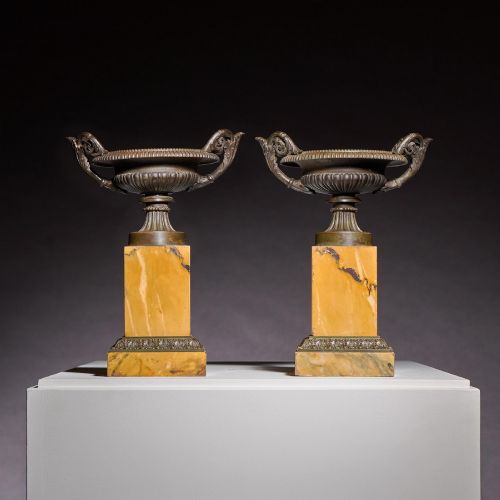
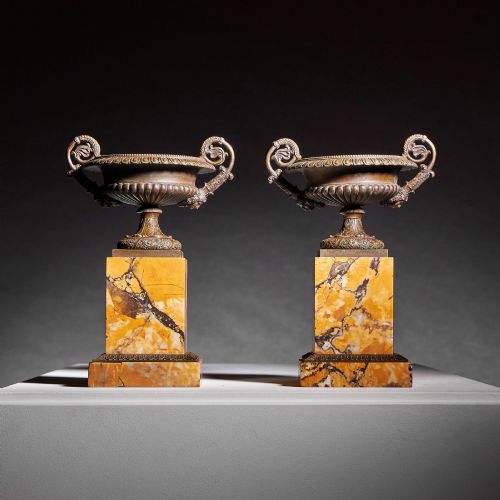
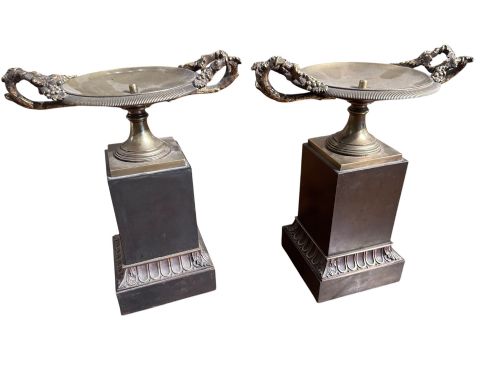
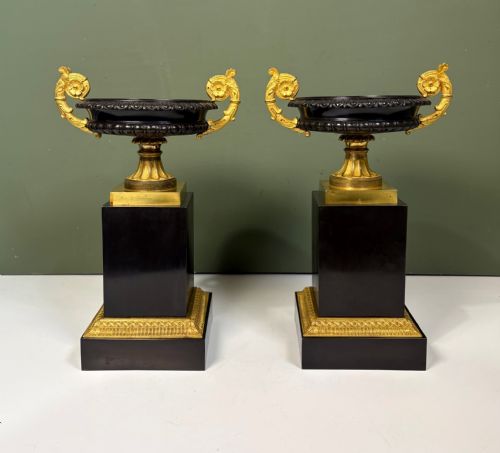
Originating predominantly from French workshops, the pieces often incorporate classical motifs borrowed from Neoclassical and French Rococo Revival traditions. Buyers encounter single items as well as matched pairs suited for symmetrical placement.
Materials and Construction
Foundry workers cast bronze, patinated bronze, and ormolu into intricate frames, mounts, and winged figures, frequently applying a layer of fine gold gilt. These metal structures support bowls made from hardstone, marble, onyx, and coloured glass.
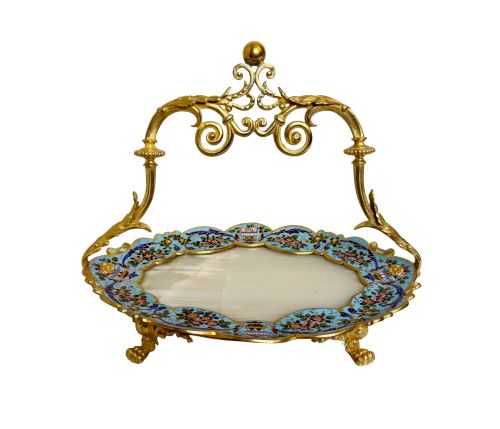
Enamelling techniques such as champlevé and Limoges application introduce vivid colour and patterned borders to the metal surfaces. Porcelains, including Sevres style pieces and mother-of-pearl dishes, are integrated directly into the bronze and ormolu mountings.
Winged cherubs and mermen frequently cling to the pedestals, gamely supporting heavy marble and glass bowls without a single complaint.
Craftsmanship and Detail
The precision of the bronze casting and the crispness of the chased detailing distinguish finer examples from simpler production. Superior pieces exhibit deeply articulated figures, such as mermen or cherubs, with hand-finished definition rather than soft, mass-produced contours.
The choice of supporting medium dictates the visual weight and stability of the piece, with dense Siena marble, green onyx, and hand-painted porcelain adding substantial heft. Expertly fired champlevé enamel work and flawless glass or malachite inserts elevate the overall harmony of the object.
Louis Pierre Malpass·Sevres
The French Decorative Tazza Glossary
- Tazza
- A shallow bowl or dish mounted on a stemmed foot for display. It serves as a decorative centrepiece on furniture.
- Ormolu
- Gilded bronze produced by applying a mercury-gilding process to cast brass or bronze. This technique creates a rich golden finish on mounts and decorative details.
- Champlevé
- An enamelling technique where troughs are dug into a metal surface and filled with vitreous enamel powder before firing. It creates coloured patterns bordered by thin lines of metal.
- Grand Tour
- A cultural journey undertaken by wealthy young Europeans to study classical antiquities. Objects acquired on these trips heavily influenced 19th-century French design.
- Comport
- A shallow dish or bowl raised on a pedestal, often used interchangeably with tazza. These vessels appear frequently in porcelain and glass.
French Decorative Tazza: Frequently Asked Questions
What is a french decorative tazza used for?
These elevated vessels serve as decorative centrepieces on dining tables, sideboards, and mantelpieces. Historically, they held fruit, sweetmeats, or flowers during formal meals.
Today, collectors use them to display mineral specimens, coloured glass, or simply as sculptural focal points in a room.
How do I date a 19th-century tazza?
Dating relies on examining the combination of materials, casting techniques, and stylistic revival periods. Pieces from the Regency and Empire eras favour strict classical motifs, while late 19th-century examples often embrace ornate champlevé enamel or Belle Epoque flourishes.
Support bases made of Siena marble or green onyx frequently point to specific decades of mid to late 19th-century production.
Are these pieces usually found as pairs?
Both single items and matched pairs appear in these collections. Pairs were originally manufactured for symmetrical placement on large dining tables or grand mantlepieces.
Single tazzas often functioned as standalone centrepieces or cabinet display items.
What materials make up the dish portion?
The shallow bowls incorporate a diverse array of media, including Sevres style porcelain, coloured glass, and mother-of-pearl. Some examples feature hardstones such as malachite and Blue John.
Others utilise polished marble or gilt bronze trays integrated directly into the metal frame.