




French Gilt Table Bowl
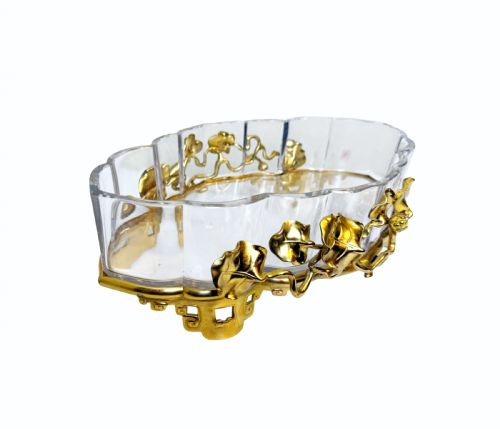
A french gilt table bowl brings rich metalwork and heavy glass to a dining room or salon, offering a striking centrepiece for formal rooms.
French Gilt Table Bowl
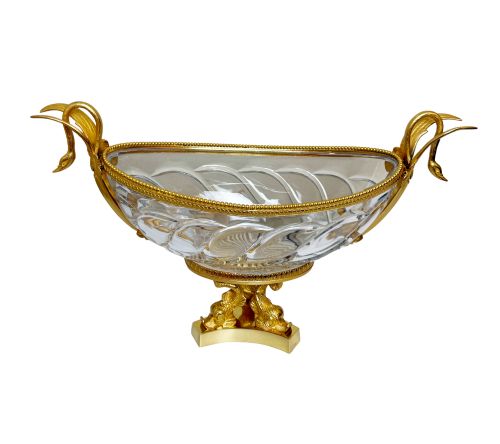
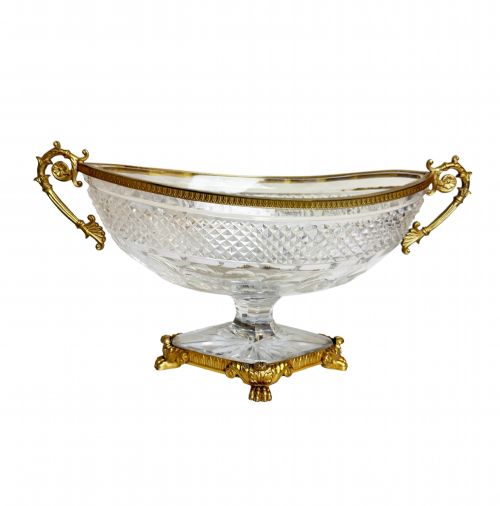
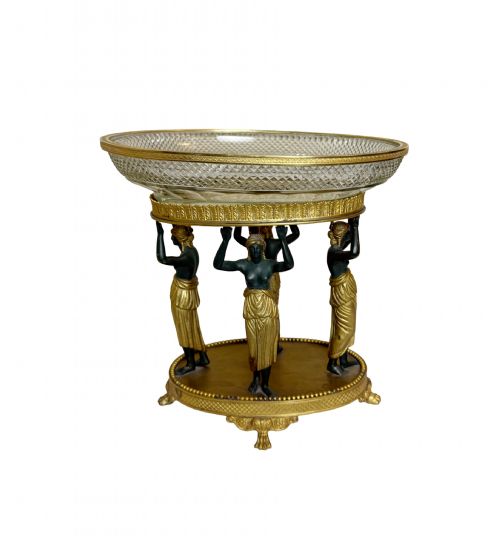
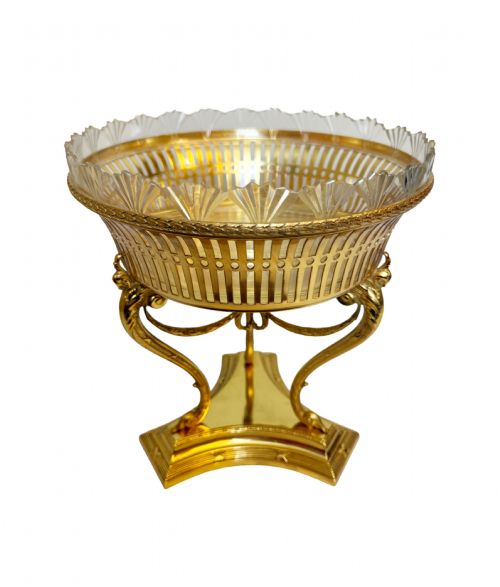
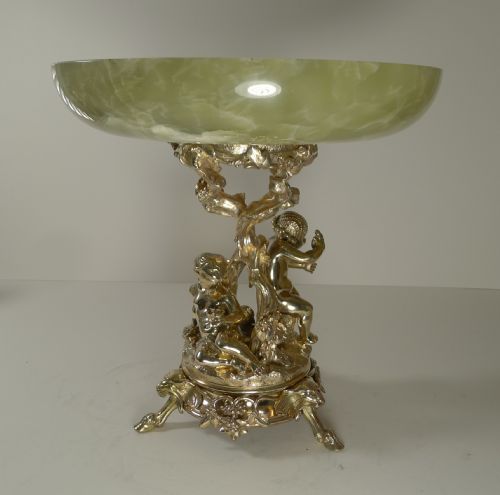
A french gilt table bowl takes several shapes across the inventory, appearing most often as a substantial centrepiece, tazza, or jardinier with a metallic frame. These objects emerge primarily from the nineteenth century, alongside a smaller number of eighteenth-century pieces and later works up to nineteen thirty.
Makers and workshops combine gilt bronze, ormolu, and silvered bronze with crystal, cut glass, porcelain, enamel, and onyx. The forms range from grand table centrepieces on stands to smaller salt cellars, powder bowls, and trinket boxes.
Stylistic influences span French Empire, French Rococo Revival, Neoclassical, Art Nouveau, and Belle Epoque designs. Buyers encounter everything from simple glass inserts within gilt frames to complex pieces featuring mermen figures or inset Limoges enamel plaques.
Craftsmanship and Detail
Quality separates through the sharpness of the bronze casting and the precision of the gilding applied to the mount. Finer pieces display crisp definition in figural elements like mermen and clean joints where metal meets glass or stone.
The choice of secondary materials marks another distinction, with cut crystal and hand-painted enamel plaques elevating the piece above simpler glass inserts. Heavier metal gauge and integrated porcelain or onyx elements indicate higher ambition in the original workshop.
Listings feature items spanning the eighteenth century through to nineteen thirty, with a strong concentration of nineteenth-century works.
Christofle Paris·Limoges·Samson
The French Gilt Table Bowl Glossary
- Ormolu
- Gilt bronze produced by applying a mercury and gold amalgam to a bronze base, creating a durable golden surface. This technique defines much of the decorative metalwork seen on nineteenth-century French pieces.
- Tazza
- An ornamental cup or shallow bowl raised on a stem and foot, often used for display on a table. These vessels appear in bronze, silvered metals, and porcelain.
- Jardiniere
- A decorative container designed to hold plants or floral arrangements, frequently fashioned from gilt bronze and glass. They serve as substantial table centrepieces in formal settings.
- Champleve enamel
- A technique where troughs are carved into the metal surface and filled with vitreous enamel before firing. This method adds colour and pattern directly to the bronze mounts.
- Comport
- A standing dish used for holding fruit or sweetmeats during a meal. They sit elevated on a base and often feature crystal bowls paired with gilt frames.
French Gilt Table Bowl: Frequently Asked Questions
What is a French gilt table bowl used for?
These pieces function primarily as decorative table centrepieces, comports, or jardinieres for display during formal meals. Smaller versions serve as trinket boxes, powder bowls, or salt cellars.
Historically, they occupied the middle of dining tables or sideboards to hold fruit, flowers, or small items. Today, collectors place them on side tables or mantels to highlight the metalwork and glass.
How do I tell nineteenth-century pieces apart?
Nineteenth-century items encompass distinct stylistic phases, moving from the strict symmetry of French Empire and Neoclassical designs to the ornate curves of Rococo Revival. Later nineteenth-century pieces often reflect Belle Epoque luxury or early Art Nouveau fluidity.
Examining the casting style, the weight of the bronze, and the combination of materials like onyx or champleve enamel helps distinguish the exact period of manufacture.
Are glass inserts original to these bowls?
Many items pair a cast gilt bronze or ormolu frame with a fitted crystal, cut glass, or porcelain insert. The fit and wear patterns between the metal mount and the glass vessel generally indicate their original pairing.
Replacement glass is common in older tableware, so inspecting the inner rim of the bronze frame for matching contact marks provides clues to its age.
How should I care for gilt bronze and ormolu?
Gilt bronze and ormolu require gentle dusting with a soft, dry cloth to prevent the accumulation of dirt in the recessed cast details. Avoid harsh chemical cleaners or abrasive polishes that can strip the gold surface.
Glass or crystal inserts can be removed and washed separately in lukewarm water with mild soap, provided they are dried completely before returning to the metal frame.