




Gold Ormolu Tazza
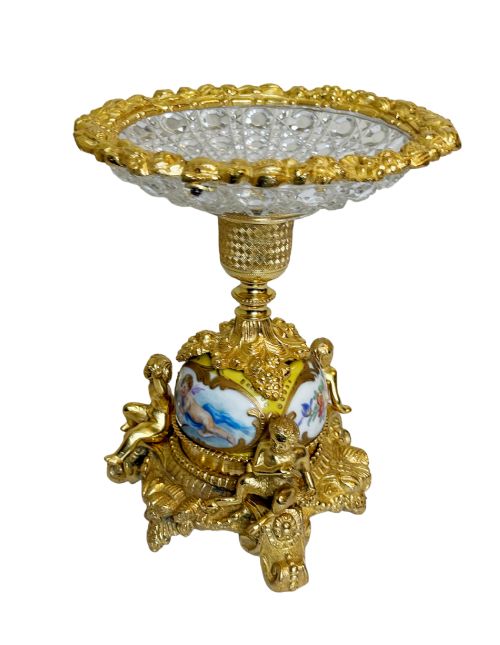
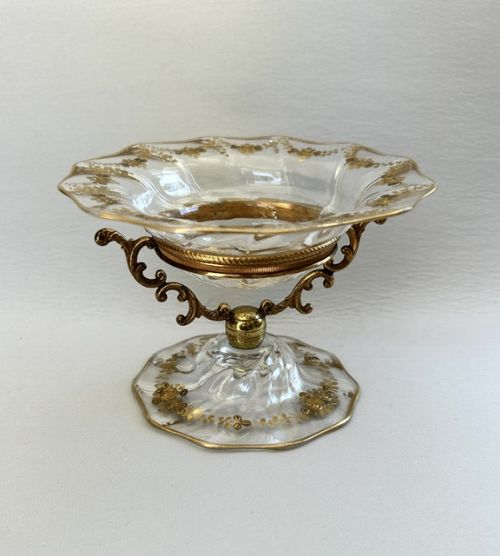
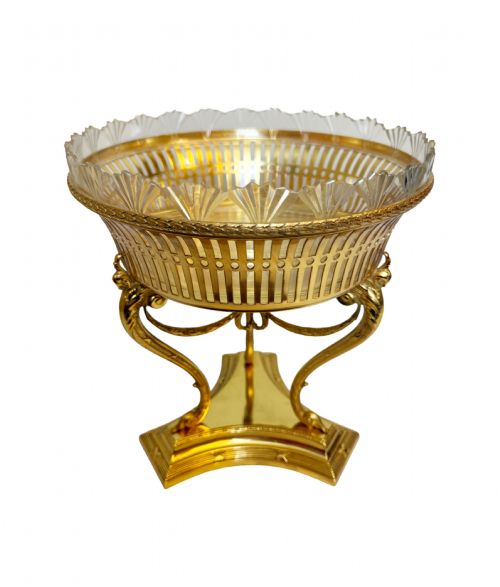
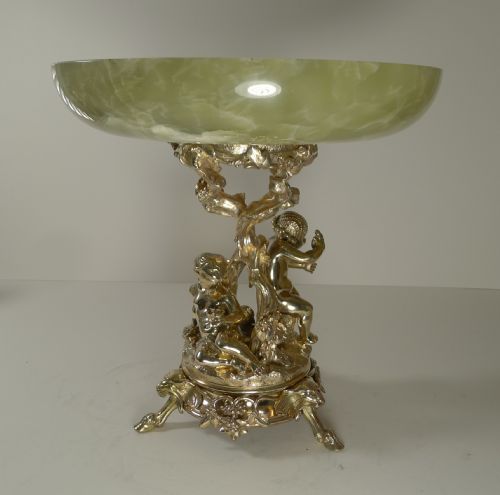
These gold ormolu tazza pieces bring heavy cast metal and glass together on the table, offering a centrepiece display of classic proportions.
Gold Ormolu Tazza
A gold ormolu tazza functions primarily as a centrepiece or decorative dish for the table, standing elevated on a decorative foot or mount. The form spans several distinct design movements including French Empire, Regency, and Rococo Revival, alongside Napoleon III and Japonisme interpretations.
Most examples found here date across the nineteenth century, ranging from eighteen hundred through to nineteen hundred, with periods such as eighteen eighty well represented. The upper bowl or insert is frequently paired with matching stands or matched sets of decorative tazzas.
Materials and construction methods
Makers shaped the structural framework using gilt bronze, ormolu, and gilt metal, casting figural elements like cherubs, mermen, and classical mounts with high precision. These metal mounts provide the rigid chassis that supports the display vessels.
Vessels and inserts utilise cut crystal, cut glass, porcelain, enamel, malachite, and Blue John, combining transparent and opaque media within the single piece. Enamel work such as Limoges plaques and Champlevé enamel add detailed colour panels to the gilded frames.
Watch for the occasional merman lurking in the gilt bronze mounts.
Quality and execution
The refinement of the cast metalwork marks the primary distinction in these items, particularly where figures like cherubs or mermen are integrated into the ormolu mounts. Sharper chisel work and deeper chasing on the gilt bronze elevate the overall presence of the object.
Material selection for the insert creates another tier of distinction, moving from standard cut glass up to specialist mineral stones like Malachite and Blue John, or signed porcelain inserts.
Christofle Paris·Louis Pierre Malpass
The Gold Ormolu Tazza Glossary
- Ormolu
- Gilded bronze produced by applying a mercury amalgam to a bronze base and heating it. This technique yields a distinct golden surface finish.
- Tazza
- A shallow ornamental bowl raised on a stem and foot. It serves as a centrepiece dish on dining tables or sideboards.
- Champlevé enamel
- A technique where troughs or cells are hollowed out of a metal surface and filled with vitreous enamel before firing. It creates vibrant coloured patterns within the metal frame.
Gold Ormolu Tazza: Frequently Asked Questions
What is a gold ormolu tazza used for?
These pieces functioned historically as centrepieces or decorative dishes placed centrally on dining tables and sideboards. They were designed to hold fruit, sweetmeats, or simply to display fine craftsmanship.
Today, they serve purely as decorative objects of display, suited to mantels, side tables, and cabinet interiors.
How do I identify a Regency period tazza?
Regency items often display distinct neoclassical lines, heavier architectural elements, and distinct motifs such as the Au Bon Sauvage design. They date to the early nineteenth century.
Later pieces from the eighteen eighties and nineties lean more toward Rococo Revival and Napoleon III styles with heavier casting.
What materials are combined with the ormolu?
The gilt bronze and ormolu mounts frequently house vessels made from cut crystal, cut glass, or Sevres porcelain. Some examples incorporate decorative stones like malachite and Blue John or Limoges enamel plaques.
These varied combinations of metal and glass or stone define the visual weight of each piece.
How should I clean a gilt bronze mount?
Gilt bronze and ormolu require gentle dusting with a soft dry cloth to prevent accumulation of grit. Avoid chemical polishes, as abrasive cleaners will strip the delicate fire gilding from the bronze surface.
Glass and crystal inserts may be removed and washed separately in warm soapy water before being fully dried.