


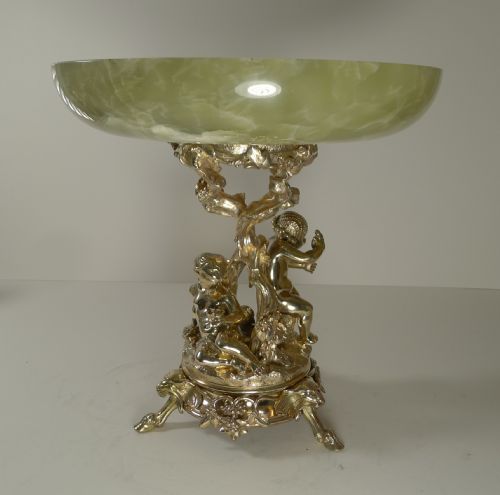

Napoleon III Tazza
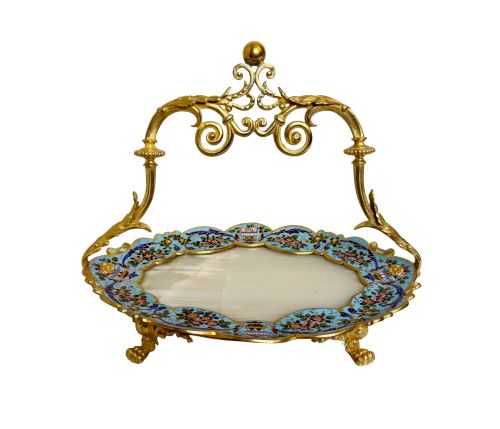
These napoleon iii tazza pieces combine gilded bronze, champleve enamel, onyx, and porcelain into striking centrepieces that anchor a formal room.
Napoleon III Tazza
A napoleon iii tazza represents the ornate decorative arts of nineteenth-century France, specifically the Second Empire and subsequent decades up to nineteen hundred. Buyers seeking a napoleon iii tazza encounter elevated pedestal bowls, centrepieces, and dishes designed for display on dining tables or sideboards.
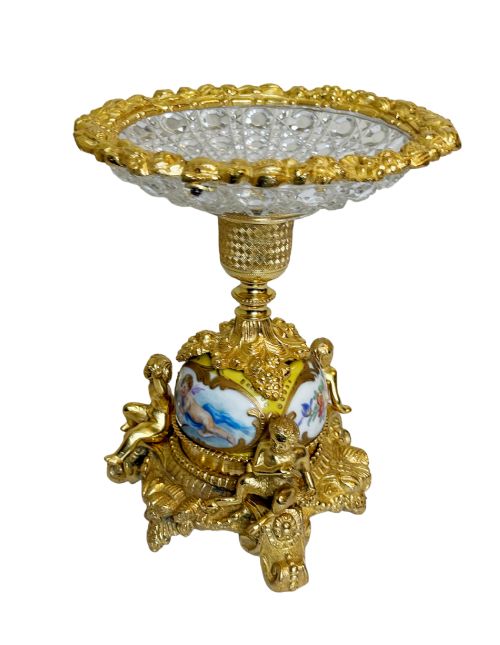
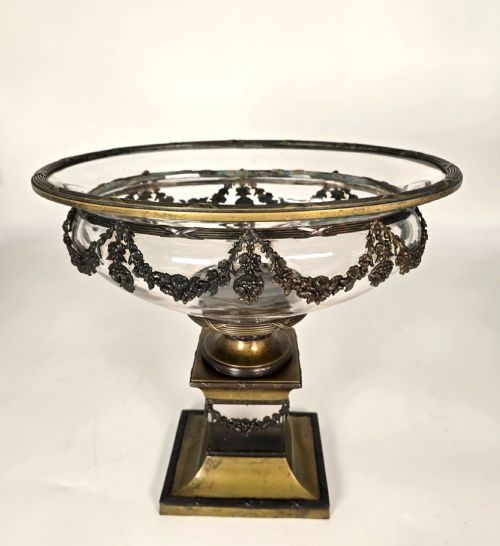
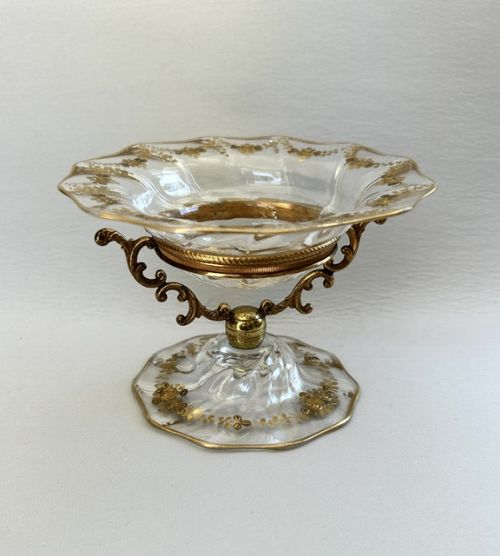
The selections on this page span the eighteen sixties to nineteen hundred, showing heavy influence from French Rococo Revival and chateau aesthetics. Forms include heavy bronze ormolu frames holding glass, green onyx, Sevres porcelain, or Limoges enamel plaques.
Most examples function as centrepiece bowls or comports rather than flat dishes, utilising vertical height and cast mounts. Gilt bronze and champleve enamel appear frequently across these nineteenth-century forms.
How they were made
Craftsmen utilised cast bronze, often fire-gilded to create the bright ormolu finish characteristic of the period. This metalwork forms the structural mounts, handles, and pedestals that support bowls of cut crystal, glass, or onyx.
Enamelling techniques, particularly champleve and Limoges plaque work, provide vibrant colour set directly into the metal frames. Sevres porcelain and green onyx were integrated into the bronze skeletons, requiring precision fitting by nineteenth-century metalworkers.
Materials appearing across these centrepieces include gilt bronze, champleve enamel, cut crystal, green onyx, Sevres porcelain, and Limoges enamel.
What varies in quality
Quality depends upon the crispness of the bronze casting and the depth of the gilding. Superior examples feature sharply defined figures, such as cherubs or mermen, hand-chased after casting to sharpen details.
The choice of bowl material also dictates the grade of the piece, with cut crystal, hand-painted Sevres porcelain, and solid green onyx representing higher ambitions than plain glass. Intricate champleve enamel work with multiple vibrant colours elevates a piece above simpler gilt bronze iterations.
Christofle Paris
The Napoleon III Tazza Glossary
- Tazza
- A shallow bowl on a pedestal, used historically for serving fruit or display. These nineteenth-century versions function primarily as decorative centrepieces.
- Ormolu
- Gilded bronze, where finely ground gold is applied to a bronze base using mercury. This technique creates a rich, lasting surface typical of French metalwork.
- Champleve enamel
- An enamelling technique where troughs are dug into the metal surface and filled with vitreous paste before firing. It creates vibrant patterns within the bronze mounts.
- Sevres porcelain
- Fine porcelain produced by the historic French state manufactory. Pieces mounted in these centrepieces often feature hand-painted details.
- Green Onyx
- A banded variety of chalcedony prized for its translucent green coloration. It provides a heavy, polished stone basin for bronze mounts.
Napoleon III Tazza: Frequently Asked Questions
What is a napoleon iii tazza?
A napoleon iii tazza is an ornamental pedestal dish or bowl created in France during the mid to late nineteenth century. These objects combine cast bronze, ormolu, enamel, and materials like glass or onyx for decorative display.
They reflect the opulent tastes of the Second Empire and subsequent decades, often featuring elaborate Rococo Revival motifs.
How were these centrepieces used?
Historically, these pieces served as decorative centrepieces on dining tables, often holding fruit, sweetmeats, or flowers during formal meals. They functioned as grand table ornaments rather than utilitarian kitchenware.
Over time, many transitioned to sideboards and mantelpieces simply to display their craftsmanship and costly materials.
How do I style a tazza at home?
Place a tazza in the centre of a large dining table, a heavy sideboard, or an open console where its vertical pedestal can draw the eye. Because many feature delicate enamel or cut crystal, keep them away from high-traffic edges where they might get knocked.
They work well as standalone sculptural objects without needing anything placed inside them.
How do I date a nineteenth-century tazza?
Dating relies on examining the combination of materials, casting quality, and stylistic markers such as French Rococo Revival details. Pieces from the eighteen sixties through the end of the century often display specific manufacturer signatures or typical champleve enamel patterns.
Comparing the patination of the bronze and the style of any mounted porcelain helps narrow down the decade of production.