

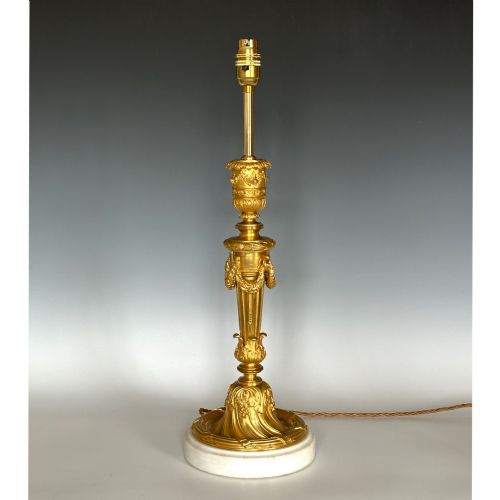

French Ormolu Table Lamp
A french ormolu table lamp brings warmth and ornate historical character to a room through gilded metal and classical styling.
French Ormolu Table Lamp
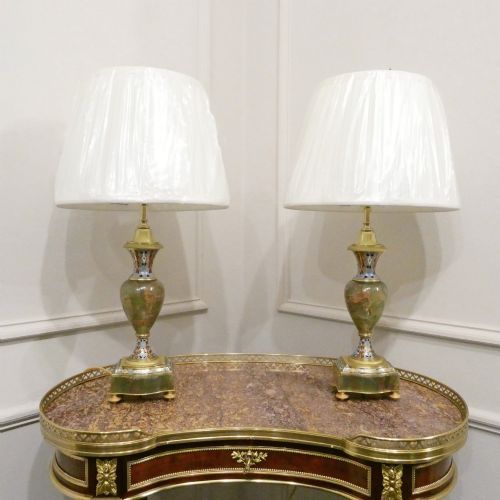
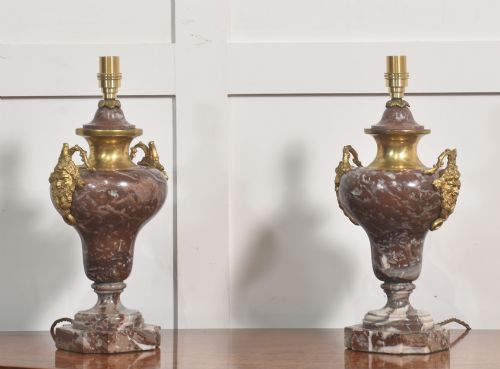
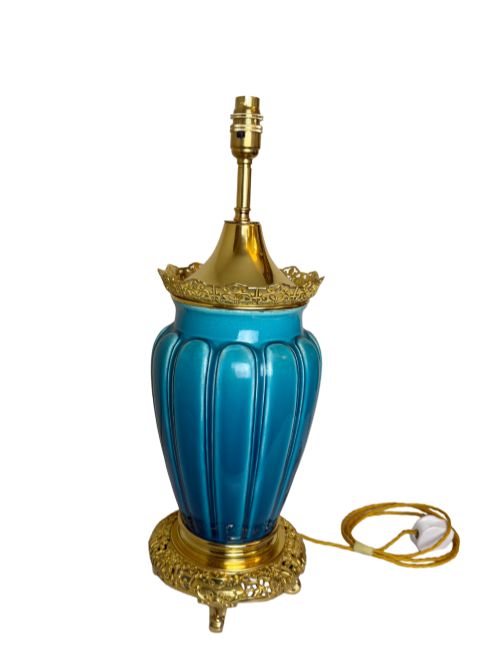
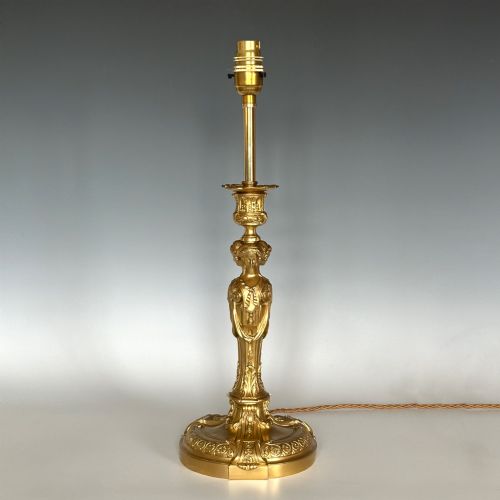
A french ormolu table lamp combines cast metal mounts with bodies of marble, porcelain, onyx, or crystal, originating largely across the nineteenth century.
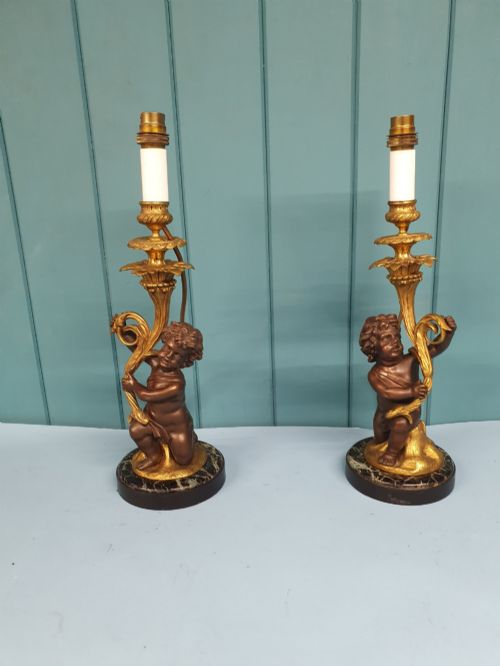
The aesthetic draws heavily on Louis XV, Louis XVI, and Empire styles, incorporating rococo scrolls, neoclassical columns, and cherub figures.
Many examples utilise converted vases, cassolettes, or urns mounted on heavy bases to serve as functional lighting fixtures.
How they were made
Ormolu work involves applying finely ground high-carat gold to a bronze or brass base through mercury amalgamation or electrogilding, creating a durable golden surface.
Casting often incorporates detailed figural elements like cherubs, floral motifs, or rams heads alongside structural columns and urns.
Makers integrated natural materials such as rouge marble, onyx, crystal, and imported porcelain bodies with the cast metal mounts.
French Ormolu Table Lamp Retail Price Guide 2026
Typical asking prices for french ormolu table lamp among the pieces listed under this phrase on Sellingantiques today, from the lower quarter to the upper quarter. They describe what is for sale here now, not the wider market.
Cherubs frequently perch on these bases, observing the room while holding up the weight of modern illumination.
What varies in quality
The crispness of the bronze chasing dictates the visual depth of the ornamentation, separating sharp hand-finished casting from softer production.
The selection of secondary materials, such as richly variegated marble or fine Sevres-style porcelain, determines the overall presence of the piece.
Cohesion between the period style of the mounts and the integrated body elements reflects the care taken in original assembly.
François Linke·Pierre-Jules Cavelier
The French Ormolu Table Lamp Glossary
- Ormolu
- Gilded bronze produced by applying a gold amalgam to a bronze base and heating it to drive off the mercury. This technique gives nineteenth-century French pieces their characteristic rich surface lustre.
- Cassolette
- A decorative vessel shaped like a vase or urn, frequently featuring a reversible lid that functions as a burner or display piece. These often form the bodies of converted table lamps.
- Champleve
- An enamelling technique where troughs or cells are carved into a metal surface and filled with vitreous enamel before firing. Pieces featuring this method display vibrant coloured patterns alongside metal trim.
- Marquetry
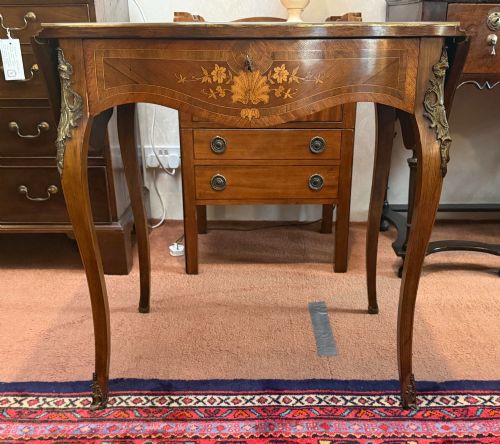
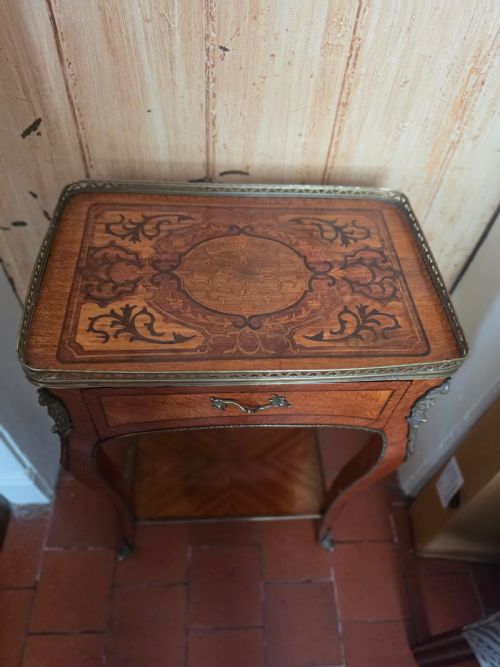
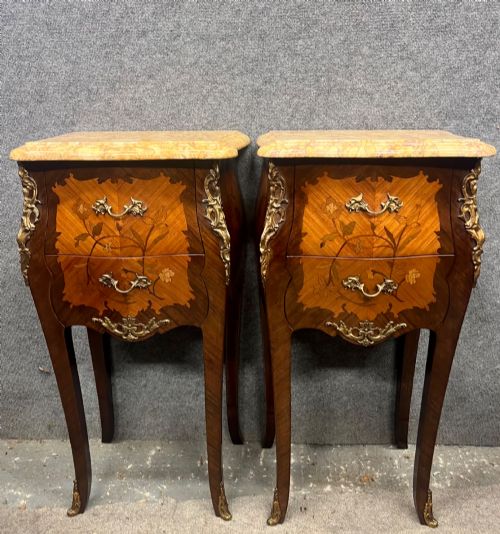
- The art of applying small pieces of veneer to a structure to form decorative patterns or pictures. This technique appears on companion pieces like bedside tables and occasional furniture.
- Neoclassical
- A style drawing inspiration from the classical art and culture of ancient Greece and Rome. It prioritises symmetry, straight architectural lines, and restrained ornamentation.
French Ormolu Table Lamp: Frequently Asked Questions
How do I date a french ormolu table lamp?
Dating relies on stylistic clues and material combinations, such as the heavy neoclassical columns typical of the early nineteenth century versus the lighter rococo revival forms of the later decades.
Examining the casting quality and the construction of the base hardware provides further context regarding the manufacturing period.
Are these lamps converted from older objects?
Many examples originate as decorative items like cassolettes, vases, or candelabra that were subsequently adapted for electrical wiring.
This practice preserves antique art objects by giving them a practical function in modern interiors.
What interior styles suit these lamps?
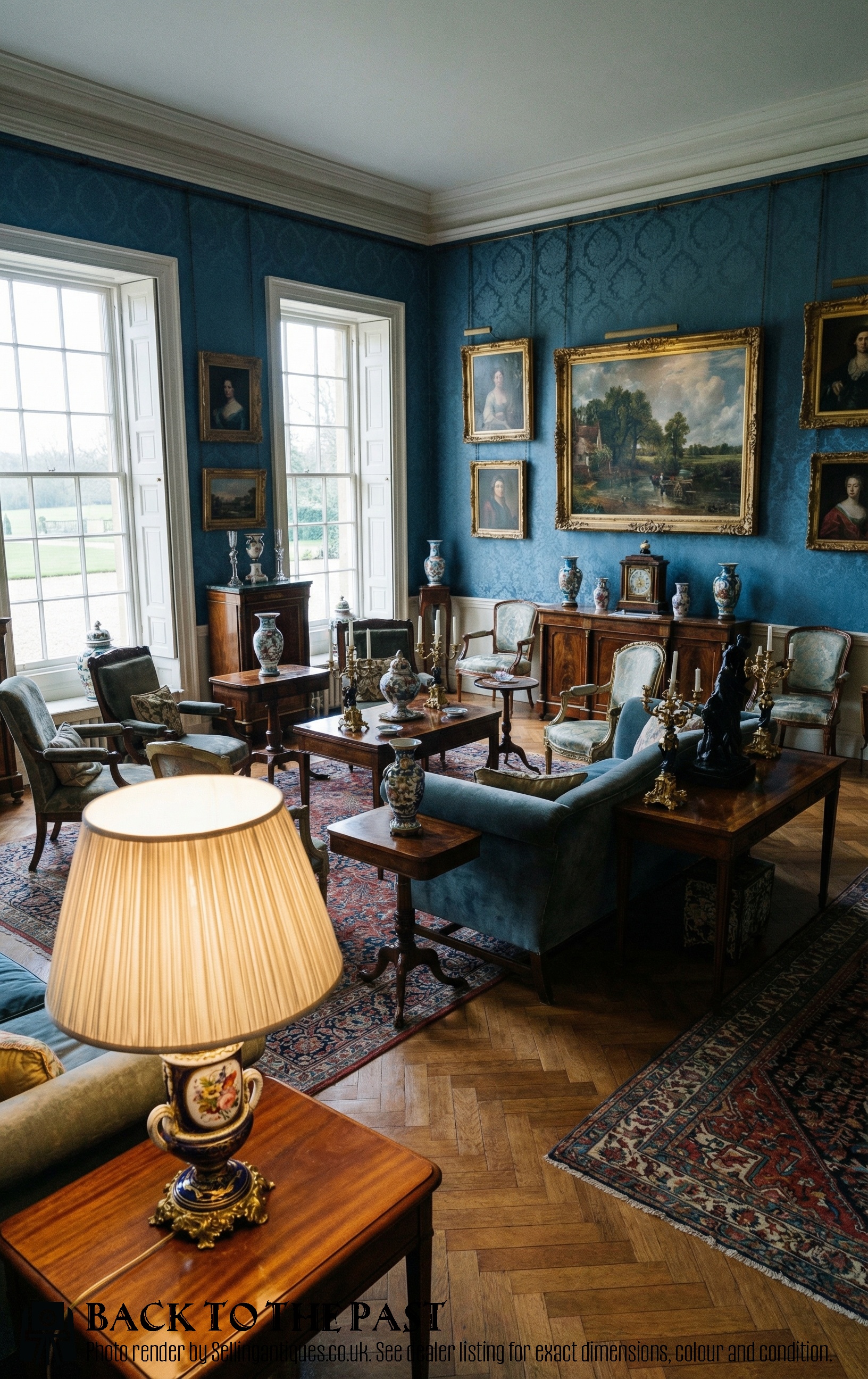
The ornate gilded bronze and marble details integrate naturally into traditional or maximalist settings that embrace historical design elements.
They also function as focal points in contemporary rooms by introducing texture and metallic contrast.
How should I clean ormolu metalwork?
Dusting gently with a soft, dry cloth is sufficient for routine maintenance to protect the delicate gold surface from wear.
Harsh chemical polishes must be avoided entirely because they strip away the historic gilding.