


Louis XVI Table Lamp
These pieces combine classical symmetry and rich metal mounts, bringing refined French design to interior lighting.
Louis XVI Table Lamp
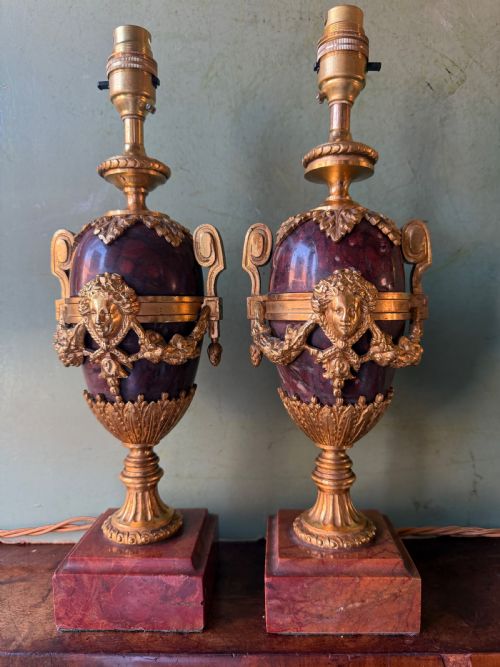
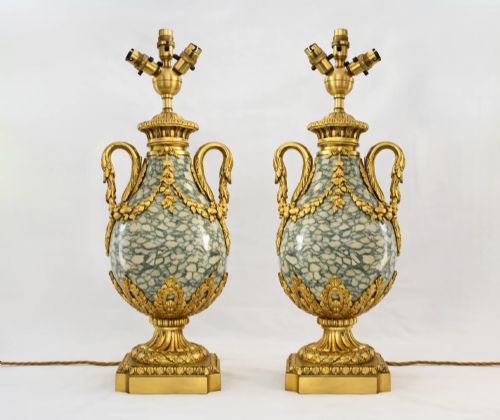
A louis xvi table lamp brings formal symmetry and classical architectural proportions to a room, drawing on the restrained ornament of late eighteenth-century France. The pieces seen here span the nineteenth and twentieth centuries, produced during revivals that favoured traditional forms and decorative vocabularies.
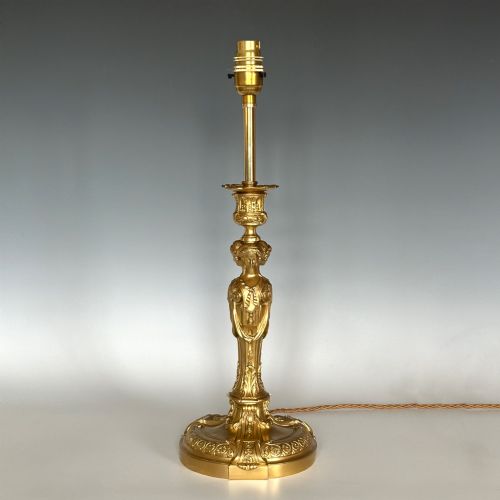
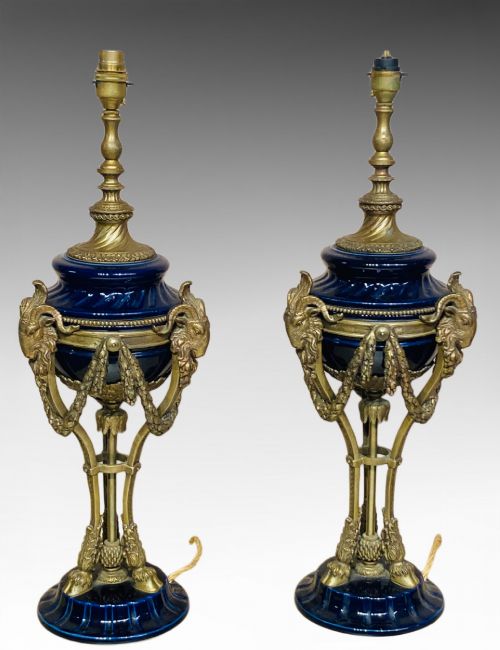
Buyers will most frequently meet examples fashioned from turned marble columns and cast metal mounts, alongside converted candelabra and cassolettes adapted for electricity. These lighting pieces reflect the enduring popularity of French Neoclassical design, often pairing heavy stone bases with detailed gilt bronze or ormolu enrichment.
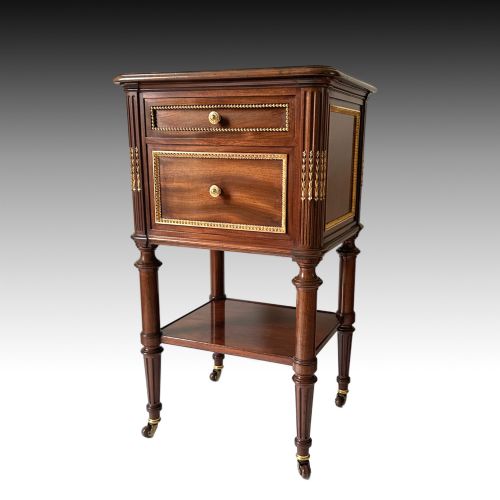
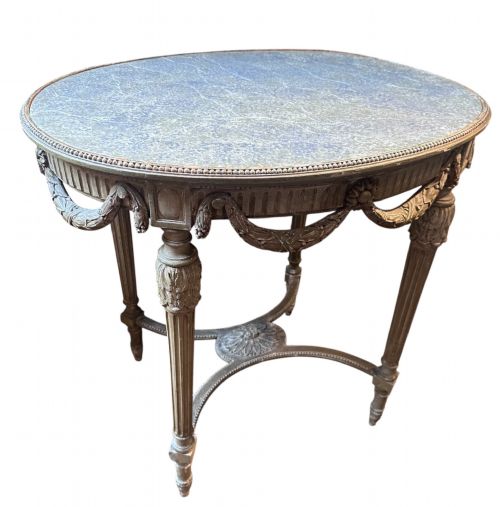
The selection also includes occasional furniture such as gueridons and side tables that frequently double as lamp surfaces, showing how closely lighting and support tables intersect in period interiors. Workshops across these decades reproduced the vocabulary of urns, swags, and fluted columns derived from the original Louis XVI period.
How they were made
Maker workshops combined heavy natural stones like rouge and green marble with cast copper alloys, applying mercury gilding or modern electroplating to create ormolu and gilt bronze mounts. Wood structures rely on mahogany, walnut, and satinwood, often enhanced with marquetry inlay or parquetry patterns.
Casting metal components required intricate hand-chasing after removal from the mould to sharpen floral motifs, acanthus leaves, and classical figures. Marble sections were lathe-turned and polished to a smooth finish, then fitted with precision-machined brass collars and candle-holders.
Several lamps double as cassolettes, meaning your lighting fixture could theoretically still double as a nineteenth-century incense burner.
What varies in quality
The crispness of the metal chasing separates standard production from superior examples, as deeper hand-tooling on ormolu mounts creates sharper definition in leaves and ribbons. Heavier gauge brass and thick marble or onyx sections provide structural stability and a substantial feel.
Proportion and balance dictate the visual success of the piece, with better examples maintaining harmonious relationships between the stone base, the central column, and the fabric shade. Original gilding and well-preserved patination on the bronze elements indicate careful historical survival without aggressive cleaning.
A Hugnet Paris·Haentgos Freres Paris·E Kahn
The Louis XVI Table Lamp Glossary
- Ormolu
- Gilded bronze produced by applying a mercury-gold amalgam to cast bronze and heating it until the mercury vaporised. This technique created a durable, deep golden surface characteristic of fine French decorative objects.
- Cassolette
- A decorative vessel with a reversible lid that functions either as a closed urn or an incense burner. In lighting adaptations, these stone and metal bodies are drilled and wired to serve as lamp bases.
- Guéridon
- A small, round table supported by a central column or a tripod of legs, originating in seventeenth-century France. These pieces frequently serve as stands for decorative lamps.
- Pate Sur Pate
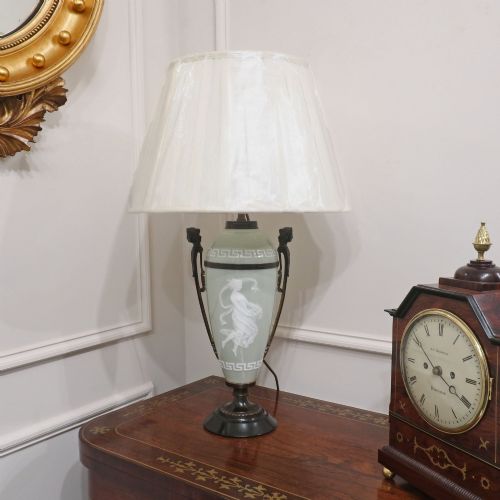
- A ceramic decoration technique where liquid clay is applied layer by layer to a contrasting body to create a low relief cameo effect. This method appears on porcelain lamp bodies.
- Bouillotte
- A traditional French card game table featuring a raised gallery edge, which inspired a specific style of single-light or multi-light lamp with an adjustable metal shade.
Louis XVI Table Lamp: Frequently Asked Questions
How do I wire an antique lamp?
Rewiring requires passing modern heat-resistant flex through the central channel of the lamp body, bypassing original weighted bases without altering the exterior metal or stone structure.
Qualified electricians should carry out this work to ensure the vintage ormolu or marble components remain undamaged during assembly.
What is the difference between ormolu and gilt bronze?
Ormolu specifically denotes objects gilded using the historical mercury-bronze amalgamation method, producing a distinct warm lustre that differs from modern electroplating.
Gilt bronze is a broader term encompassing any bronze object with a gold surface layer, regardless of the precise application technique used by the workshop.
Where should I place a gueridon lamp table?
These compact round tables suit corners or beside seating where a vertical column lamp adds height and directional illumination without occupying excessive floor space.
The marble tops provide a durable surface for drinks or books while anchoring the lighting fixture securely.
How do I date a nineteenth-century lamp base?
Dating relies on examining the assembly methods of the internal threaded rods, the composition of the bronze casting, and the wear patterns on the underside of the marble.
Stylistic cues also point to specific revival periods, such as the heavier neoclassical interpretations popular during the late nineteenth century.