
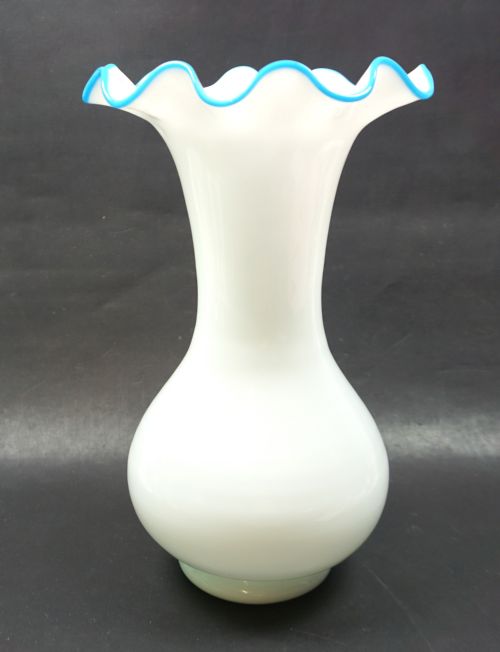


French Opaline Glass
French opaline glass brings translucent colour and tactile weight to domestic interiors through nineteenth-century vases, lamps and trinket boxes.
French Opaline Glass
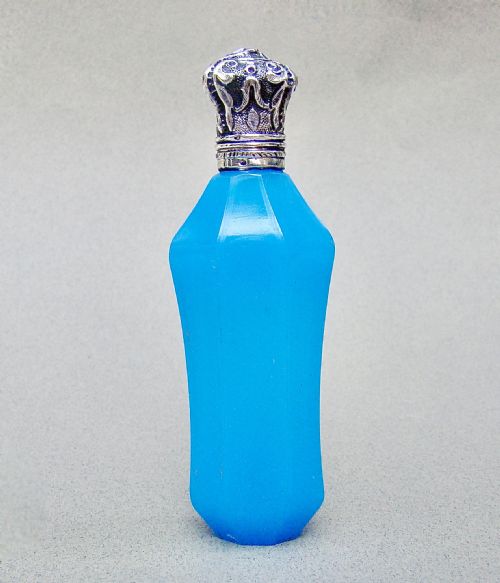
French opaline glass encompasses decorative objects created primarily during the nineteenth century, ranging from delicate scent bottles housed in gilt bronze caskets to robust table lamps and hanging pendant lights. Buyers searching for french opaline glass encounter items displaying characteristic dense, milky translucency in shades spanning turquoise, green, pink, yellow, blue and classic white. Forms frequently take practical or decorative shapes such as scallop shell dishes, table lustres, decanters and specimen vases.
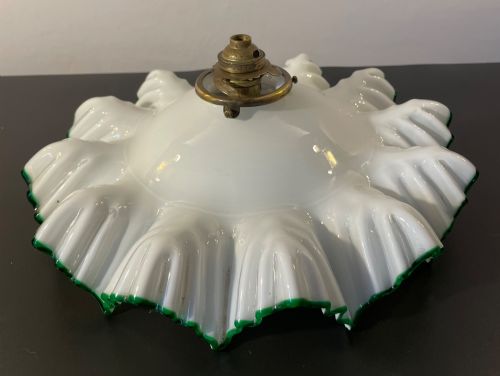
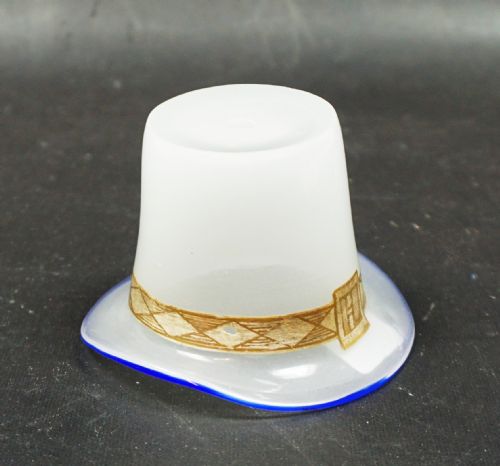
Vases and scent bottles often feature hand-painted floral motifs or raised enamel detailing alongside applied gilding, while lighting components include frilled lampshades and plafonniers. Production spans diverse design movements including Neoclassical, Victorian, Art Nouveau and Art Deco periods, reflecting shifting aesthetic preferences across French decorative arts. Many surviving pieces incorporate mounts of brass, ormolu, copper or silver, anchoring the delicate glass within substantial metal frameworks.
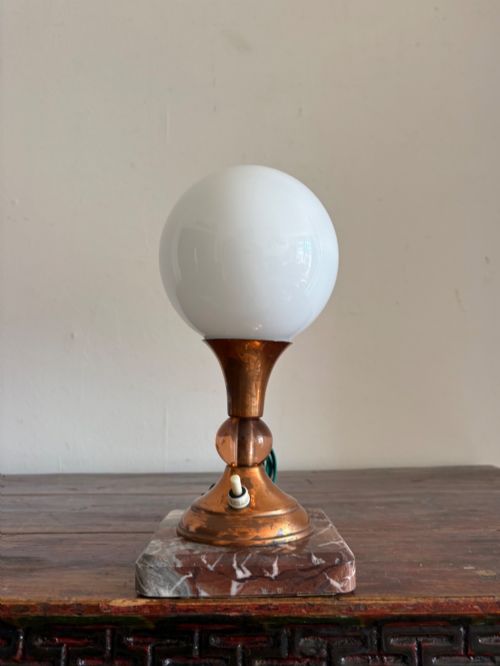
The material surface varies from smooth gloss finishes to frosted textures, occasionally paired with contrasting marble bases or granite elements. Smaller novelty items like egg-shaped trinket boxes designed for the Grand Tour market demonstrate the diverse utilitarian scope of the medium. Surviving examples reflect both domestic utility and cabinet display functions favoured by nineteenth-century collectors.
Materials and manufacture
Makers produced french opaline glass by adding bone ash, arsenic or other opacifying agents to the molten batch, creating the signature milky, semi-translucent body that diffuses light softly. Artisans shaped pieces by free-blowing or mould-blowing the glass before applying decorative elements such as enamel floral scenes, painted borders and gold leaf accents.
Metal components played a structural and decorative role, with workshops employing cast brass, gilt bronze, ormolu and silver mounts to frame scent bottles, support lamps or edge dishes. Craftsmen secured these mounts using collars, hinges and pins, frequently combining the glass with marble, granite or copper bases for stability.
The documented object forms include table lamps, scent bottles, scallop shell dishes, decanters, and hanging pendant lights.
Assessing quality and execution
Quality in french opaline glass rests upon the purity and even density of the glass body, alongside the crispness of any moulded or free-blown contours. Superior examples display uniform colouration without excessive bubbles or striations, paired with finely executed hand-painted enamel work and securely fitted metal mounts.
The refinement of ancillary materials distinguishes finer pieces, such as heavily chased ormolu mounts, delicate gilt bronze framing, and precise hand-gilding rather than mass-applied transfer decoration. Weight, balance, and the harmonious integration of metal hardware with the glass vessel indicate higher workshop standards.
Baccarat·Portieux Vallerysthal·Perry And Co·Jean Francois Robert
The French Opaline Glass Glossary
- Opaline glass
- A semi-translucent glass type developed in France, prized for its milky appearance and range of pastel or saturated colours.
- Ormolu
- Finely ground high-carat gold applied to a bronze base, commonly used for mounts on nineteenth-century caskets and scent bottles.
- Table lustre
- A decorative glass vase hung with cut glass prisms, designed to reflect candlelight on dining tables and mantelpieces.
- Plafonnier
- A ceiling-mounted bowl light shade made of frosted or opaline glass, frequently paired with metal hanging hardware.
- Grand Tour
- Souvenir items purchased by nineteenth-century travellers in Europe, often taking the form of miniature boxes and painted glass bottles.
French Opaline Glass: Frequently Asked Questions
How do I clean opaline glass?
Wash pieces gently in warm water using mild soap, avoiding abrasive sponges or harsh chemical cleaners that might damage surface gilding and enamel work.
Dry items immediately with a soft cloth to prevent water spots, and take care around delicate brass or ormolu mounts.
Were these items used daily?
Many pieces served practical functions on dressing tables, desks and dining rooms, holding perfumes, trinkets or illuminating domestic spaces.
Finer decorative items and Palais Royal souvenirs were primarily intended for display in cabinets or boudoirs rather than heavy utilitarian service.
How can I date french opaline glass?
Dating relies on stylistic indicators, manufacturing techniques, and the design of associated metal mounts, which shifted from Neoclassical and Victorian aesthetics toward Art Nouveau and Art Deco.
Nineteenth-century examples frequently feature hand-painted details and heavy ormolu fittings, whereas twentieth-century items often adopt simpler industrial or geometric profiles.
Can antique opaline lamps be rewired?
Lamps and pendant lights can generally be fitted with modern wiring by a qualified professional to meet current safety standards.
Original brass or bronze components should be retained and preserved during any restoration work to maintain the integrity of the piece.