
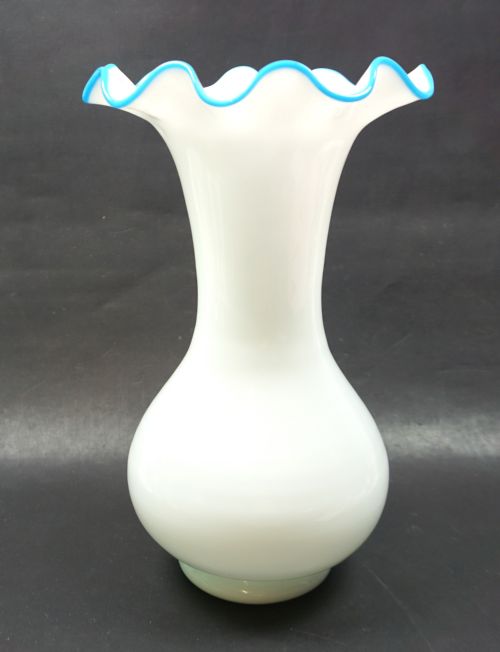


White Glass Vase
When you search for a white glass vase, you encounter Victorian opaline, French table lustres, and moulded mid-century creations.
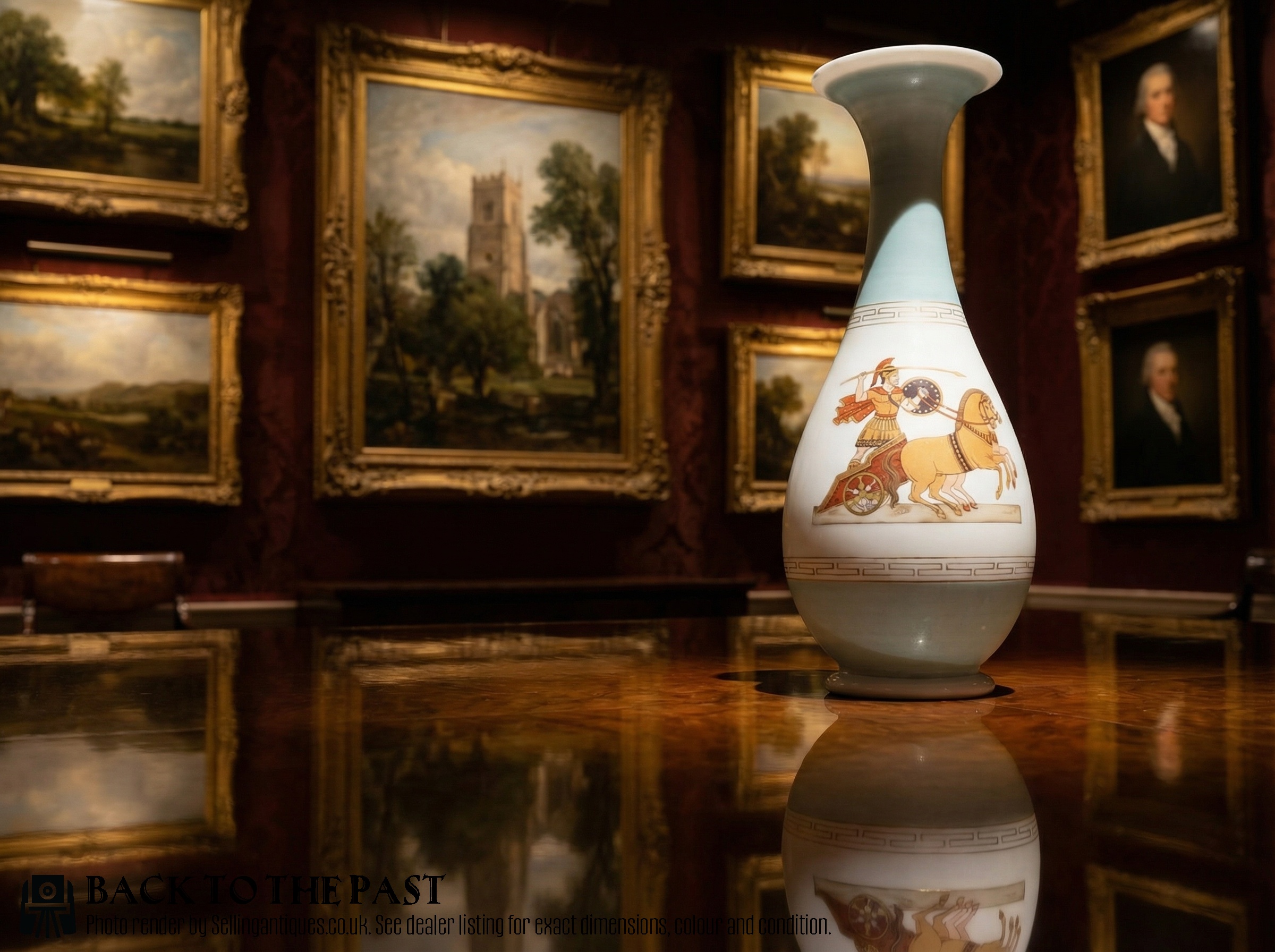
White Glass Vase
A white glass vase encompasses nineteenth-century opaline vessels, mid-century moulded designs, and Victorian mantel lustres intended for domestic display. Buyers examining this page will frequently discover nineteenth-century French and English opaline glass alongside twentieth-century opalescent examples.
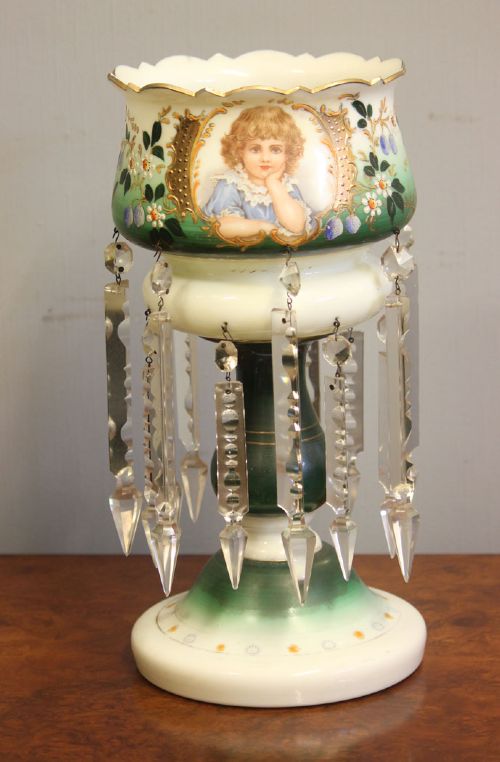
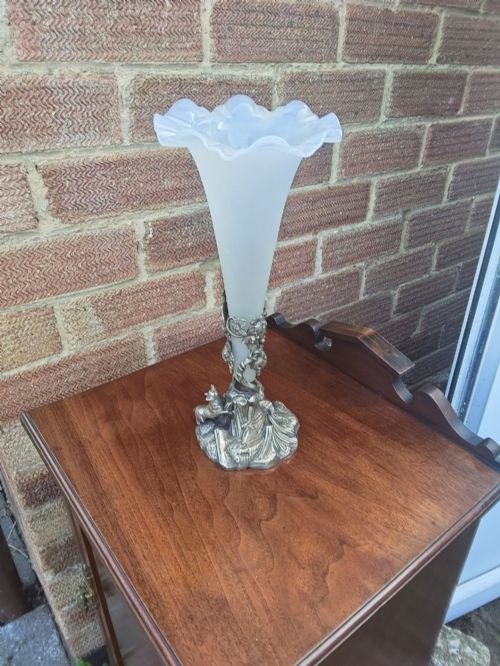
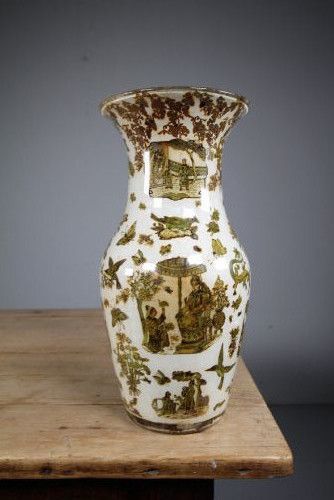
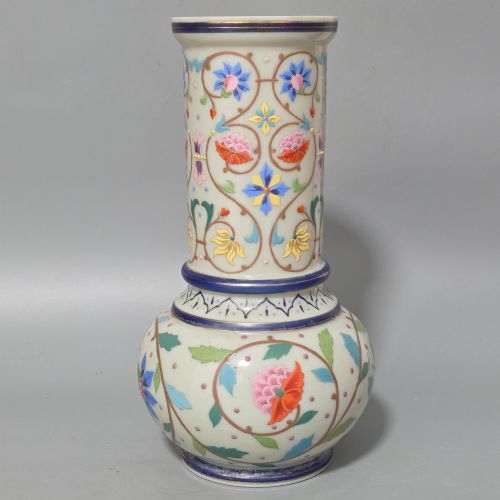
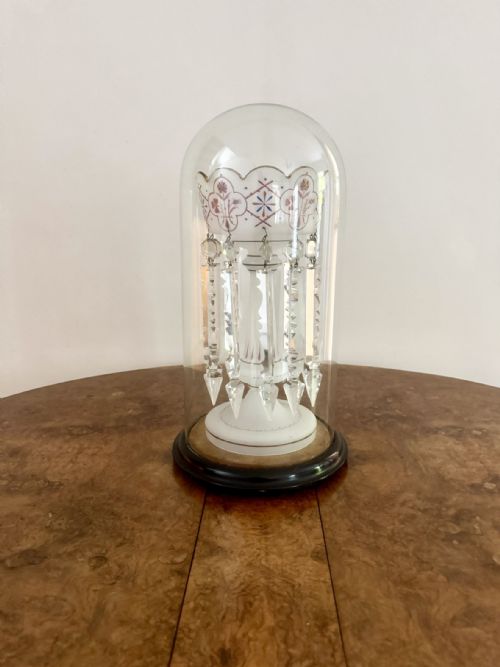
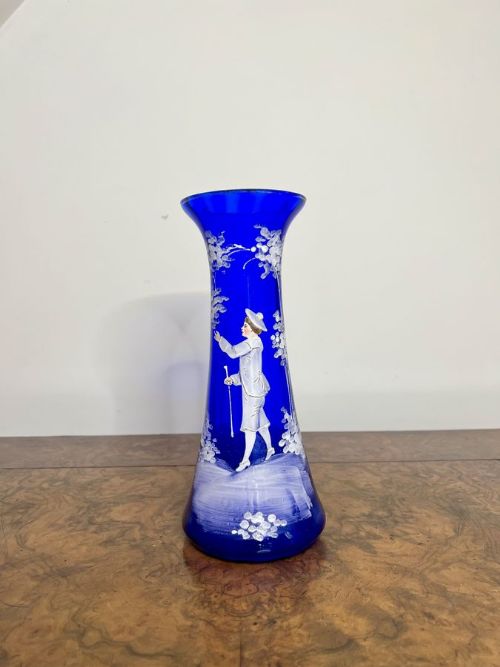
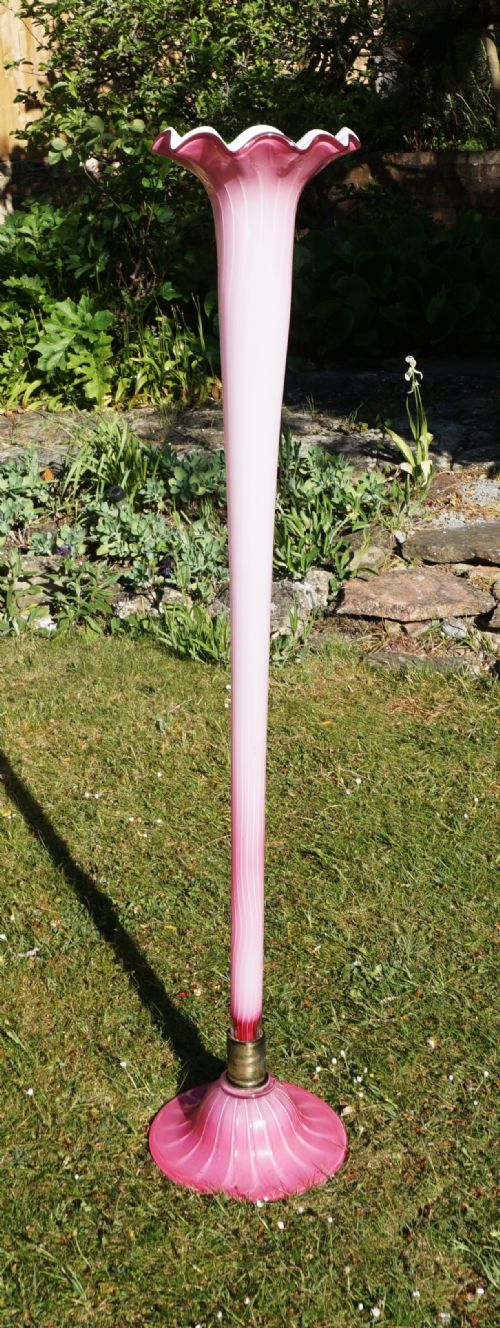
The selection ranges from tall lily vases and bulbous vessels painted with enamel flowers to pairs of gilt-decorated mantel lustres hung with glass prisms. Forms vary from simple ovoid shapes to handkerchief vessels and classical Grecian silhouettes.
Originating predominantly from English, French, and Bohemian workshops, these decorative objects reflect both utilitarian mantelpiece decoration and high artistic achievement in glassmaking.
How they were made
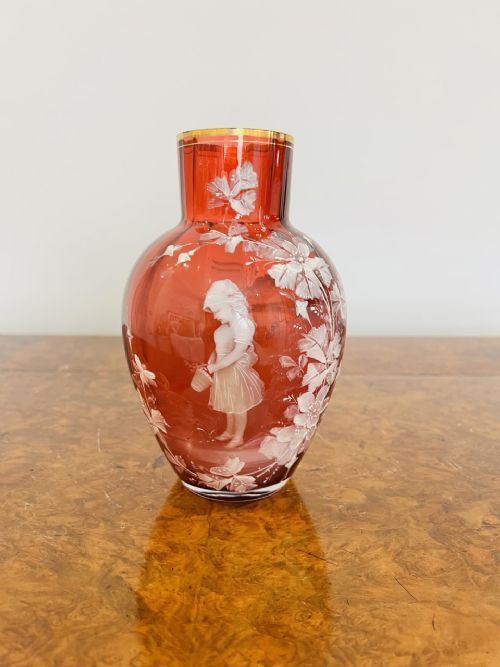
Many pieces utilise opaline or opaque white glass, often blown into moulds or shaped by hand to create smooth, milky surfaces. Makers frequently applied enamel painting, gold leaf, and delicate gilt highlights over the finished glass body.
Some examples employ cased glass techniques, fusing layers of coloured and white glass together before cutting or etching the outer surface. Advanced pieces incorporate applied canes, trailing, or overlay methods to build depth and tactile contrast.
Listings span nineteenth-century opaline, Victorian mantel lustres, Art Deco opalescent pieces, and mid-century glass forms.
What varies in quality
Quality rests in the purity of the glass matrix, the crispness of any applied moulding, and the refinement of hand-painted enamel or gilding. Superior examples display balanced proportions, clean pontil marks, and precise brushwork on floral or classical motifs.
The sophistication of the design and the reputation of the house, whether Baccarat, Loetz, or Lalique, elevate certain vessels above standard decorative wares. Heavier cased walls and intricate surface treatments separate exceptional studio pieces from mass-produced items.
Thomas Webb·Baccarat·Fulvio Bianconi for Venini·Rene Lalique·Loetz·Whitefriars
The White Glass Vase Glossary
- Opaline glass
- An opaque or translucent pale glass, frequently white, developed in nineteenth-century France to mimic porcelain. It provides a smooth matte or glossy ground for enamel painting and gilding.
- Mantel lustre
- A decorative table ornament featuring a central vase fitted with a ring of hanging glass prisms or lustres. These pieces caught the flicker of candlelight in Victorian parlours.
- Cased glass
- A method where a vessel is formed from two or more distinct layers of glass, often different colours. The outer layer can be cut away to reveal the contrasting glass beneath.
- Opalescent glass
- A type of glass that appears milky-white with shifting blue or amber tones when lit from certain angles. It gained immense popularity during the Art Deco period through makers like Rene Lalique.
- Enamel
- A durable vitreous composition fused to the surface of the glass through firing. It allowed makers to apply raised colourful floral or figurative scenes onto white glass grounds.
White Glass Vase: Frequently Asked Questions
What is opaline glass?
Opaline glass is a heavy, translucent or opaque material developed during the nineteenth century, particularly in France. It was prized for its milky appearance, which successfully imitated porcelain while retaining the smooth touch of glass.
Artisans frequently used this white surface as a canvas for hand-painted floral enamels and rich gilt decorations. These vessels served primarily as decorative garnitures and mantel ornaments in period homes.
Are mantel lustres the same as vases?
Mantel lustres incorporate a central vase body but feature an attached rim fitted with glass pendants or prisms. They were designed to hang in matched pairs on nineteenth-century mantelpieces to reflect ambient light.
While they can hold small floral arrangements, their primary function was decorative display rather than utility. Standard vases lack the hanging crystal prisms characteristic of lustres.
How can I tell nineteenth-century glass from later pieces?
Nineteenth-century glass often exhibits hand-finished characteristics such as polished pontil marks on the base and slight irregularities in thickness. The enamel work and gilding on Victorian pieces display organic brushstrokes unique to individual hands.
Twentieth-century studio glass and Art Deco moulded pieces carry different stylistic markers, sharper mould seams, or distinct signatures. Examining the weight, wear patterns on the base, and decorative style helps clarify the period.