



English Glass Urn
These English glass urn and vase forms bring weight, colour and texture to a room, ranging from Georgian cut crystal to Victorian cameo work.
English Glass Urn
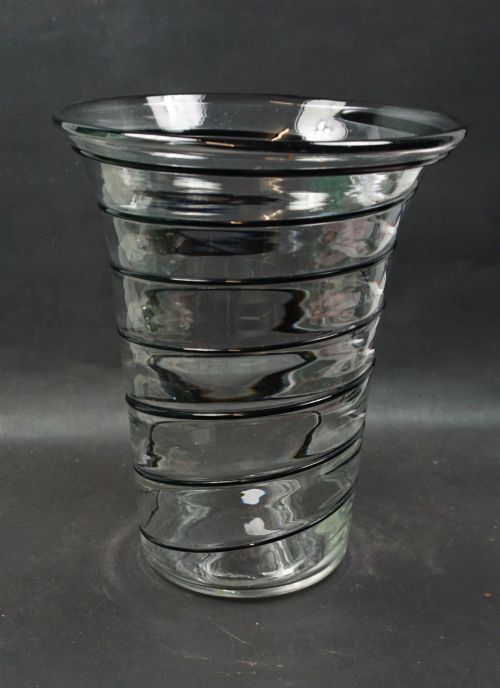
When you search for an english glass urn, you encounter vessels that bridge ornamental display and practical function, spanning the Georgian, Victorian and Art Deco eras. The pieces appearing here encompass pedestal bowls, heavy amethyst and blue satin vessels, alongside double-walled creations.
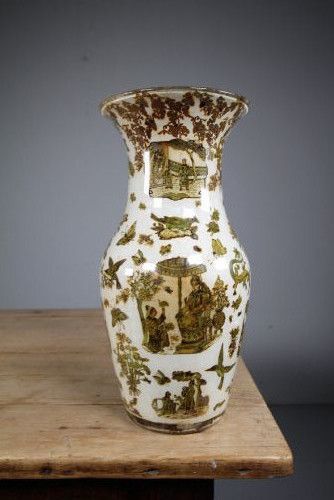
You are most likely to meet Victorian and 19th-century examples on this page, including decalcomania vases and cameo glass. The selection draws on Georgian and Regency cut crystal as well as mid-century studio output, reflecting diverse stylistic shifts from Chinoiserie and Aesthetic Movement to classical scenes.
How they were made
Makers shaped these vessels using traditional blowing and cutting techniques, often incorporating layered glass to achieve deep colour saturation in shades of green, blue and amethyst. Methods such as cameo carving require precise removal of outer casing layers to reveal contrasting backgrounds.
Decoration extended beyond simple moulding into surface treatments like enamelling, gilding and internal decalcomania paper transfers. Workshops also employed specialised finishes like silvering and vitrified painting to build complex visual depth across the glass surface.
English Glass Urn Retail Price Guide 2026
Typical asking prices for english glass urn among the pieces listed under this phrase on Sellingantiques today, from the lower quarter to the upper quarter. They describe what is for sale here now, not the wider market.
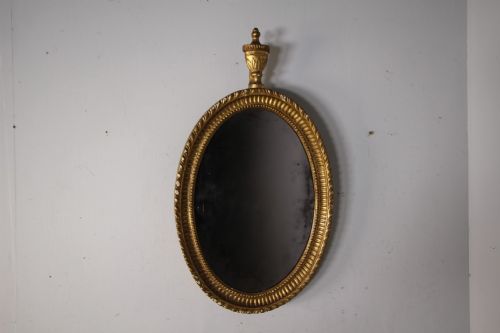
Listings feature items spanning the 18th century through the 1930s, utilising materials such as glass, gesso, giltwood and silvered glass.
What varies in quality
Quality rests in the crispness of the cut or carved detail, the purity of the metal or glass body, and the ambition of the decorative scheme. Pieces bearing distinct signatures or attributed to prominent makers demonstrate a higher command of material and design.
The sophistication of the colour layering and the preservation of delicate surface applications, such as giltwork and enamel, dictate the standing of an individual piece. Heavier, substantial forms with balanced proportions separate standard production items from exceptional workshop outputs.
Thomas Webb and Sons·Richardson·Graystan
The English Glass Urn Glossary
- Cameo glass
- A vessel formed of two or more distinct layers of fused glass of different colours, where the outer layer is carved away to leave a raised design. This technique demands exceptional skill from the glassmaker to maintain even depths.
- Decalcomania
- A process of transferring printed designs from paper to the interior or exterior of glass surfaces, popular during the nineteenth century. The resulting decoration mimics hand painting through layered imagery.
- Vitrified glass
- Glass treated with enamel colours fused to the surface through high-temperature firing. This method ensures the pigment becomes a permanent part of the material.
- Cut crystal
- High-clarity glass shaped and patterned through abrasive wheel cutting, producing deep geometric or floral facets. The process enhances the material's natural refractive qualities.
English Glass Urn: Frequently Asked Questions
What is an english glass urn?
An english glass urn is a decorative vessel made in England, taking various forms from nineteenth-century decalcomania vases to twentieth-century pedestal bowls. These items utilise diverse techniques including cameo carving, enamelling and heavy cutting.
They serve primarily as decorative objects for display on mantelpieces, tables or cabinets. Their physical presence relies on substantial weight and rich coloration.
How do I date an antique glass vessel?
Dating relies on examining the manufacturing technique, pontil mark, style of decoration and material composition. Georgian and Regency pieces often feature heavy cut crystal, while Victorian examples introduce satin glass, decalcomania and cameo work.
Signatures, registry marks and known workshop patterns provide further chronological anchors. Comparing the depth of colour and surface finish against documented pieces helps narrow the production period.
Where were these glass urns displayed?
Historically, these vessels occupied prominent spaces in domestic interiors, such as drawing rooms, libraries and dining parlours. They functioned as centrepieces on tables or as decorative accents on mantelpieces.
Their substantial weight and striking colour palettes made them focal points in Victorian and Edwardian room schemes. Today, they continue to serve similar ornamental roles in contemporary interiors.