
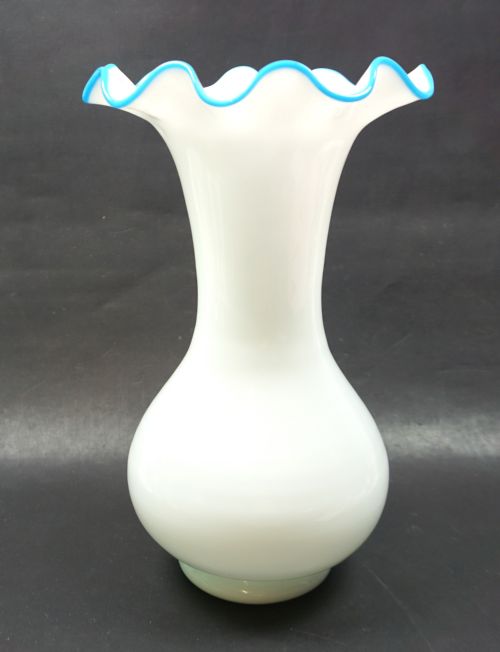


Crimped Rim Vase
A crimped rim vase brings distinctive ruffled silhouettes to a room, offering rich tactile appeal through folded glass and decorated ceramic forms.
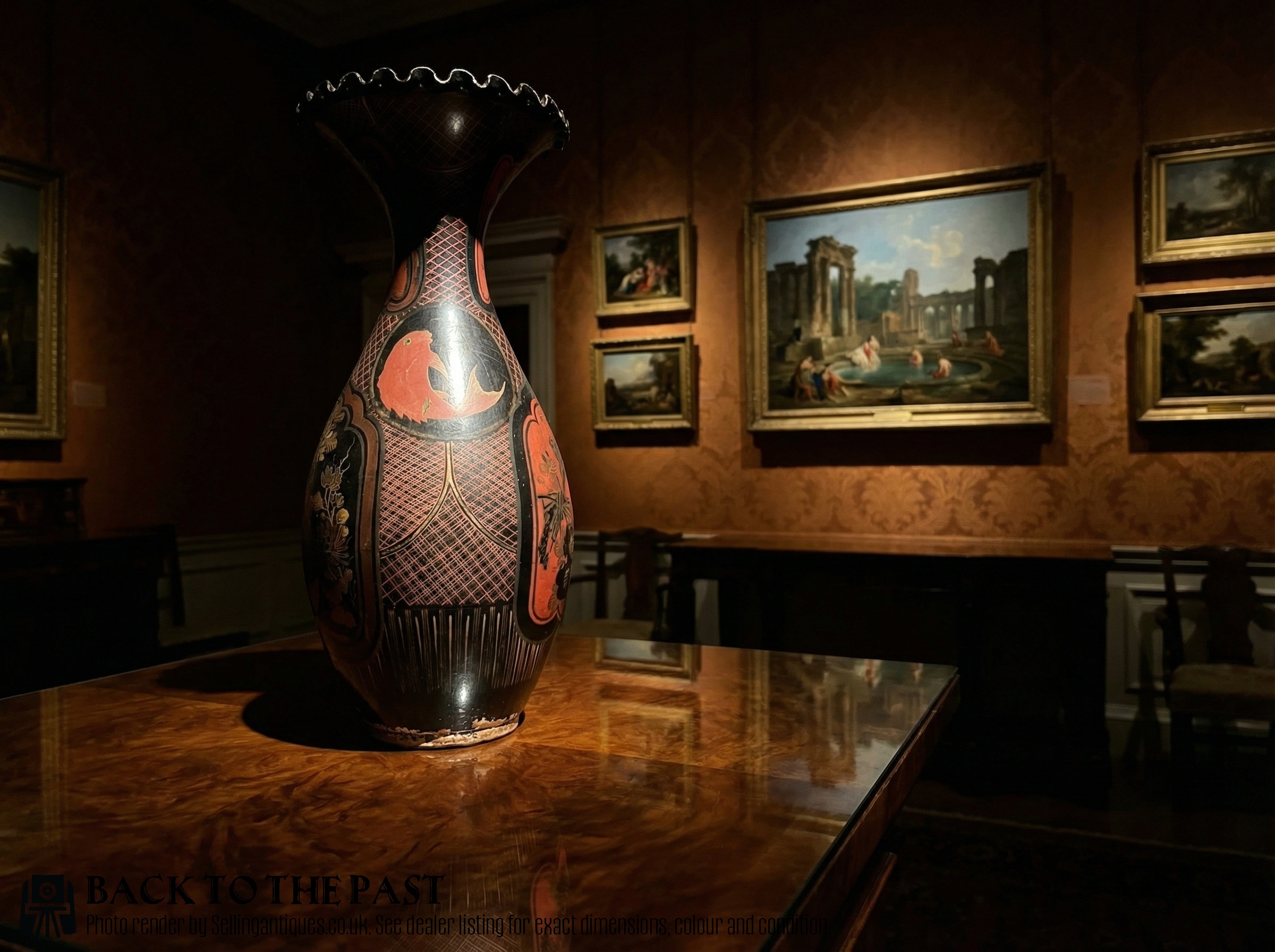
Crimped Rim Vase
A crimped rim vase is an ornamental vessel defined by its manipulated, ruffled top edge, originating across the nineteenth and early twentieth centuries in various glass and ceramic traditions. These pieces appear in forms ranging from small posy holders to large floor vases and paired lustres, reflecting both English Victorian domestic tastes and continental studio output.
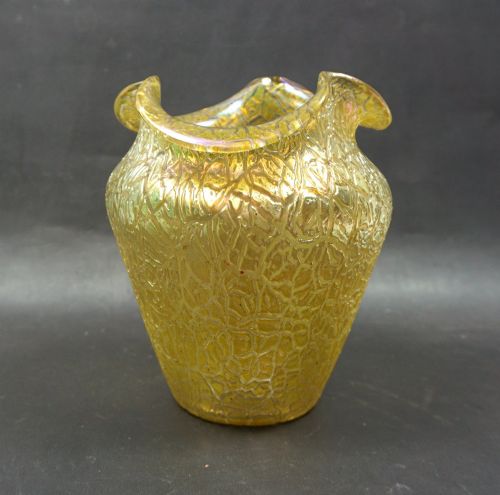
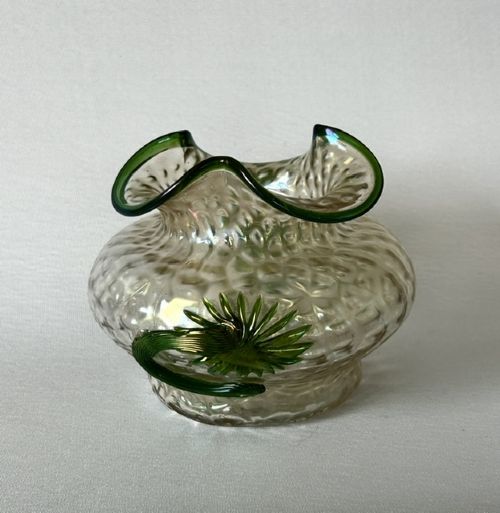
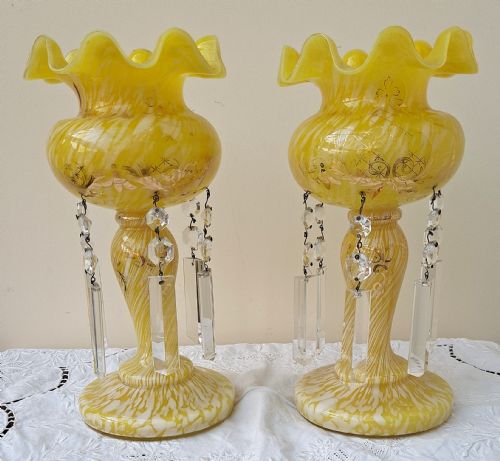
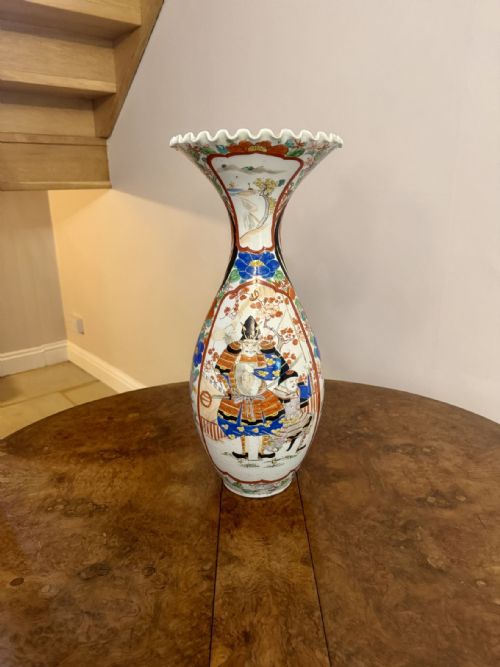
The selections encountered here span Victorian satin glass, iridescent art glass, and Japanese porcelain, demonstrating how diverse makers adopted the folded profile. Whether formed from cranberry glass or decorated Japanese Imari ware, each example highlights the artisan's control over hot materials or clay during the shaping process.
Distinctions in Quality
Quality in a crimped rim vase rests upon the precision of the hand-formed edge and the harmony of colour within the body. Superior examples display crisp, symmetrical folds that flow naturally from the neck without distortion, alongside accomplished surface painting or complex multi-layered glass effects.
Pieces from recognised houses demonstrate finer balance and more ambitious thermal manipulation, whereas simpler production items show heavier, less refined walls. The integration of auxiliary elements, such as uranium green glass bases or delicate applied trails, further separates standard production from exceptional studio work.
Listings feature items from the nineteenth century through the Edwardian period, incorporating satin glass, porcelain, and Japanese Imari.
Loetz·Kralik·Baccarat·Thos. Webb & Sons
The Crimped Rim Vase Glossary
- Cranberry glass
- A transparent red glass coloured with gold chloride, widely utilised in Victorian decorative vessels. This rich hue appears frequently in nineteenth-century tablewares and ornamental vases.
- Satin glass
- An art glass type featuring a characteristic velvety, acid-etched surface texture that diffuses light softly. It was produced by major nineteenth-century English and American glassworks.
- Imari
- A style of Japanese porcelain decorated in underglaze blue and overglaze iron red, gold, and other colours. These wares were heavily exported during the Meiji period.
- Lustre
- A glass or ceramic vessel hung with cut-glass prisms, designed to reflect candle or gas light. Pairs of these objects often match the flared rims seen on contemporary vases.
- Cane
- A rod of coloured glass fused in a furnace and sliced or drawn out to create internal patterns. Makers incorporated these elements into the body or rim of decorative glass.
Crimped Rim Vase: Frequently Asked Questions
How do I clean a delicate glass vase safely?
Wash the vessel by hand using lukewarm water and a mild detergent, avoiding abrasive cloths that might scratch the surface or delicate painted details.
Dry the piece immediately with a lint-free cloth, supporting any fragile or extended rims carefully throughout the process.
What period do most coloured glass pieces come from?
The majority of coloured and satin glass vessels date from the Victorian era and the late nineteenth century, reflecting peak production periods in England and Bohemia.
Art Nouveau and Edwardian examples also appear frequently, marking the transition towards more stylised organic forms.
How can I tell Japanese porcelain from European items?
Japanese pieces from this period often display specific regional decoration styles, such as Kutani or Imari palettes, alongside characteristic paste weights and potting techniques.
European counterparts generally employ glass or earthenware bodies with distinct regional moulding methods and Western decorative motifs.
Where should I display a large floor vase?
Position large ceramic or glass vessels in low-traffic corners or on stable pedestals where they remain safe from accidental knocks.
Ensure the spot receives indirect natural light to highlight the glaze variations, enamel work, or iridescent qualities of the surface.