


Ruffled Glass Vase
A ruffled glass vase brings wonderful colour and dramatic shape to a room, catching the light across textured rims and flared edges.
Ruffled Glass Vase
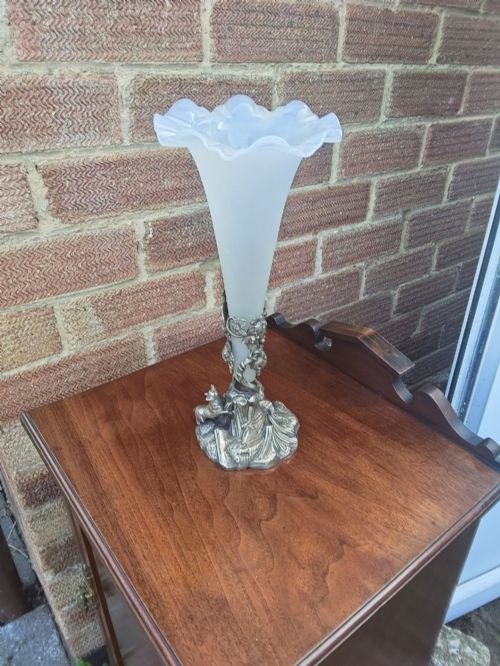
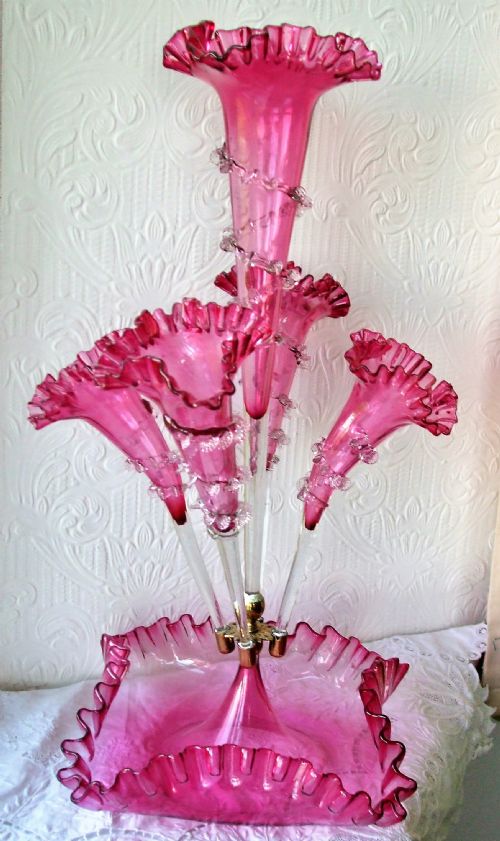
When you search for a ruffled glass vase, you encounter Victorian and turn-of-the-century decorative vessels defined by their shaped, crimped, or folded rims. These pieces span from the mid-nineteenth century through the Art Nouveau period, appearing as single stem holders, table centrepieces, and multi-trumpet epergnes.
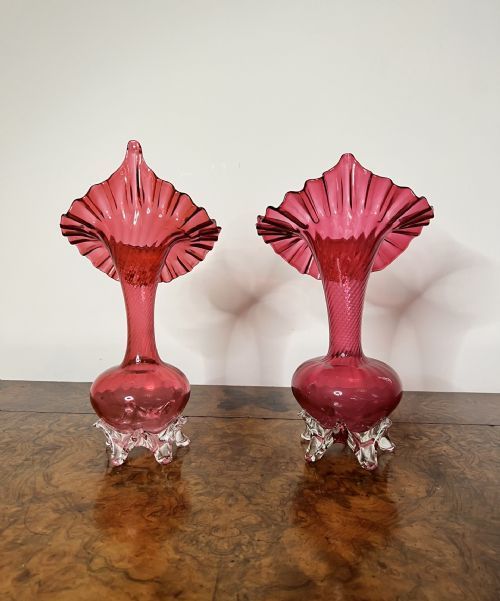
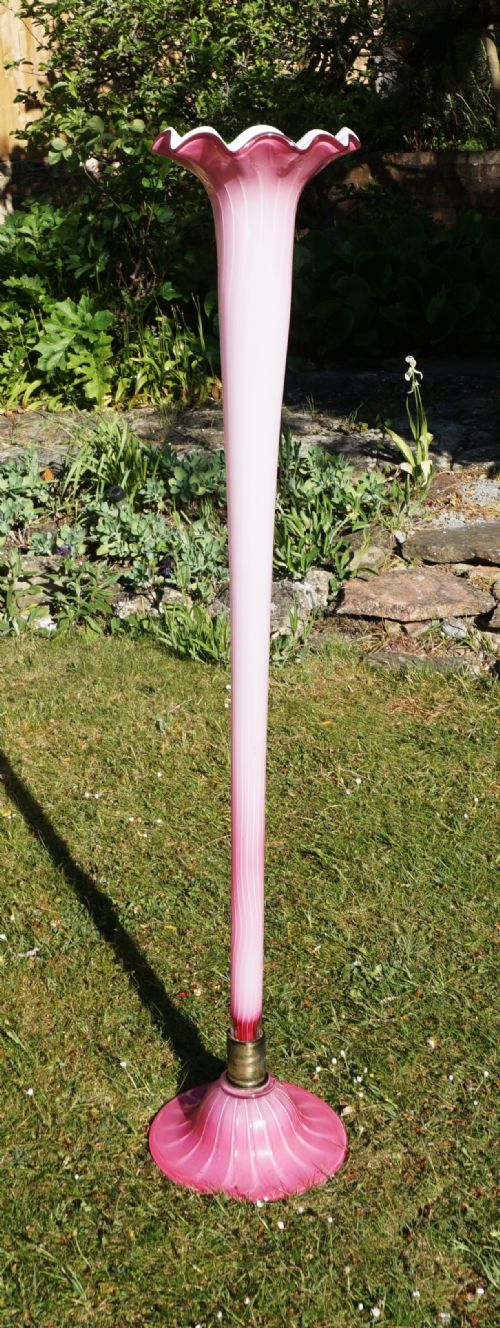
The most common examples you meet on this page date from the Victorian era and feature rich cranberry glass or cased glass techniques. Makers across England, France, and Bohemia shaped these forms into jack in the pulpit styles, cornucopias, and tall trumpets with ruffled borders.
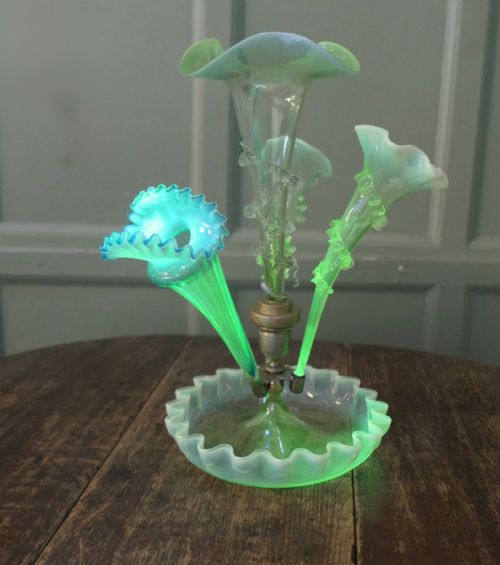
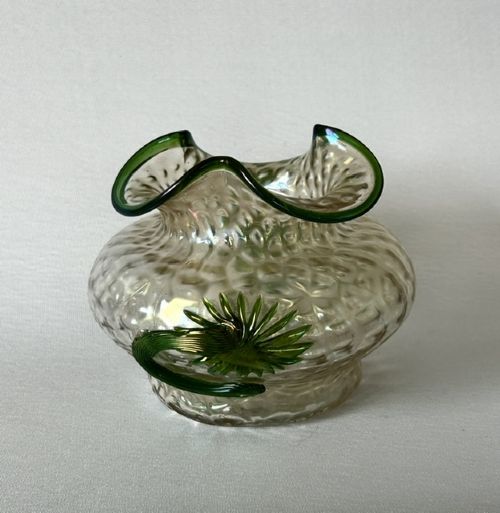
Vases range from modest single vessels to elaborate epergnes incorporating brass or white metal mounts and multiple glass inserts. The shared characteristic across all these forms is the manipulated rim, pulled and fluted whilst hot by the glassmaker.
What varies in quality
Quality in a ruffled glass vase rests upon the dexterity of the hot forming and the depth of the material colour. Superior pieces show crisp, confident folding at the rim without unintended distortion in the vessel body.
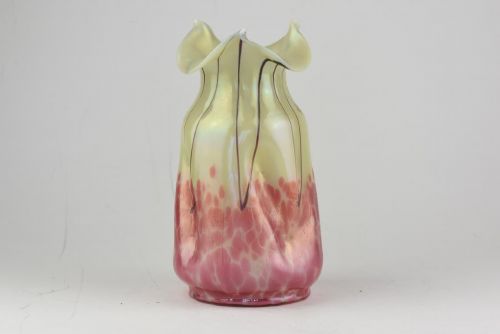
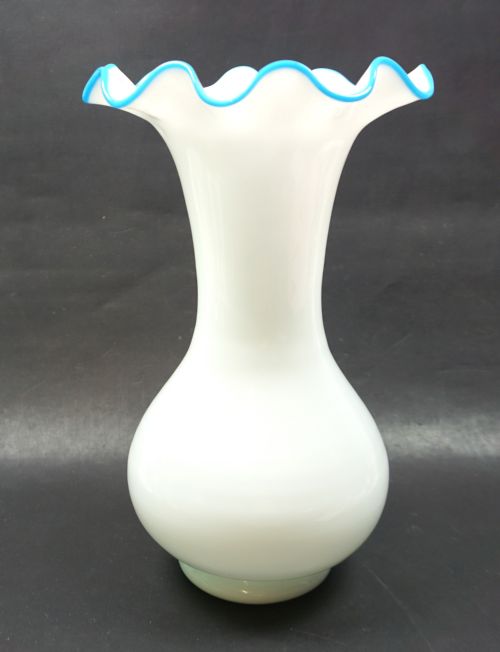
The complexity of the form and the choice of glass influence the standing of a piece. Multi-layered cased glass, intricate enamel decoration, and controlled iridescent effects elevate certain examples above standard single-colour production.
Mary Gregory vases captured Victorian imaginations by depicting Victorian children playing in meadows, rendered entirely in white enamel.
Pallme Konig·Kralik·Baccarat·Webb·Legras·Mary Gregory
The Ruffled Glass Vase Glossary
- Cased glass
- Glass made with two or more distinct layers of different colours, often blown together and then manipulated. This technique allows contrasting interior and exterior hues, such as a pink outer layer over a white inner lining.
- Epergne
- A large table centrepiece featuring a central bowl or dish fitted with multiple detachable trumpets or baskets. They were typically used for holding fruit, flowers, or sweetmeats during formal dining.
- Jack in the pulpit
- A specific style of vase characterised by a long stem widening into a broad, hooded, and ruffled rim resembling a flower blossom. The form gained popularity during the Victorian period.
- Uranium glass
- Glass containing a small percentage of uranium oxide added as a colorant, producing a pale yellow or green hue. It glows brightly when exposed to a blacklight source.
- Satin glass
- Art glass treated with hydrofluoric acid to produce a matte, velvety surface texture resembling satin. It was widely produced by English and American makers in the late nineteenth century.
Ruffled Glass Vase: Frequently Asked Questions
What is the difference between cranberry glass and pink cased glass?
Cranberry glass achieves its rich translucent red-pink shade through the addition of gold chloride to the molten batch. The colour runs uniformly through the material.
Cased glass consists of two distinct fused layers, usually a vibrant exterior colour combined with an opaque white interior layer.
How can I tell a Victorian epergne from a later piece?
Victorian epergnes typically feature hand-blown trumpets with individually crimped ruffled rims and polished pontil marks on the base. The glass components fit securely into fitted brass or metal branch mounts.
Later reproductions often display heavier, uniform machine-pressed glass without pontil scars or characteristic Victorian colour variations.
Where should I display a large epergne centrepiece?
Place an epergne in the centre of a dining table or upon a sturdy sideboard where light can pass through the trumpets. Ensure the location avoids heavy foot traffic due to the delicate projecting arms.
Keep the display away from direct, harsh sunlight to prevent any fading of sensitive cranberry or enamel pigments over time.