




Blue Opaline Glass
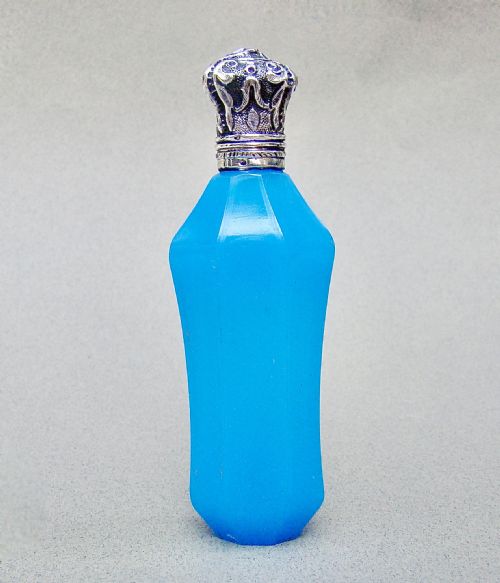
Blue opaline glass brings a striking saturated hue and soft translucency to nineteenth-century vanity sets, scent bottles and decorative vases.
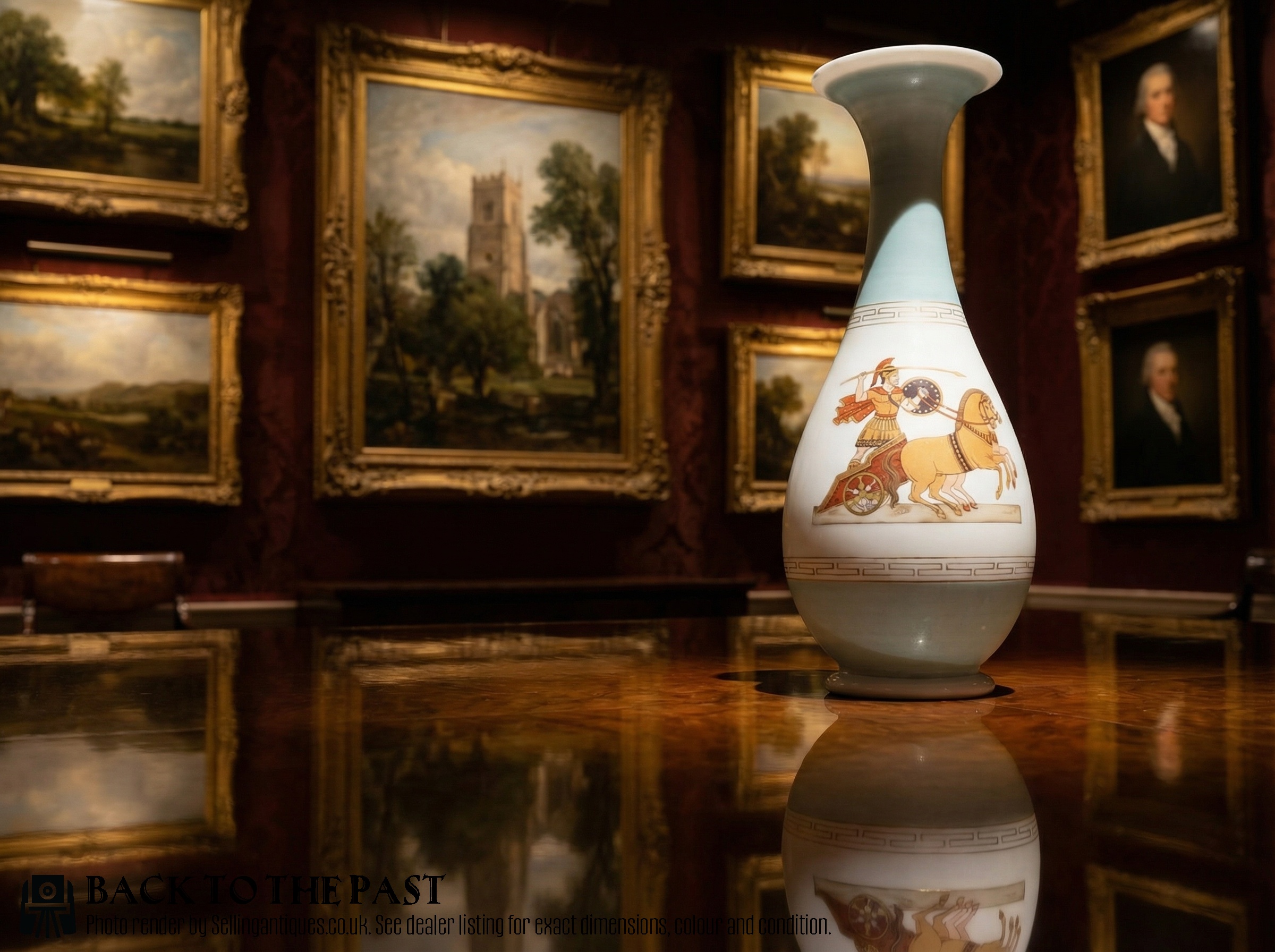
Blue Opaline Glass
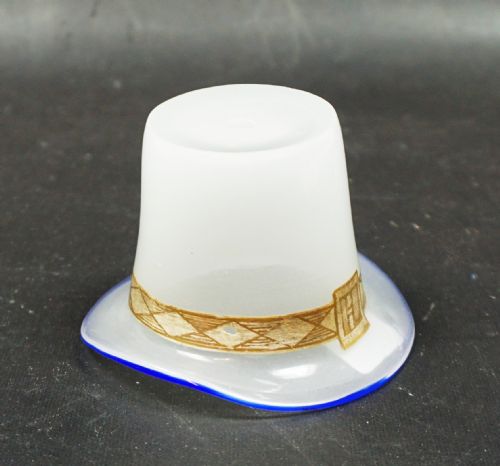
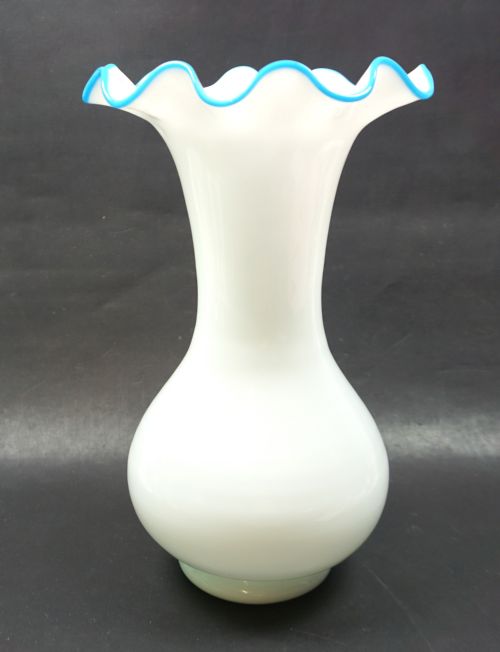
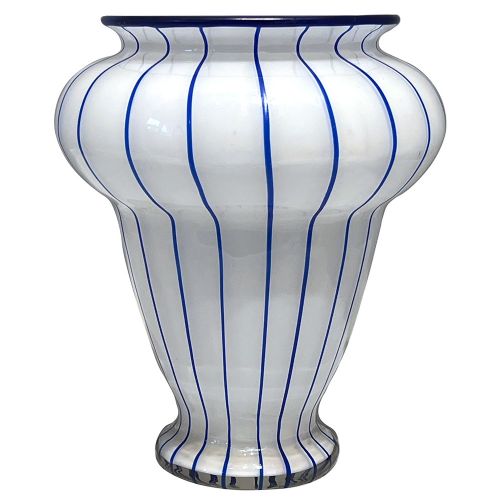
These pieces are decorative glass objects made in shades of blue opaline glass, spanning Victorian, Georgian, and twentieth-century periods. A buyer exploring blue opaline glass typically encounters small scent bottles, vanity boxes, egg cups, and table vases.
French workshops and English makers produced these items in styles ranging from Rococo Revival and Neoclassical to Art Nouveau. The selection includes both standalone vessels and pieces fitted with silver mounts, ormolu, or silverplate.
How they were made
The glass was formed using opacifying agents to create a milky, dense body that diffused light rather than remaining entirely clear. Artisans frequently added enamel painting, gilding, or applied glass rims in contrasting colours to finish the surface.
Many finer items received metalwork mounts in silver, sterling silver, gilt bronze, or ormolu. These mounts were fitted around the glass necks and bases to secure stoppers or provide structural feet.
Listings for blue opaline glass frequently feature French and English origins, spanning the Georgian, Victorian, and later nineteenth-century periods.
What varies in quality
Quality depends upon the depth and evenness of the glass colour and the crispness of any applied enamel work or gilding. Pieces with hand-painted details display greater refinement in brushwork and more complex decorative motifs.
The integration and metal quality of any fitted mounts also distinguish better pieces. Mounts cast in heavy ormolu or hallmarked sterling silver indicate higher-tier production compared to standard silverplate.
Baccarat·Portieux Vallerysthal·Gunnar Ander·Elkington and Co
The Blue Opaline Glass Glossary
- Opaline glass
- A type of semi-opaque art glass that emerged in popularity during the nineteenth century. It has a cloudy, milky appearance due to the addition of bone ash or metal oxides during manufacture.
- Ormolu
- Gilded bronze used widely for mounts, feet, and decorative hardware on French decorative objects. It provides a rich gold-toned metallic contrast against blue glass.
- Enamel
- Opaque vitreous material fused to the glass surface through firing. It creates raised or flat decorative patterns, often in floral or classical designs.
- Silverplate
- A base metal coated with a thin layer of silver used for baskets, frames, and liners. It was common in English tableware and decorative containers.
Blue Opaline Glass: Frequently Asked Questions
What is blue opaline glass?
Blue opaline glass is a semi-opaque art glass produced in various shades of blue, widely used in the nineteenth century for decorative tablewares and vanity items.
The material is distinguished by its milky translucency, which diffuses light differently than standard clear or transparent coloured glass.
How do I date blue opaline glass?
Dating relies on stylistic clues, mounting techniques, and contextual hallmarks found on associated metal fittings. Victorian and nineteenth-century French pieces often exhibit classical or rococo revival motifs.
Items paired with hallmarked sterling silver or specific maker marks offer more precise chronological markers for identification.
Were these pieces used daily?
Many items, such as scent bottles, trinket boxes, and egg cups, served functional purposes within domestic nineteenth-century dressing rooms and dining tables.
Others functioned purely as decorative objects, displayed on mantelpieces or within glass cabinets to showcase their colour and form.
How should I clean blue opaline glass?
Gentle cleaning with lukewarm water and mild soap preserves both the glass body and any delicate surface gilding or enamel. Harsh abrasives or soaking should be avoided to protect applied decorations.
Metal mounts require separate, careful maintenance depending on whether they are silver, brass, or ormolu.