

French Napoleon III Chairs
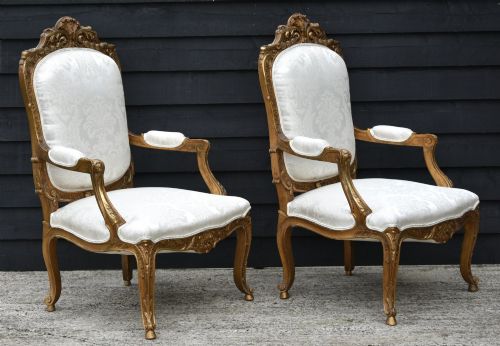
These french napoleon iii chairs bring nineteenth-century salon seating to life with deep buttoning, curved backs, and gilt finishes.
French Napoleon III Chairs
When buyers search for french napoleon iii chairs, they encounter a range of nineteenth-century seating from formal armchairs to salon chairs and chaises longues. The pieces span the nineteenth century, including specific dates around eighteen eighty and eighteen seventy, alongside Victorian and later twentieth-century periods.
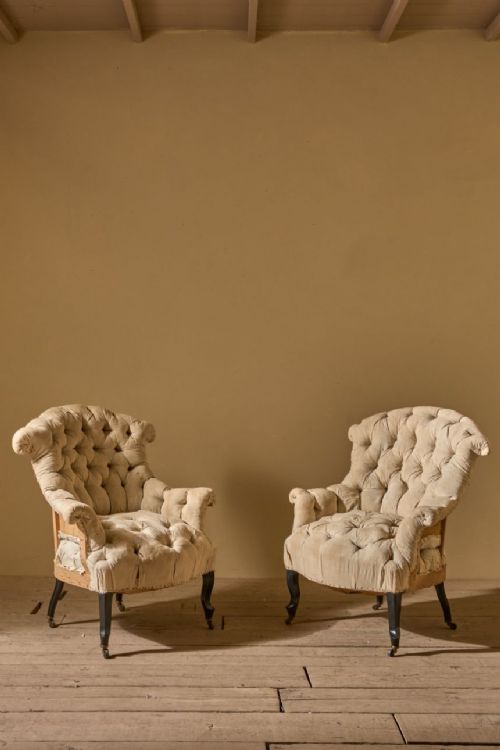
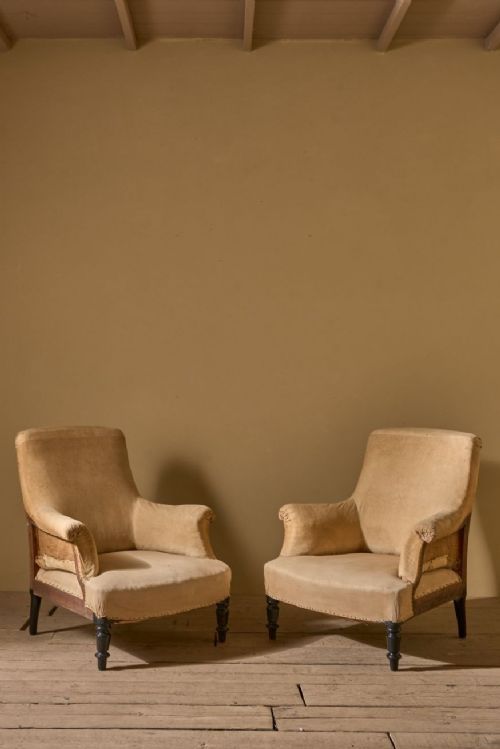
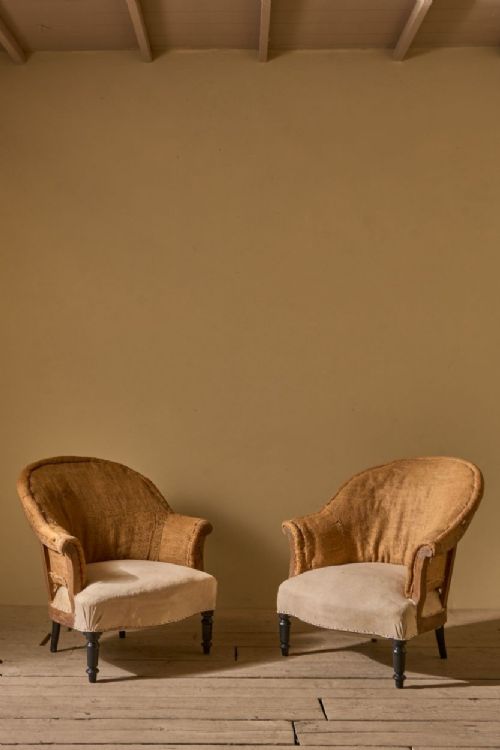
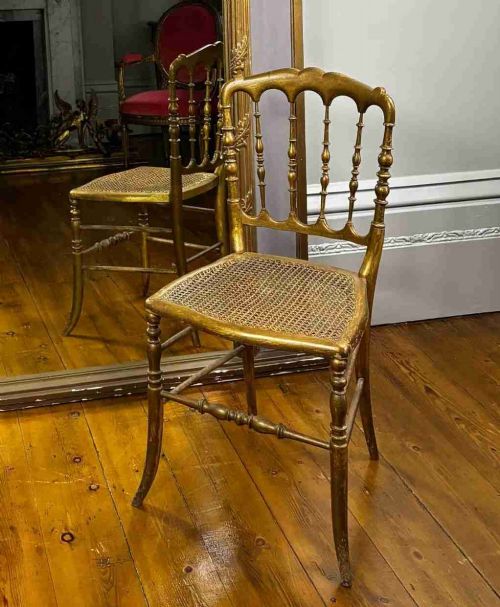
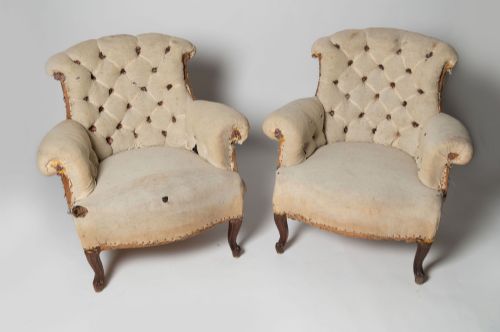
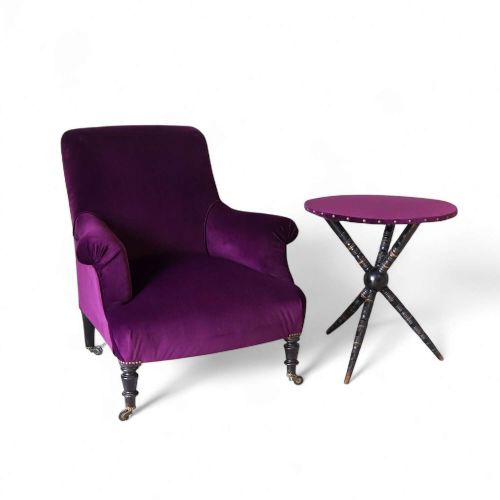
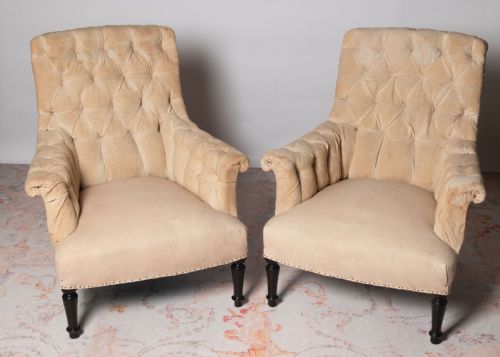
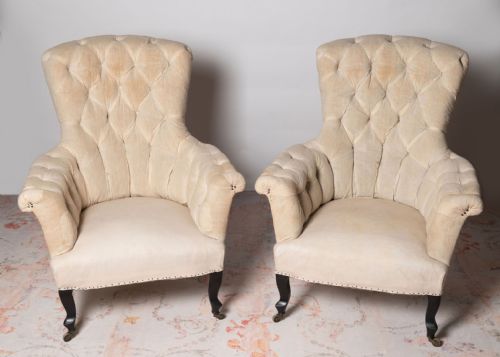
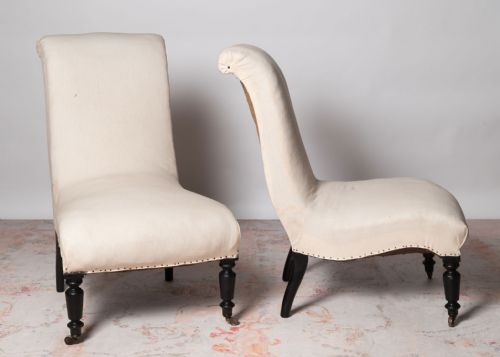
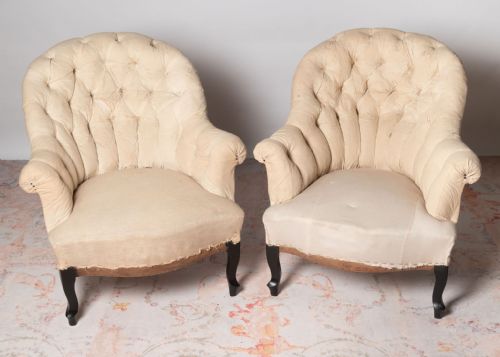
Armchairs and tub chairs dominate the selection, often appearing in pairs with buttoned backs, scroll arms, or high curved profiles. Buyers also find side chairs, slipper chairs, and dining sets suited to traditional interiors.
How they were made
Makers utilised timber and beech as structural frames, mounting them with brass, giltwood, and gilt bronze. Many examples combine carved wooden frames with exposed polished brass elements or decorative gilding.
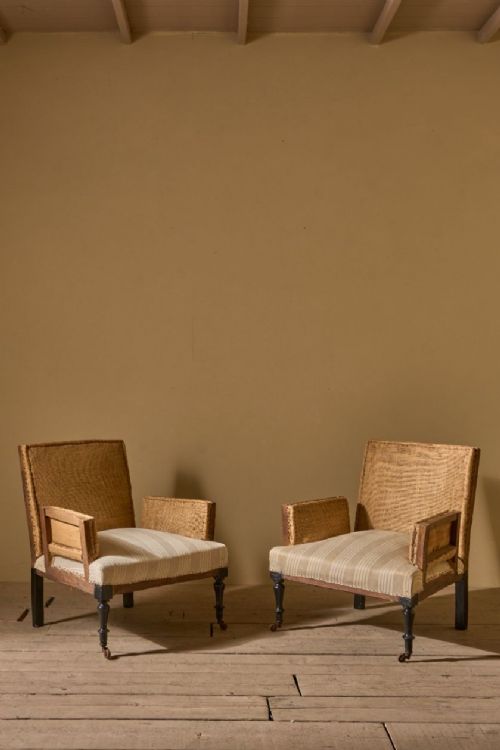
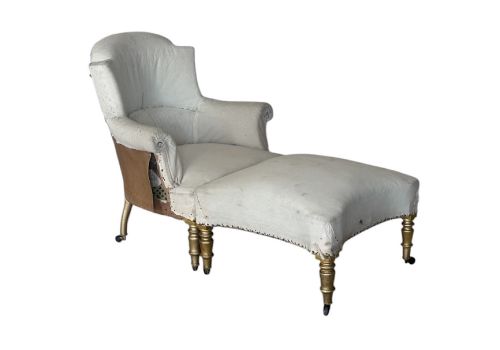
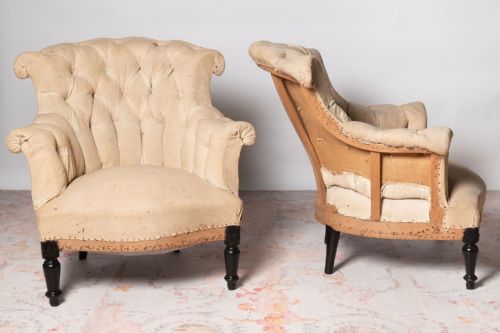
Upholstery forms a core part of the construction, relying on calico, hessian, and various fabrics including velvet and corduroy. Pieces frequently survive in base covers like hessian or calico, awaiting final textile selection.
What varies in quality
The distinction between standard examples and finer works rests upon the crispness of the giltwood carving and the integrity of the underlying beech frame. Superior pieces retain original fire gilding on bronze mounts and deeply sculpted wooden scrollwork.
Upholstery execution alters the finished character, particularly the precision of buttoning on curved and tub backs. Pieces retaining well-balanced proportions in the arms and backrest command stronger visual presence in a room.
The French Napoleon III Chairs Glossary
- Giltwood
- Wood that has been coated with gold leaf or a gold-coloured substance. This finish defines the formal salon chairs of the period.
- Hessian
- A coarse woven fabric typically utilised as an initial foundation layer for traditional upholstery. It appears frequently on pieces offered for re-covering.
- Tub chair
- An armchair featuring a continuous curved back and arms forming a rounded enclosure. These often appear as low occasional seating.
- Duchess brisee
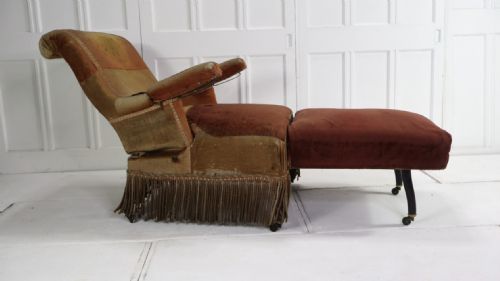
- A multi-part daybed combining an armchair and a matching stool or footstool. This form provides extended lounging capacity in nineteenth-century interiors.
- Calico
- A plain-woven unbleached textile used beneath decorative top fabrics to secure internal stuffing. It forms the tight base layer on buttoned backrests.
French Napoleon III Chairs: Frequently Asked Questions
What defines french napoleon iii chairs?
These nineteenth-century seats emerge from the period spanning the Second Empire, blending revival styles with comfortable domestic forms. They typically showcase ornate wooden frames, curved profiles, and buttoned upholstery.
They reflect an era of opulent interior design, offering decorative presence alongside substantial padding. The style encompasses everything from formal gilded salon seats to intimate tub chairs.
How were these chairs originally used?
Owners placed these items in drawing rooms, salons, and boudoirs for formal entertaining and daily relaxation. Armchairs and tub chairs provided comfortable seating for conversation and reading.
Larger configurations like chaises longues and daybeds allowed individuals to recline in private rooms. Dining chairs served formal hosting duties around large nineteenth-century tables.
How do I live with these chairs?
Integrating nineteenth-century seating into modern spaces requires balancing ornate gilt frames with contemporary surroundings. They function effectively as statement armchairs in living rooms or as reading seats in studies.
Many pieces arrive ready for upholstery, allowing owners to select fabrics that match existing interior colour schemes. Velvet and patterned textiles update the traditional forms while respecting their heritage.
How do I identify different chair styles?
Distinguishing between types involves observing the silhouette, from the enclosed curves of tub chairs to the elongated proportions of slipper chairs. Scroll backs and buttoned spoon backs indicate specific nineteenth-century preferences for padded comfort.
Frame materials also signal style variations, separating giltwood salon pieces from mahogany empire designs and polished brass models.