





Vintage Slipper Chair
These vintage slipper chair examples span Victorian, Edwardian, and French styles, offering low seats designed originally for dressing rooms and bedrooms.
Vintage Slipper Chair
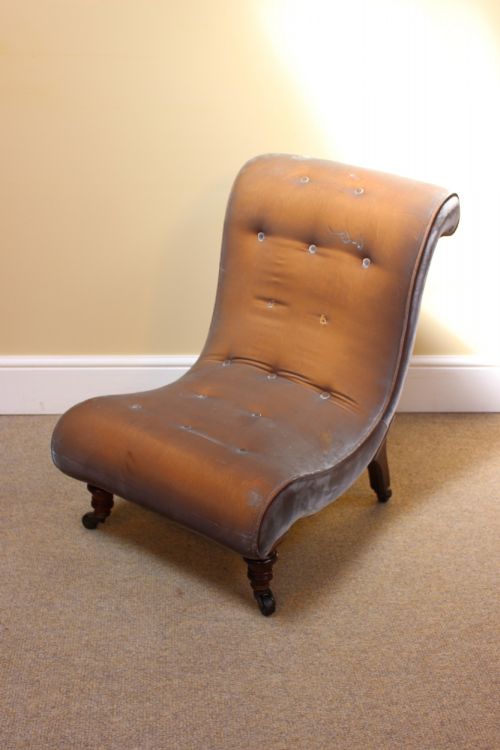
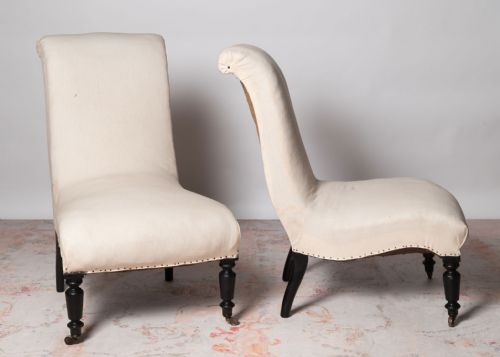
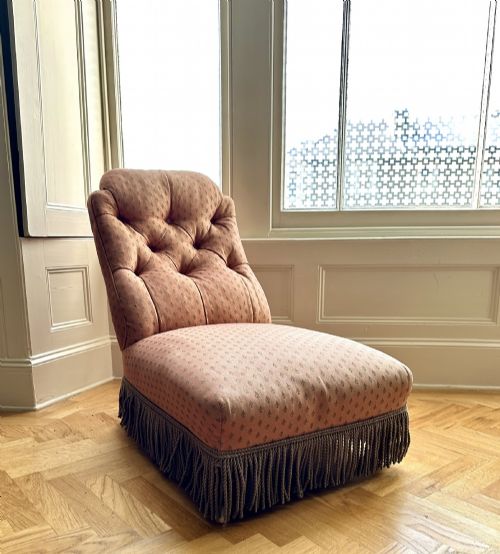
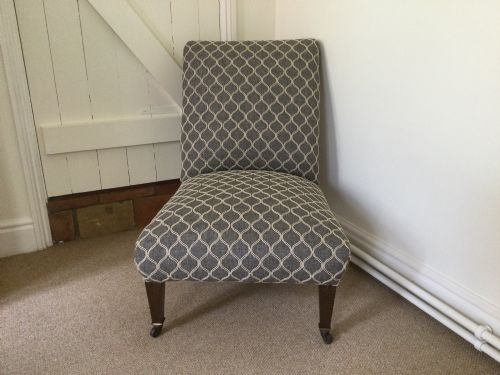
A vintage slipper chair sits low to the floor, designed originally for ladies to dress in comfort during the Victorian and Edwardian eras. You will frequently encounter Victorian walnut nursing chairs, Edwardian bedroom chairs, and nineteenth-century French pieces among these listings.
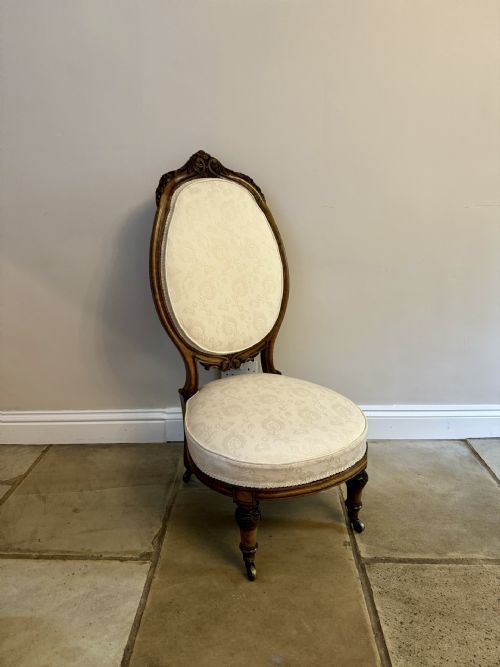
The form often lacks arms to accommodate bulky nineteenth-century garments and crinolines, resting instead on short wooden legs of mahogany, walnut, or oak. Many examples arrive upholstered in velvet, tapestry, linen, or cotton textiles, reflecting their domestic interior origins.
Materials and construction
Frames rely on sturdy timbers such as mahogany, walnut, rosewood, oak, and other woods, sometimes shaped with carved details or finished with gilt accents. Brass castors and ceramic components frequently appear on the feet of nineteenth-century pieces for mobility.
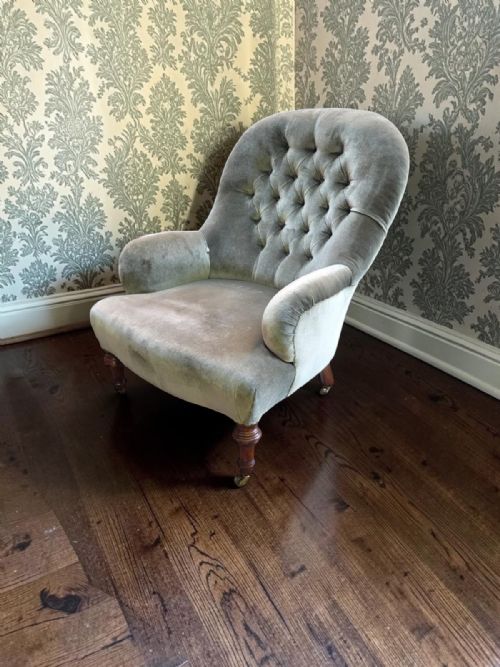
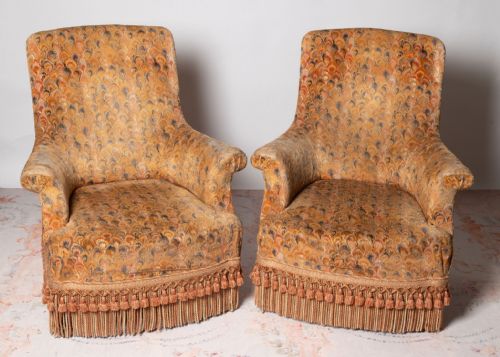
Upholstery techniques involve traditional stuffing, button backs, and fringe detailing, utilising fabrics ranging from modern velvet and linen to period tapestry and leather. Several listings note frames offered specifically for restoration and reupholstery.
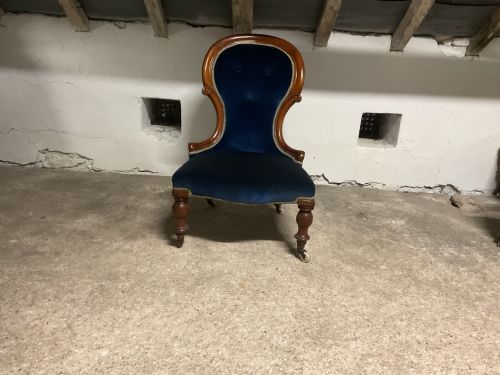
One chair arrives dressed in electric blue velvet with gold piping, proving that nineteenth-century silhouettes love a twentieth-century shock of colour.
Assessing the pieces
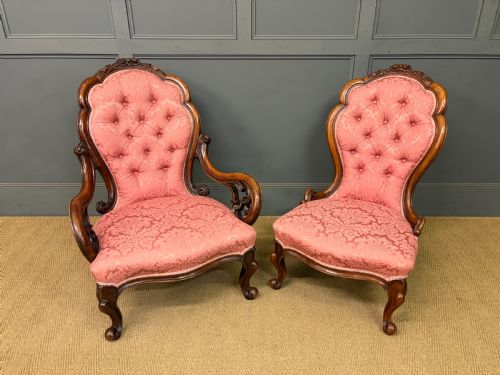
The distinction between ordinary and exceptional examples rests in the carving work on the wooden frame and the integrity of the structural joinery. Walnut and mahogany frames with crisp carved ornament command attention.
Original upholstery condition and the quality of the textile choice alter the character of each piece. Frames requiring total reupholstery present differently from those retaining preserved period fabric or quality replacement velvet.
Gillows
The Vintage Slipper Chair Glossary
- Slipper chair
- A low-seated bedroom chair traditionally manufactured without arms to assist with dressing. These low profiles characterise nineteenth-century boudoir furniture.
- Nursing chair
- A low chair designed for feeding infants, closely related in form to the slipper chair. They often feature sprung seats and padded backs.
- Button back
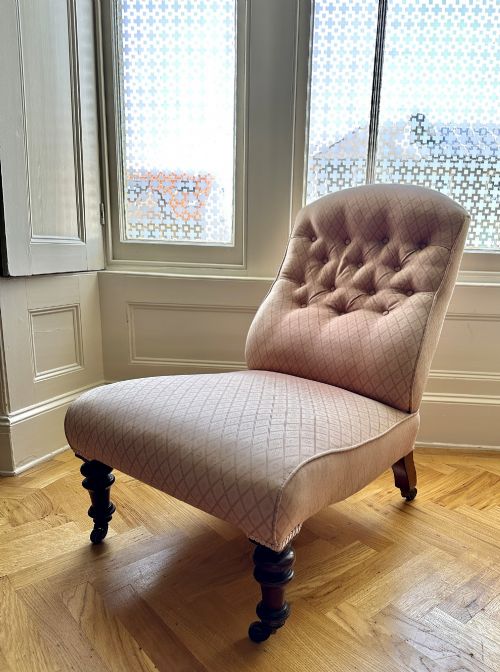
- An upholstery technique where buttons are pulled deep into the padding to create a diamond pattern. This method provides structured support and decoration.
- Napoleon III
- A French nineteenth-century design style spanning the Second Empire, known for eclectic revivalism and rich upholstery. Pieces from this period often feature gilt or ebonised frames.
Vintage Slipper Chair: Frequently Asked Questions
What distinguishes a slipper chair from a nursing chair?
Slipper chairs and nursing chairs share a similar low-slung profile designed for bedroom and dressing room use. Both forms typically omit arms to allow room for historical garments.
Historically, nursing chairs sometimes featured slightly higher backs or specific ergonomic curves for holding infants. In practice, nineteenth-century makers and modern dealers often use both terms interchangeably.
Can I use these chairs in a modern living room?
Their compact dimensions make these pieces adaptable for modern sitting rooms, bedrooms, and dressing areas. They fit well into small spaces where standard armchairs overwhelm the room layout.
Many buyers pair them with contemporary sofas or place them in corners as accent seating. The variety of velvet, linen, and tapestry coverings helps them bridge historic and modern interiors.
How do I identify a Victorian example?
Victorian pieces usually feature dense timbers such as walnut, rosewood, or mahogany. Look for characteristic details like deep button-backed upholstery, scroll backs, and turned wooden legs fitted with brass castors.
Construction methods from this era often employ heavy timber frames and traditional hand-sprung seats. Carved walnut ladies chairs from the mid-nineteenth century show particularly ornate woodwork.
Why do some listings mention upholstery for restoration?
Several pieces arrive with worn fabric or exposed webbing, sold specifically for reupholstery. This allows buyers to select their own modern textiles, such as velvet or linen, to match existing decor.
Buying a chair for restoration also lets a restorer inspect and secure the underlying wooden frame. Original frames in mahogany or walnut provide a sturdy foundation for new fabric.