
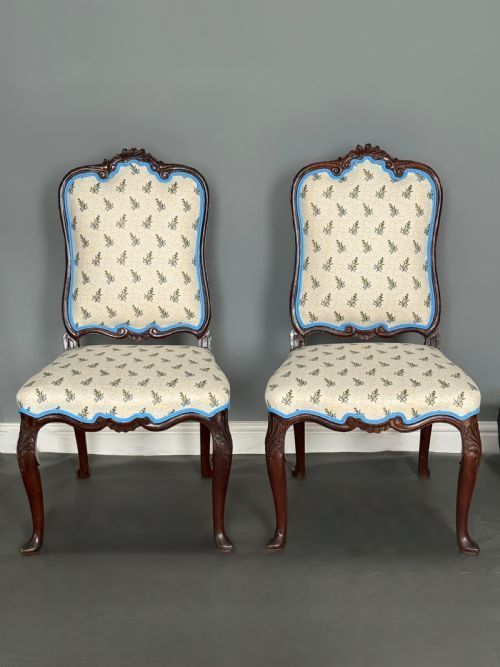
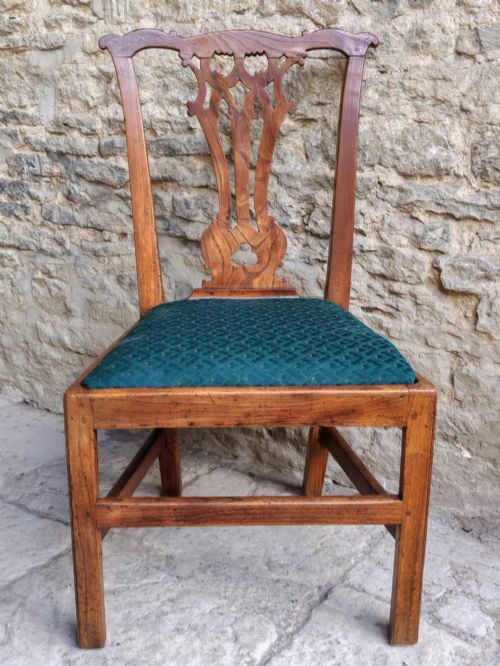
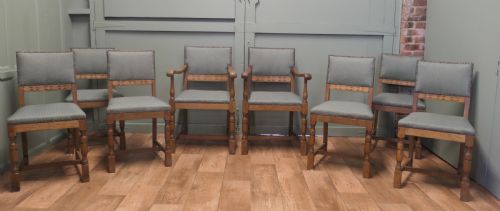
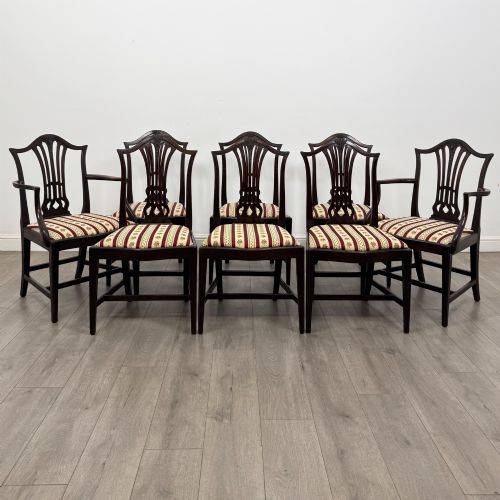
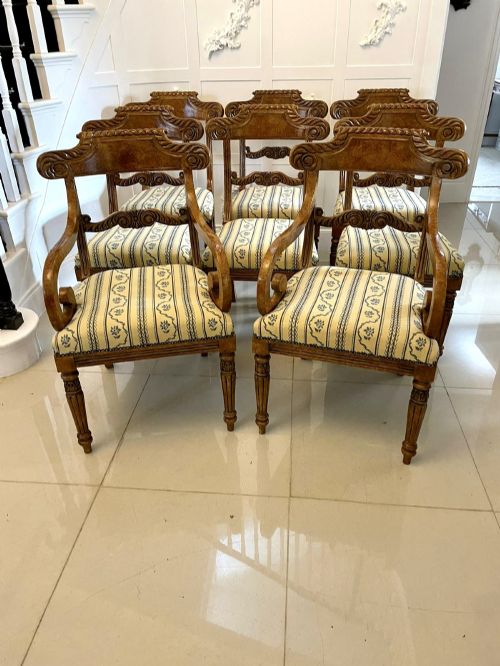
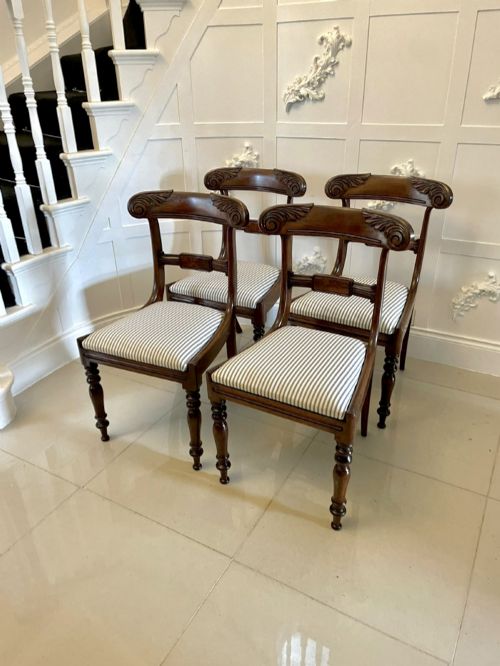
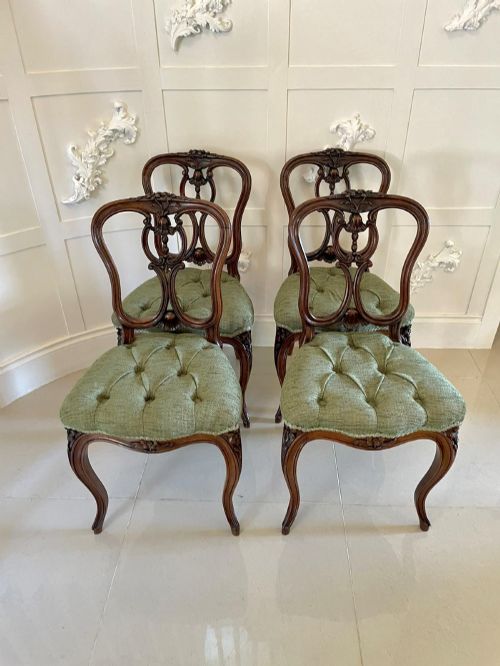
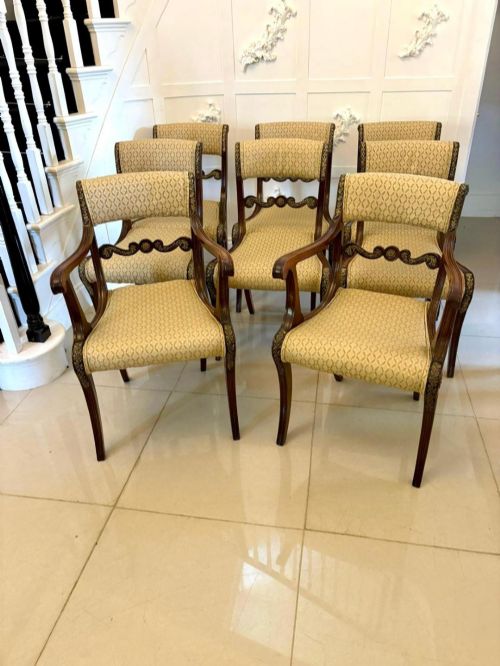
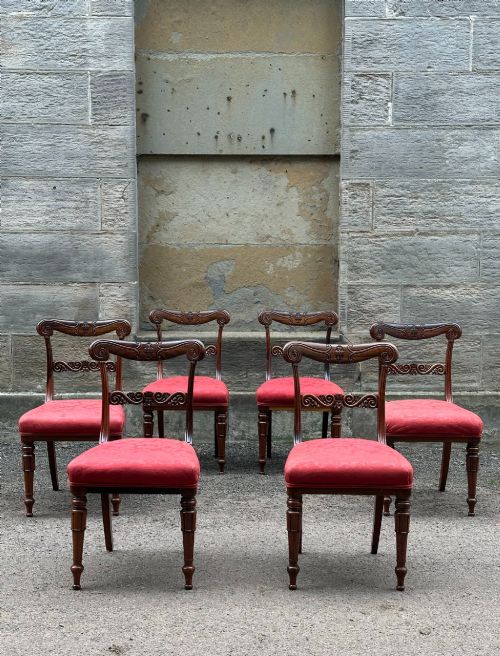
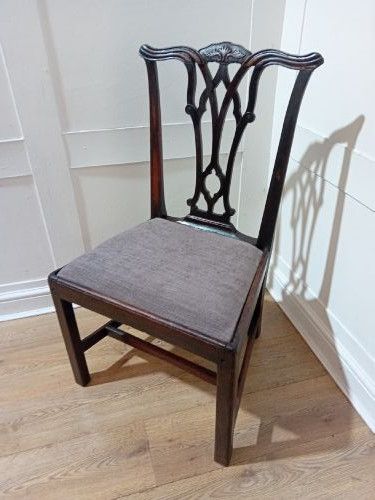


Upholstered Dining Side Chair
An upholstered dining side chair brings period character and substantial seating to a table, spanning styles from Georgian mahogany to Edwardian oak.
Upholstered Dining Side Chair
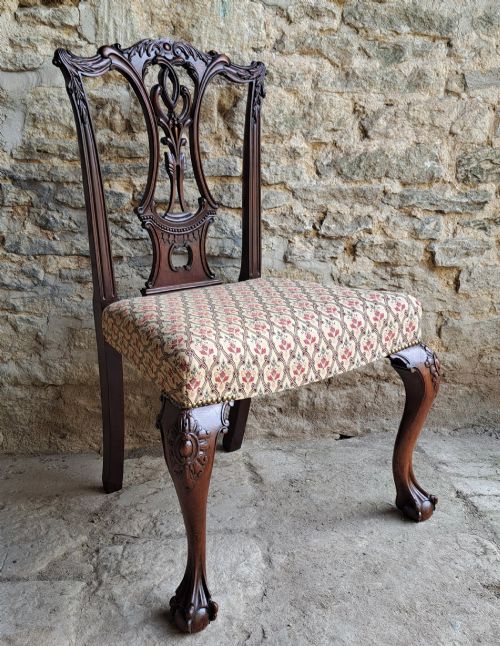
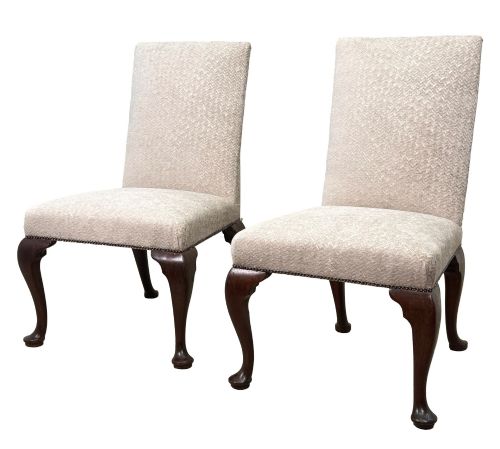
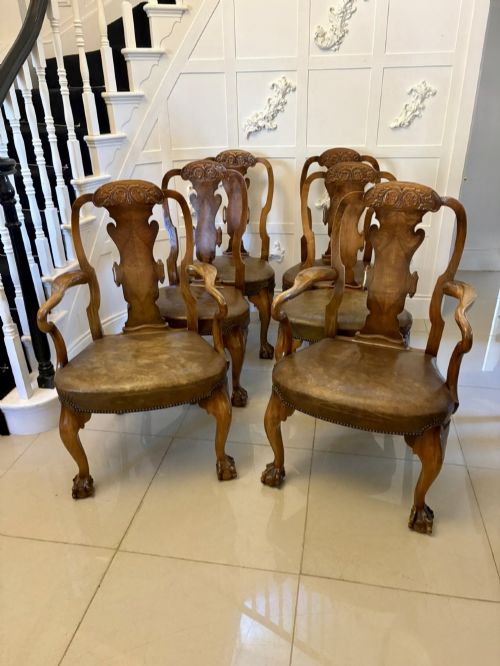
An upholstered dining side chair is a seat designed for the dining table, constructed without arms to allow closer placement and easier movement. These items appear across numerous eras, with a strong representation of 19th-century and Victorian examples alongside 18th-century and early 20th-century pieces.
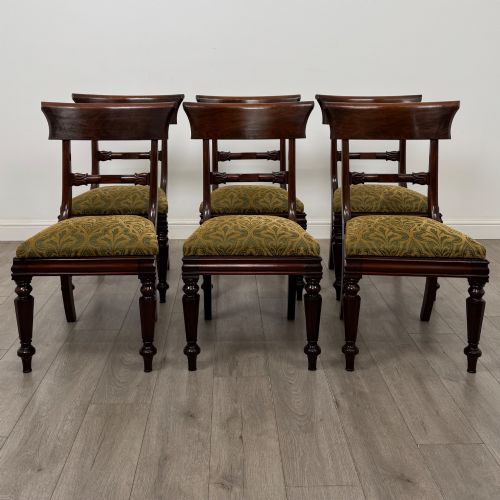
The form encompasses a wide variety of regional and stylistic influences, ranging from Regency brass inlaid models and William IV bar back designs to Arts and Crafts and Dutch Baroque forms. Buyers frequently encounter sets of four, six, or eight, as well as pairs suited for drawing rooms or halls.
Originating primarily from British workshops, though occasionally drawing on European and Scandinavian traditions, these chairs serve both functional dining and decorative interior roles. The materials selected for these pieces reflect the prevailing tastes of their respective periods, combining structural timber with textile coverings.
How they were made
Construction relies heavily on dense hardwoods such as mahogany, walnut, oak, elm, and fruitwood, shaped through traditional joinery to ensure the structural integrity required for daily seating. Timbers are frequently carved, polished, or decorated with veneers like faux birds eye maple.
Upholstery incorporates a variety of fabrics, textiles, velvet, silk, and tapestry, secured over padded foundations to provide comfort. Metal elements such as brass appear as inlay or structural accents, complementing the rich tones of the primary woods.
Several chairs double as avian masquerades, wearing faux birds eye maple finishes that look remarkably convincing until you touch the grain.
What varies in quality
The calibre of an upholstered dining side chair rests upon the selection of timber and the precision of the cabinet work, where tight joints and well-figured wood distinguish finer examples from standard production. Carving depth and execution play a major role, with hand-carved details showing greater crispness and definition than simpler or later copies.
The integration of the upholstery with the wooden frame also dictates standard, as superior pieces maintain harmonious proportions between the padded seat or back and the structural rails. Original surface finishes and the preservation of authentic materials further elevate the standing of a piece.
Gillows·Charles Tozer·Norwich Maker
The Upholstered Dining Side Chair Glossary
- Side chair
- A chair without arms, designed primarily for use at a dining table or against a wall. This form constitutes the majority of the seating options found on this page.
- Bar back
- A chair design featuring a horizontal wooden slat across the upper back, frequently seen in William IV and Regency pieces. The slat is often curved to fit the spine.
- Balloon back
- An oval or rounded upholstered backrest popular during the Victorian era. This shape provides substantial support while offering a softer visual silhouette.
- Shield back
- A chair back shaped like a heraldic shield, popularised during the Georgian period. This design often incorporates delicate pierced splats and fine carving.
- Klismos
- An ancient Greek chair form characterised by curved, flaring legs and a concave backrest. This classical shape was revived during the Regency and Art Deco periods.
Upholstered Dining Side Chair: Frequently Asked Questions
How do I spot a Georgian chair?
Georgian chairs generally rely on timbers such as mahogany, elm, or walnut, displaying classical proportions and restrained carving. Look for structural elements like slip seats, cabriole legs, or square-section legs joined by stretchers depending on the specific decade.
Construction methods from this period involve pegged mortise and tenon joints executed by hand. The overall aesthetic prioritises functional elegance over heavy ornamentation.
Are these chairs comfortable for daily use?
Many upholstered dining side chairs were built with supportive padding intended for long dinner parties. The comfort level often depends on whether the internal webbing and stuffing have been restored.
Seat heights and back angles vary by period, with Regency and Victorian models offering distinct ergonomic support. Testing the seat firmness helps determine daily suitability.
How should I clean antique wood?
Maintaining antique timber requires gentle dusting with a dry, soft cloth to remove grit without scratching the polish. Avoid modern silicone sprays, which can penetrate the grain and damage the finish over time.
Periodic application of a quality wax helps nourish hardwoods like mahogany and walnut. Keeping chairs away from direct heat sources prevents the timber from splitting.