



Traditional Vanity Chair
These traditional vanity chair pieces offer low-slung, seated comfort in bedrooms and dressing spaces.
Traditional Vanity Chair
A traditional vanity chair brings low seating to dressing tables and bedrooms across various historical periods. The selection here leans towards Victorian, Edwardian, and earlier revival styles, spanning from the nineteenth century into the early twentieth century.
Most examples function as slipper chairs, low bedroom chairs, or revolving piano stools. Frames appear in walnut, mahogany, oak, and other timbers, often paired with textile upholstery such as damask or linen.
Materials and construction methods
Frames are constructed from solid timber like walnut, mahogany, and oak, sometimes featuring hand-carved details or inlaid decoration. Joinery techniques reflect the period of origin, from Victorian production methods to Edwardian cabinetwork.
Upholstery incorporates traditional textiles including damask and vintage linen. Additional elements like fringe trim, ceramic components, and brass hardware appear across the recorded chair and stool formats.
The listings span periods from the nineteenth century through to the nineteen-twenties, using mahogany, walnut, oak, brass, and textile materials.
Judging the range and execution
Quality separates through the crispness of timber carving, the integrity of the frame construction, and the selection of period-appropriate upholstery materials. Finer examples display careful attention to structural joinery and harmonious proportions.
The choice of covering fabric and secondary materials such as brass or ceramic accents also distinguishes standard workshop output from more ambitious decorative seating.
The Traditional Vanity Chair Glossary
- Slipper chair
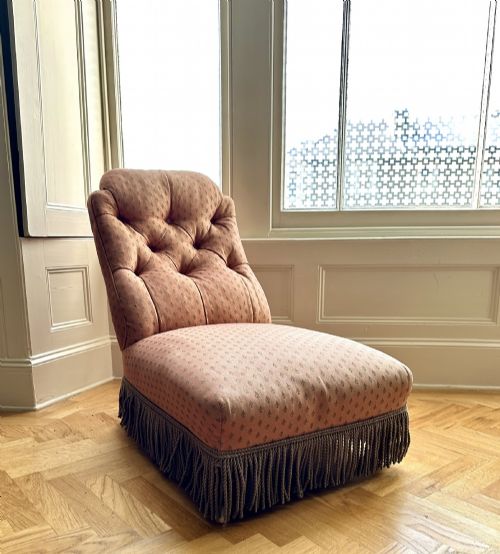
- A low-seated upholstered chair originally designed for bedrooms to allow women to put on shoes and slippers easily. These pieces typically sit close to the floor without arms.
- Piano stool
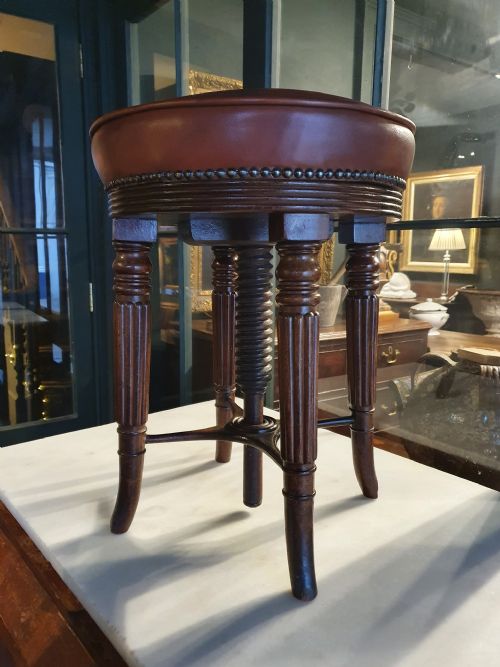
- A seat designed for use at a keyboard instrument, frequently featuring a revolving mechanism or adjustable height. Examples in the records include revolving formats and inlaid timber designs.
- Damask fabric
- A reversible figured fabric woven on a jacquard loom, frequently utilised for traditional upholstery. The pattern is formed by contrasting warps and wefts.
- Queen Anne style
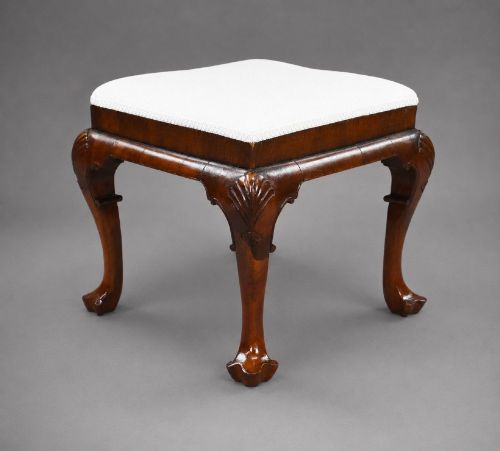
- A design movement characterised by cabriole legs and pad feet, prominent in furniture production. Revival pieces often emulate these distinct eighteenth-century silhouettes.
Traditional Vanity Chair: Frequently Asked Questions
Where do I put a traditional vanity chair?
These low seats suit dressing tables, bedrooms, and dressing rooms where compact, comfortable seating is required.
Their low profile allows them to tuck neatly beneath standard table heights while adding a decorative textile element to the room.
What is the difference between a slipper chair and a nursing chair?
Slipper chairs sit low to the ground and traditionally served dressing functions in bedrooms. Nursing chairs were similarly low but often included upholstered backs designed for seated comfort during infant care.
Both formats prioritise a reduced seat height compared to standard dining or salon seating.
Can I use a piano stool at a vanity table?
Revolving piano stools provide adjustable height options that work well at dressing tables. Their compact footprints match the space requirements of traditional vanity setups.
Swivelling mechanisms also offer practical mobility when seated in confined bedroom layouts.