
Carved Wood Fireside Chair
A carved wood fireside chair brings substance to a hearth, offering timber frames and upholstered comfort shaped by Victorian, Edwardian, and earlier hands.
Carved Wood Fireside Chair
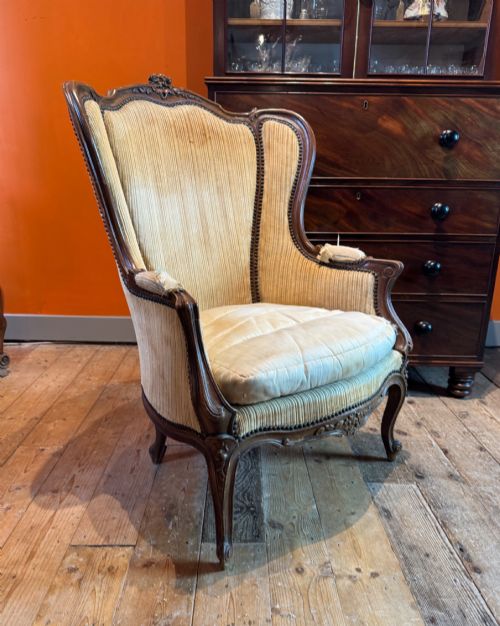
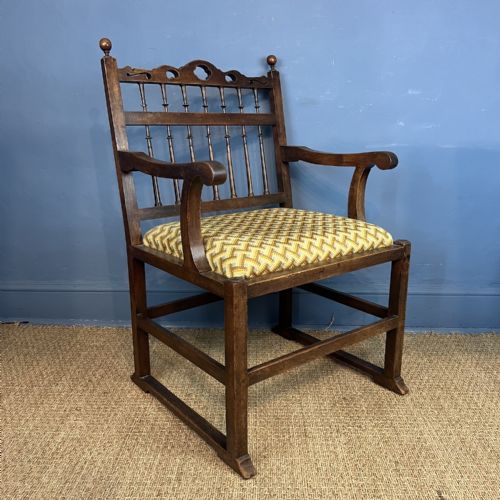
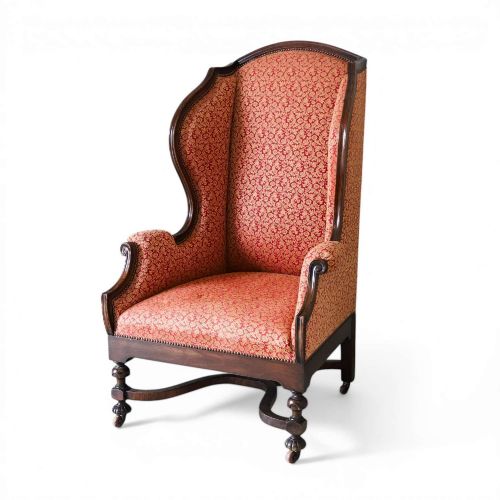
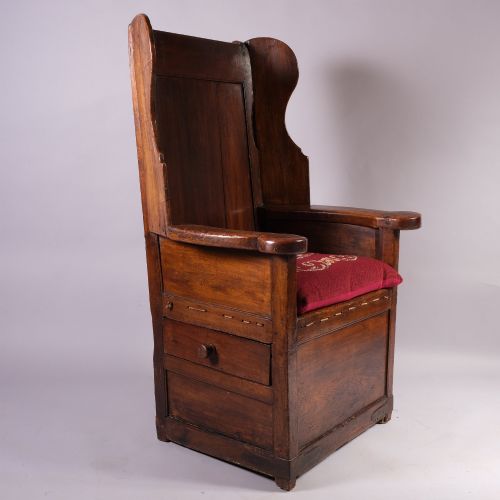
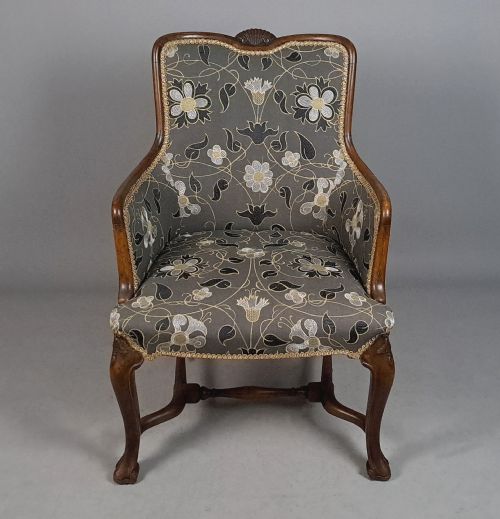
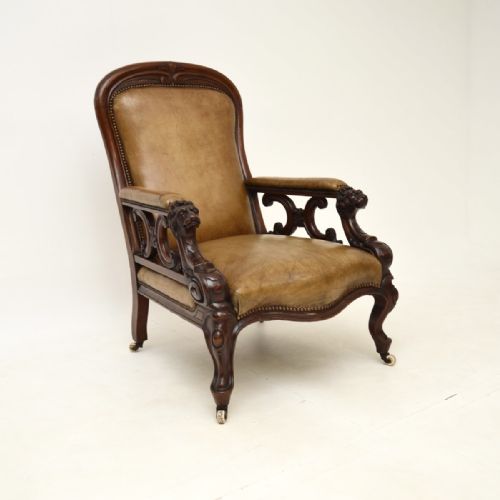
A carved wood fireside chair encompasses seating designed for warmth and repose beside a hearth, drawing on centuries of domestic tradition. These pieces range from substantial Victorian walnut and mahogany armchairs to country Windsor forms in elm and beech.
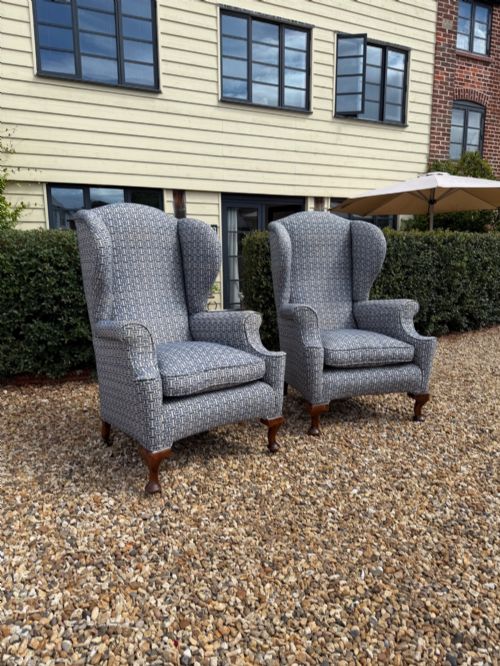
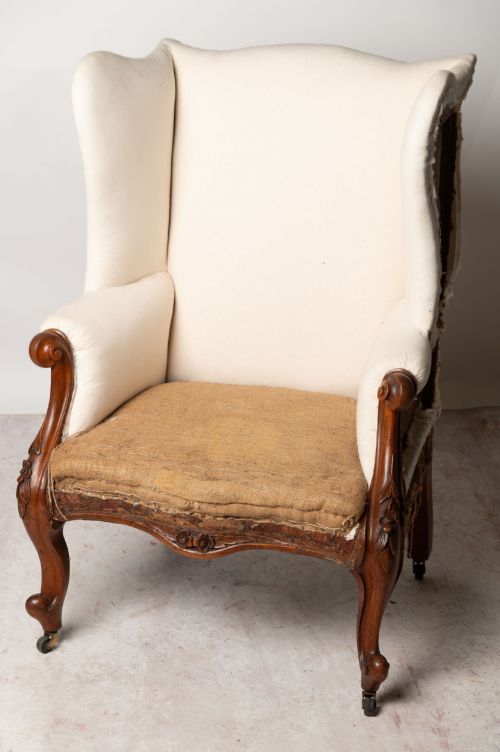
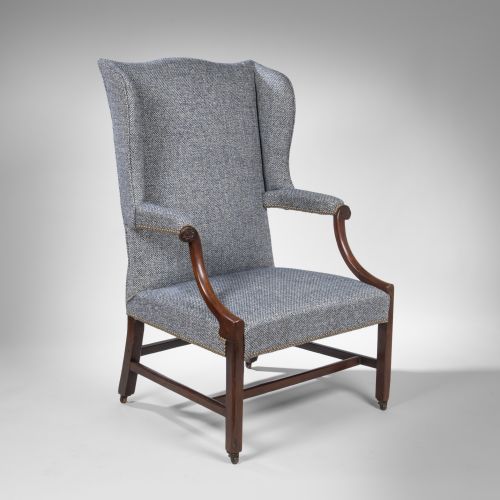
The selection on this page leans heavily toward nineteenth-century examples alongside Edwardian interpretations of earlier styles. Buyers encounter wingbacks, library chairs, and low fireside seats built for practical household use.
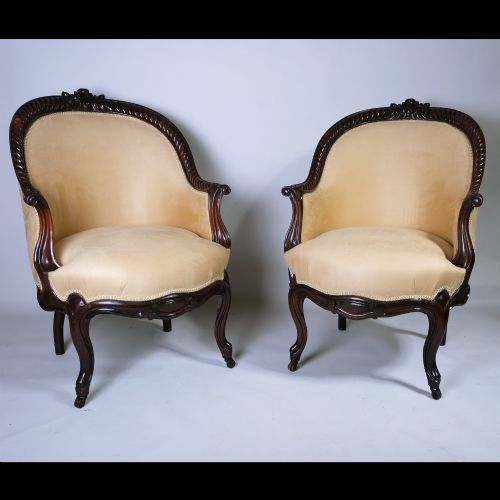
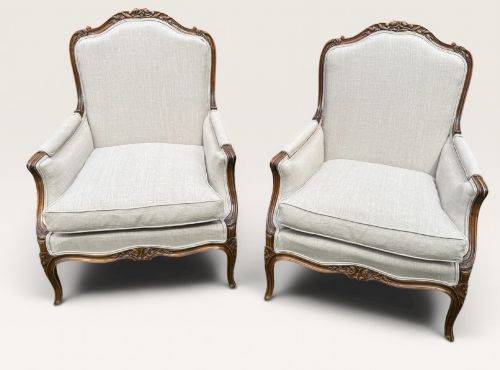
Origins span English country workshops, French salons, and urban cabinet makers. Each chair reflects the domestic habits of its period, whether through deep buttoned upholstery or open carved woodwork.
How they were made
Construction relies on solid timbers such as mahogany, walnut, beech, and elm, shaped by hand and jointed to withstand daily sitting. Carved details emerge directly from the structural wood rather than applied ornament.
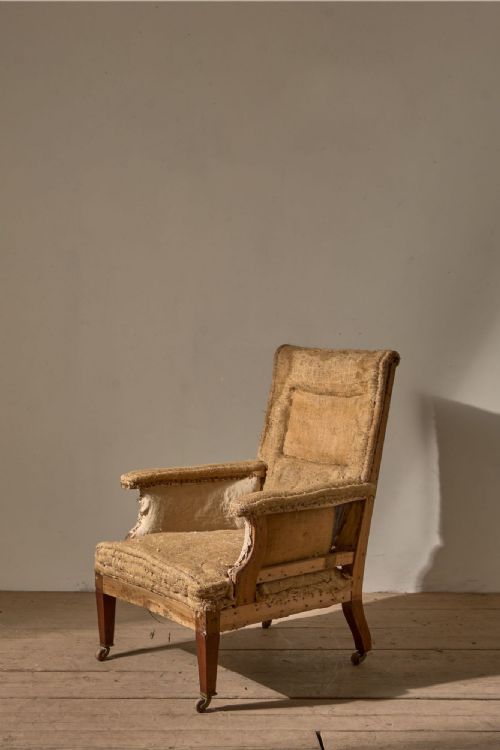
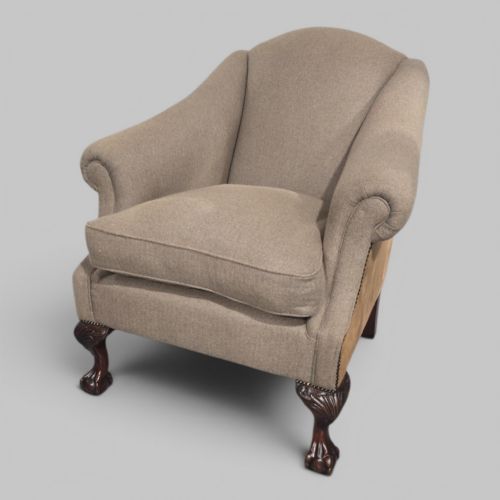
Upholstery techniques involve traditional stuffing secured over webbing or springs, finished with textiles including velvet, leather, and woven fabrics. Brass tacks and gimpe often secure the edges of the covering material.
Some nineteenth-century drunkards' chairs feature exceptionally low seats designed so gentlemen could doze off comfortably without rolling too far.
What varies in quality
Quality rests in the crispness of the timber carving and the integrity of the frame construction. Superior pieces show confident joinery and timber selection that has settled evenly over generations.
The proportion of the arms, back, and legs dictates the visual balance of the chair. Finer examples retain their original show wood frames without excessive replacement or structural timber fatigue.
The Carved Wood Fireside Chair Glossary
- Bergère
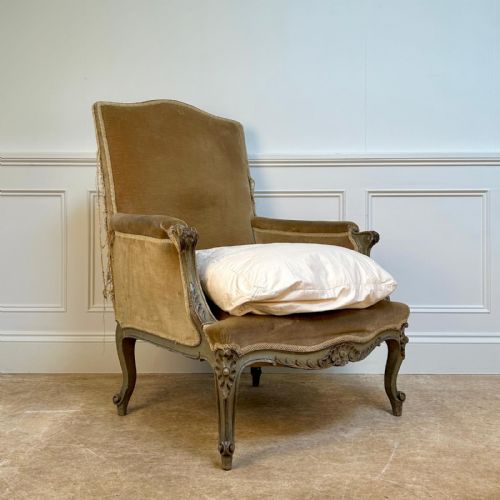
- An enclosed armchair with stuffed upholstery and cane or upholstered sides. This French form gained popularity in various revivals.
- Windsor
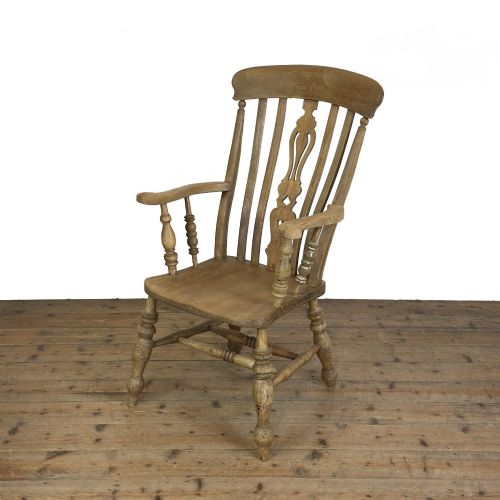
- A wooden chair featuring a saddle-shaped seat into which the legs and back spindles are wedged. Elm and beech commonly form these traditional country pieces.
- Show wood
- Exposed timber framing on an upholstered chair that displays the grain and carving. Victorian makers utilised this to highlight polished walnut or mahogany.
- Wingback
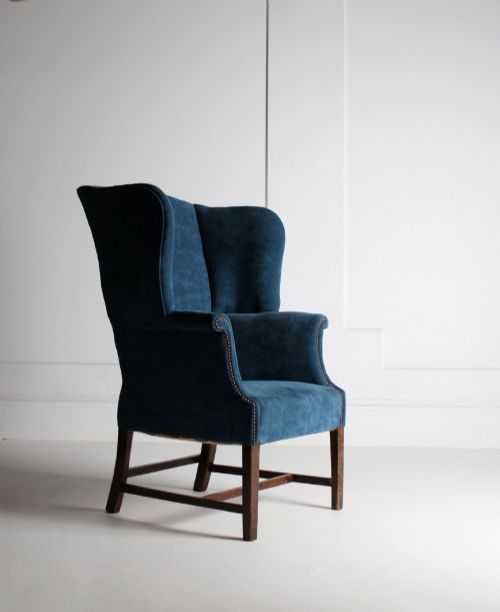
- An armchair with high sides attached to the arms and back to shield the sitter from drafts. Early examples served a practical purpose near open hearths.
- Cabriole leg
- A furniture leg that curves out and then in, resembling an animal's foreleg. This shape appears frequently on revival seating from the nineteenth century.
Carved Wood Fireside Chair: Frequently Asked Questions
How do I care for timber frames?
Keep wooden frames away from direct heat sources and sudden temperature shifts to prevent the timber from splitting. Regular dusting with a dry cloth maintains the surface finish.
Apply traditional wax sparingly when the wood appears dry, buffing it gently to preserve the natural sheen of the material.
Were these chairs meant for firesides?
Many low armchairs and wingbacks were specifically proportioned for warmth near a hearth, shielding the occupant from drafts. Their sturdy wood frames suited daily domestic use.
Over time, forms evolved from simple country seating into upholstered library and gentleman's chairs designed for studies and parlours.
How do I identify the period?
Examine the timber species, joinery methods, and the style of any carved ornament to gauge the era of manufacture. Nineteenth-century pieces often combine earlier revival motifs with machine-assisted or hand finishing.
Comparing the turning on legs and stretchers against dated examples helps narrow down the decade of production.
Can these chairs suit modern rooms?
The varied timber tones and classic silhouettes allow these seats to anchor contemporary living spaces. They function well as reading chairs or occasional seating.
Mixing period woodwork with modern interiors adds textural contrast and historical depth to a room.