
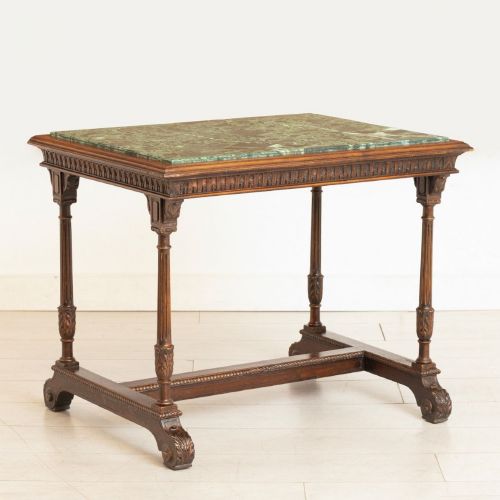


French Marble Coffee Table
A french marble coffee table brings a cool stone surface and classical proportion to a room, grounding modern and traditional spaces alike.
French Marble Coffee Table
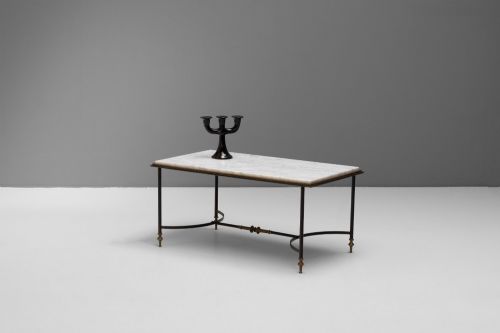
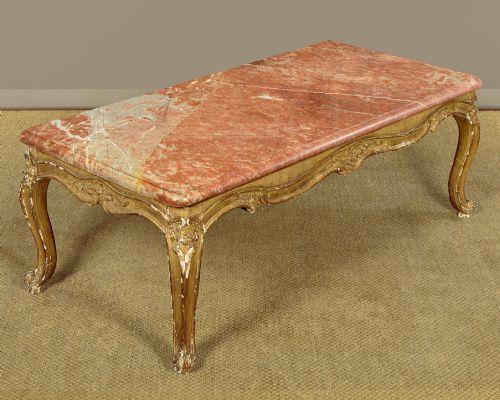
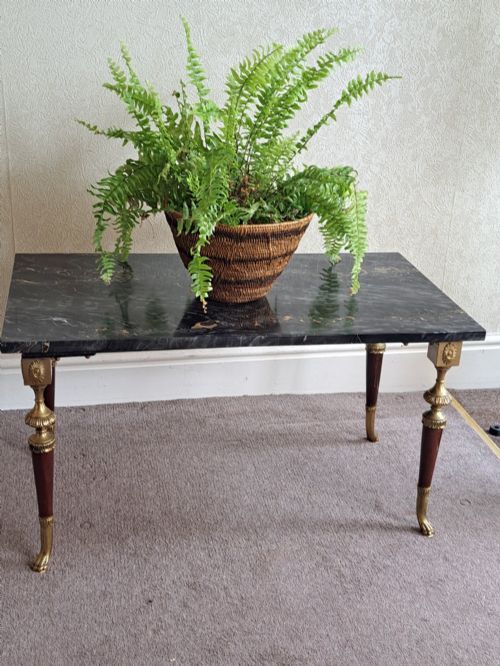
A french marble coffee table combines heavy stone with timber, brass, or iron frames. These pieces span from the nineteenth century into the nineteen-thirties, reflecting diverse historical revivals.
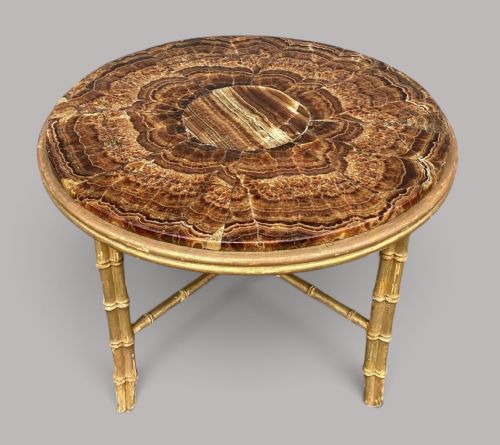
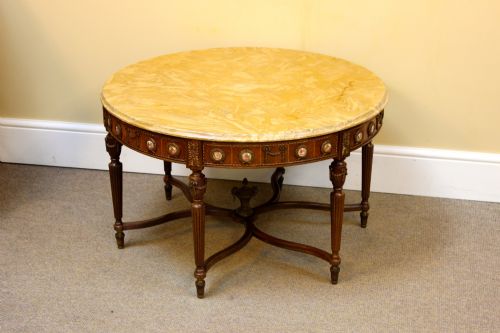
The format ranges from low coffee tables and round cafe tables to taller side and centre tables adapted for modern living. Walnut, mahogany, and giltwood appear frequently alongside painted and wrought iron bases.
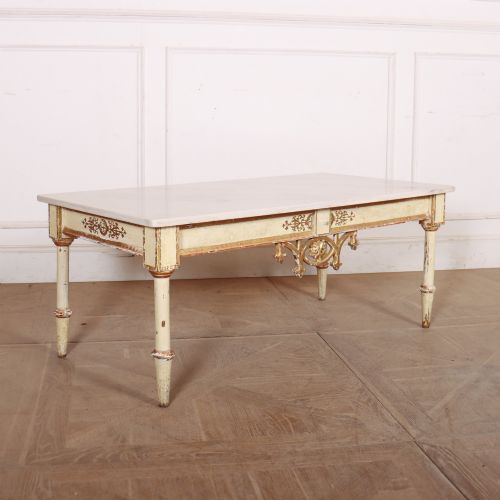
Neoclassical and Louis XVI styles dominate the selection, often featuring restrained proportions, fluted legs, and inset stone slabs. Pieces from the early twentieth century bring lighter frames and distinct patination to the form.
Construction and materials
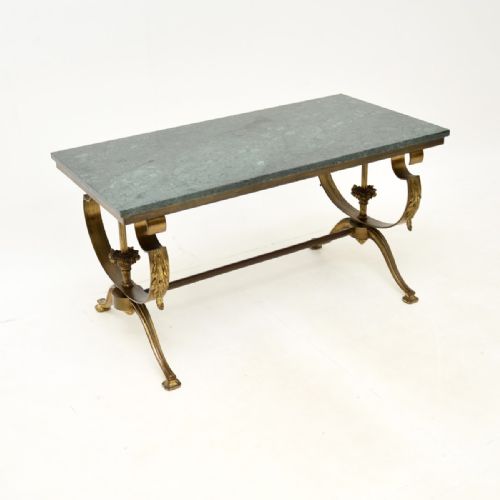
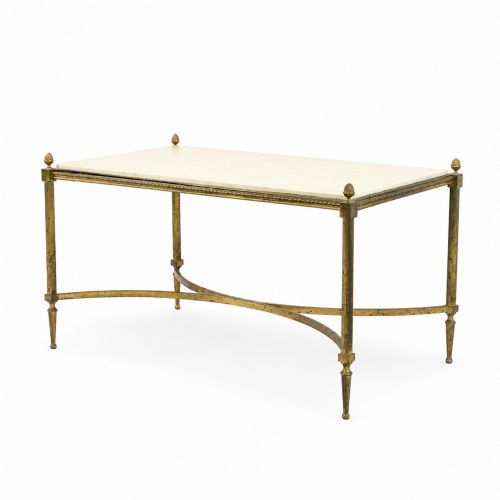
Makers set polished marble slabs into timber, brass, or wrought iron frames, securing the heavy stone tops within moulded surrounds or galleries. Giltwood and carved mahogany provide ornate structural support for the dense stone.
Foundry-cast brass elements and delicate ormolu mounts complement the cool surface of the marble. Iron frames offer a sturdier industrial contrast, often finished with painted or patinated surfaces.
One early twentieth-century workshop, Masion Ramsay, left its mark on these stone-topped tables.
Assessing quality
Quality rests in the harmony between the stone top and its supporting frame. Superior examples feature dense, well-figured marble fitted precisely into hand-carved giltwood or heavy brass mounts without gaps.
Finer construction shows in the crispness of carved details on walnut and mahogany bases, as well as the stability of the joinery beneath the weight of the stone.
Masion Ramsay
The French Marble Coffee Table Glossary
- Bouillotte table
- A small round card or occasional table with a raised gallery around the marble top, typically featuring candle slides or small drawers.
- Giltwood
- Timber coated with a thin layer of gold leaf or gold paint, frequently used on ornate nineteenth-century frames.
- Ormolu
- Gilded bronze or brass applied as decorative mounts to furniture frames and table legs.
- Neoclassical
- A style drawing inspiration from classical antiquity, characterised by straight lines, symmetry, and restrained classical motifs.
French Marble Coffee Table: Frequently Asked Questions
How do I clean a marble top?
Wipe the surface with a damp cloth and mild, neutral soap. Avoid acidic cleaners that etch the polished stone.
Dry the marble thoroughly after wiping to prevent water spots and maintain the natural lustre.
Are these tables heavy?
Yes, the stone slabs make these tables considerably heavier than standard wooden furniture. Moving them generally requires two people to lift the top and base safely.
Many period designs rest the stone unattached in a rebated frame, meaning the top lifts out entirely for transport.
Can I use a side table as a coffee table?
Many smaller tables listed historically as side or lamp tables now function comfortably as low coffee tables. Check the height dimensions to ensure proper alignment with your seating.
Shorter cafe and bistro tables offer similar proportions and work well in compact living spaces.
How do I identify Louis XVI style?
Louis XVI style pieces favour straight lines, geometric symmetry, and classical motifs over the curved asymmetry of earlier rococo designs. Look for fluted legs, rectangular frames, and restrained carving.
This aesthetic returned to popularity in Edwardian revivals and nineteen-twenties modern interpretations.