

Vintage French Low Table
These vintage french low table pieces bring continental style and low-slung utility to a room, offering surface space built with traditional craftsmanship.
Vintage French Low Table
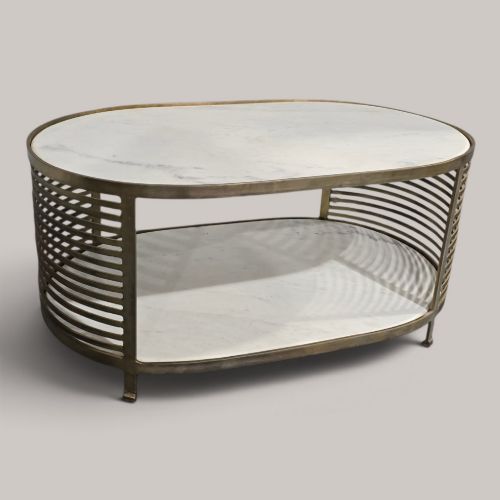
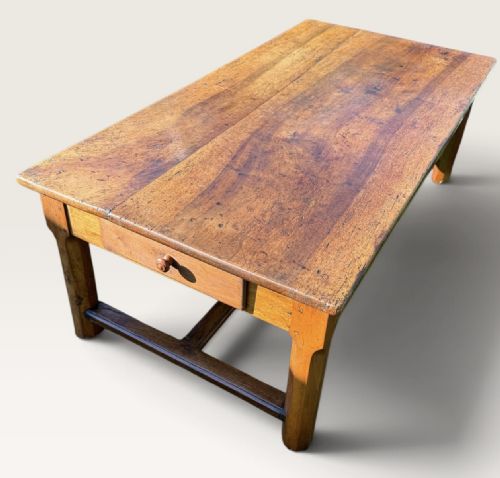
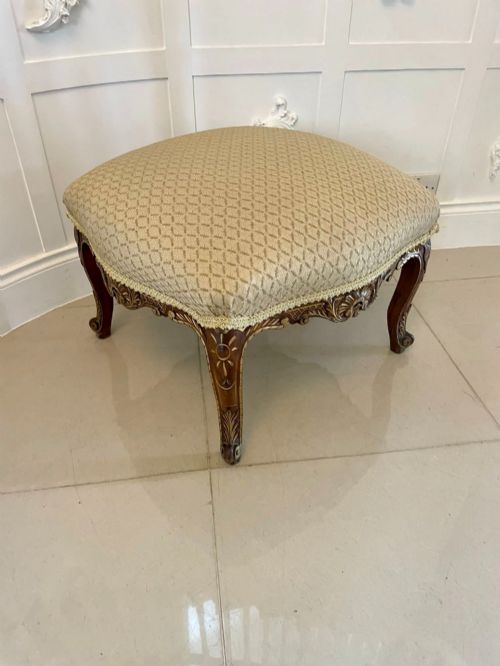
A vintage french low table brings continental form into modern spaces, drawing from styles like French Provincial, Art Deco, and Louis XV Revival. These items function primarily as coffee tables, side tables, and occasional surfaces, sitting low to the floor.
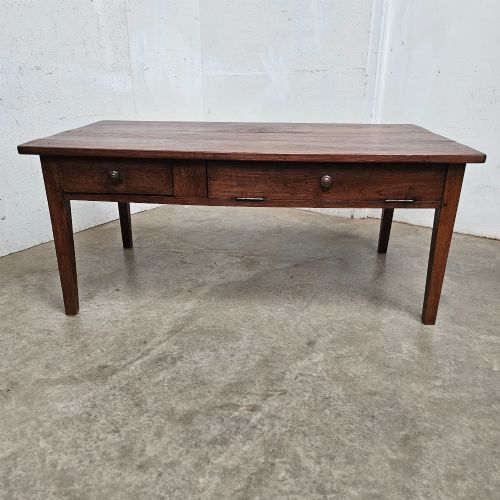
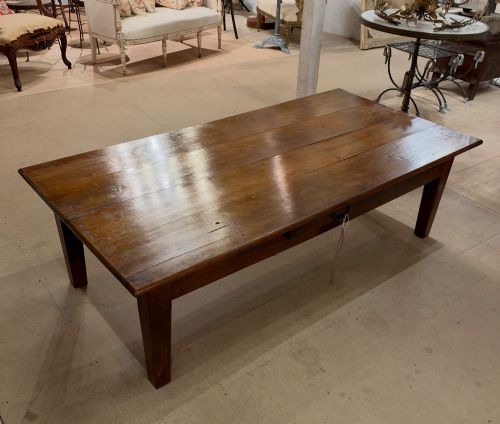
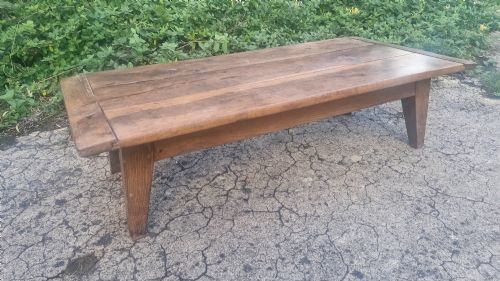
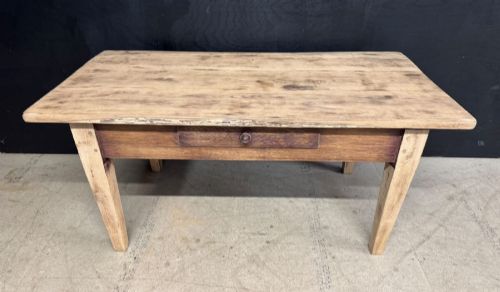
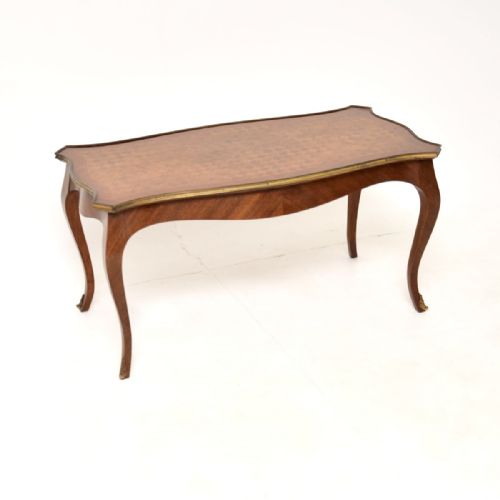
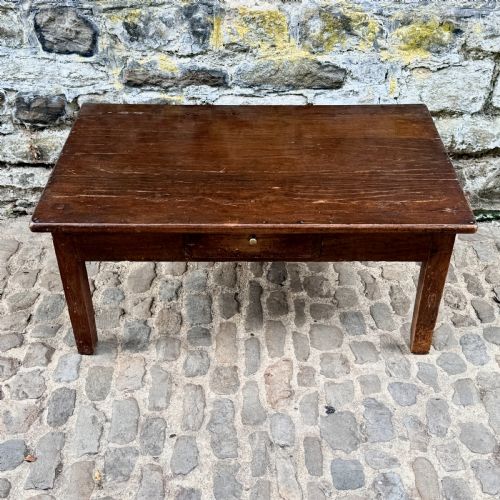
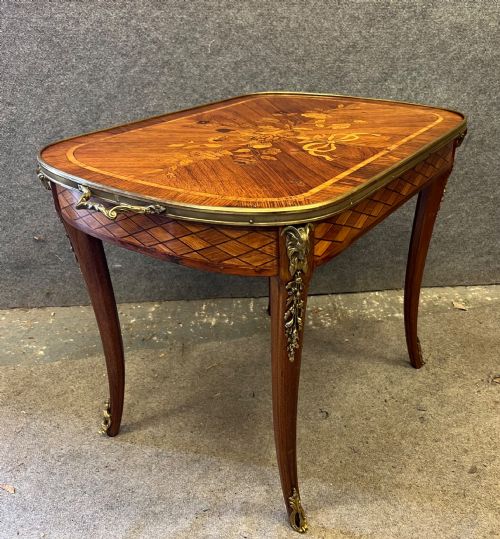
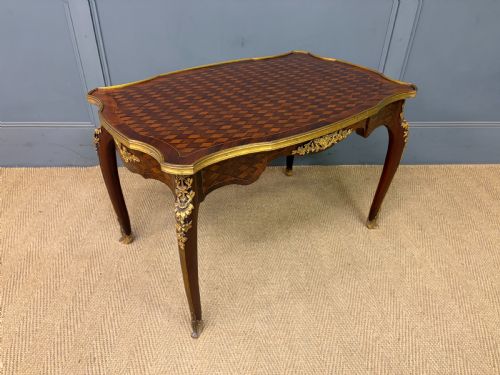
The selection ranges from rustic farmhouse oak and chestnut constructions to refined walnut and mahogany pieces decorated with parquetry and marquetry. Buyers frequently encounter marble-topped and brass-mounted examples dating from the nineteenth and early twentieth centuries.
Makers such as Maison Jansen, Maison Bagues, and Maison Ramsay appear alongside provincial workshops, spanning periods from the 1850s through the 1930s. Forms vary from simple round and rectangular coffee tables to tray tops, demi-lune side tables, and display pieces.
How vintage french low table pieces were made
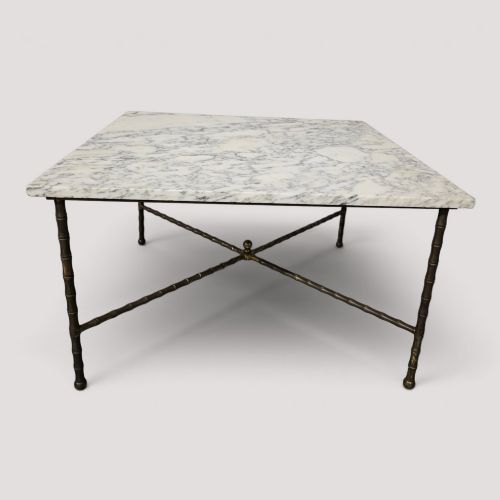
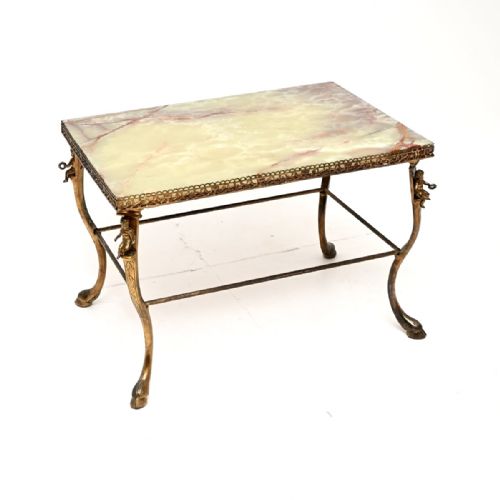
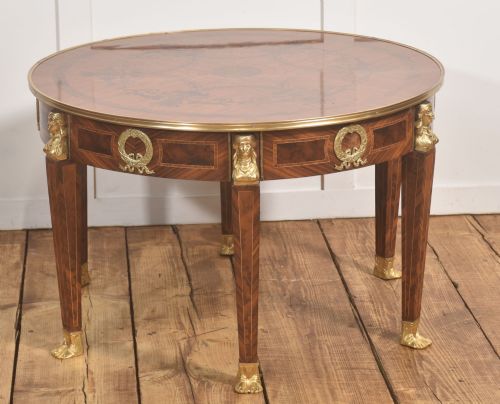
Cabinetmakers utilised hardwoods such as oak, walnut, cherry wood, and satinwood, often employing parquetry and marquetry to create geometric or floral surface patterns. Tops frequently feature inset slabs of white or onyx marble, secured within wooden frames or supported by metal structures.
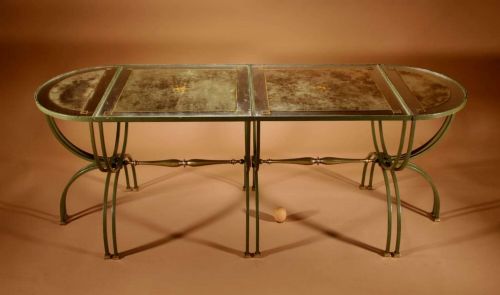
Metalwork plays a significant role, with brass, bronze, and wrought iron forming frames, mounts, and gallery rails. Ormolu mounts add decorative detail to walnut and mahogany structures, while giltwood finishes provide traditional ornamentation on carved wooden frames.
Vintage French Low Table Retail Price Guide 2026
Typical asking prices for vintage french low table among the pieces listed under this phrase on Sellingantiques today, from the lower quarter to the upper quarter. They describe what is for sale here now, not the wider market.
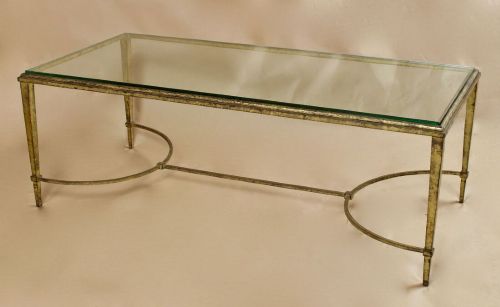
Listings feature woods like walnut, oak, chestnut, and satinwood alongside materials such as marble, brass, wrought iron, and glass.
What varies in quality in vintage french low table pieces
Construction methods determine durability, separating items made with traditional joinery from simpler assembly. The weight and thickness of inset marble tops and the precision of inlaid parquetry or marquetry indicate the maker's level of skill.
Materials dictate the tier of the piece, distinguishing standard oak and chestnut frames from fine burr walnut, satinwood, or heavy cast bronze frameworks. The presence of maker stamps or attribution to known ateliers elevates the standing of an item within its period.
Maison Jansen·Maison Bagues·Maison Ramsay
The Vintage French Low Table Glossary
- Parquetry
- Geometric wood inlay forming a mosaic pattern on tabletops. This technique uses contrasting timbers to create visual depth.
- Marquetry
- Elaborate pictorial wood veneer work applied to furniture surfaces. Craftsmen assemble tiny pieces of various coloured woods to form floral or figurative designs.
- Ormolu
- Gilded bronze mounts applied to furniture for decoration. This finish gives metallic accents a rich, golden appearance.
- Demi-lune
- Half-moon or semicircular shape used for side tables designed to sit flush against a wall. This profile saves floor space in narrower rooms.
- Tray top
- A table surface featuring a raised lip or edge resembling a serving tray. This design prevents items from sliding off the surface.
Vintage French Low Table: Frequently Asked Questions
What defines a vintage french low table?
These tables are low-slung surfaces originating from France, spanning rustic wooden farmhouse builds to refined Art Deco and period revival designs.
They serve primarily as coffee or side tables, incorporating materials like marble, brass, walnut, and oak to suit diverse interior settings.
How do I care for marble-topped tables?
Marble surfaces require gentle cleaning with mild, non-acidic soap and water to preserve the stone polish and prevent staining.
Using coasters and avoiding harsh chemical cleaners protects both the natural stone and the surrounding wooden or brass frames.
Are these tables sturdy enough for daily use?
Most examples utilise solid hardwoods like oak, walnut, and cherry, offering robust construction built for everyday living.
Metal-framed pieces using brass or wrought iron similarly provide strong structural support while maintaining a lighter visual footprint.
How can I date a vintage french low table?
Dating relies on stylistic markers, such as the geometric lines of Art Deco pieces versus the ornate curves of Rococo revival furniture.
Materials, joinery techniques, and occasional maker stamps or signatures also help pinpoint the specific era of manufacture.