
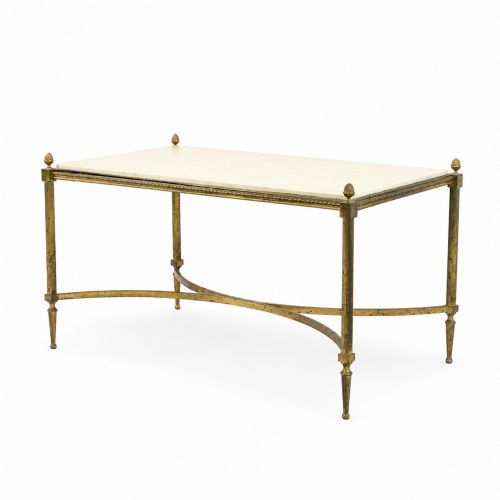


Brass Marble Coffee Table
A brass marble coffee table brings weight and polish to a room, combining cool stone with warm metal in lasting forms.
Brass Marble Coffee Table
A brass marble coffee table combines a polished stone surface with a metal frame, creating a sturdy centrepiece for a sitting room. These pieces span the early twentieth century, drawing on French, Edwardian, and Neoclassical traditions.
The versions most commonly met on this page include French and Italian designs, often featuring inset stone tops supported by brass or gilt metal frames. Alongside standard coffee tables, the selection includes side tables, plant stands, and occasional tables that share the same materials.
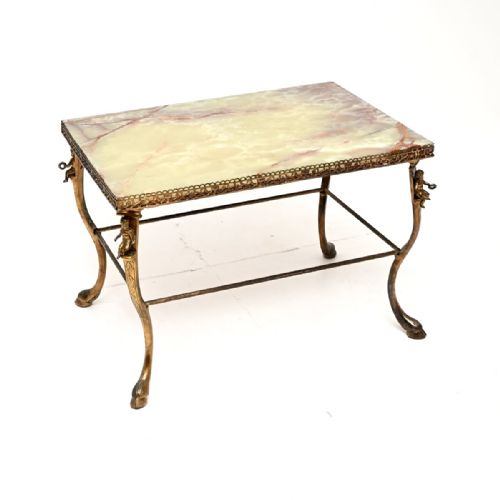
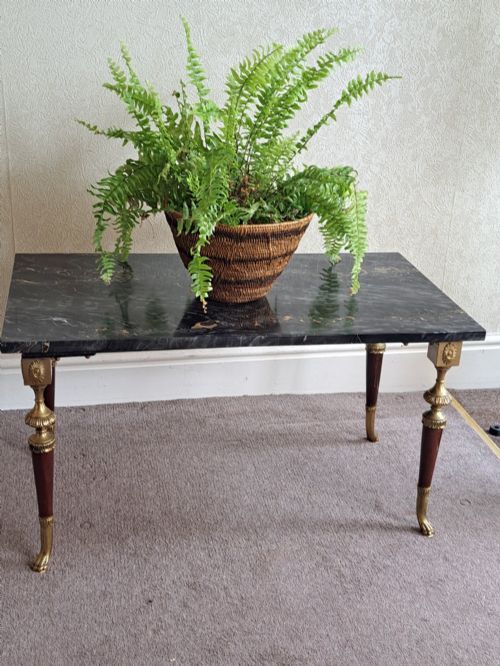
The forms range from simple low tables to pieces with decorative details such as lion paw feet, dolphin motifs, or brass galleries. Makers and designers from the Amsterdam School to Maison Ramsay produced variations within these styles.
Materials and construction
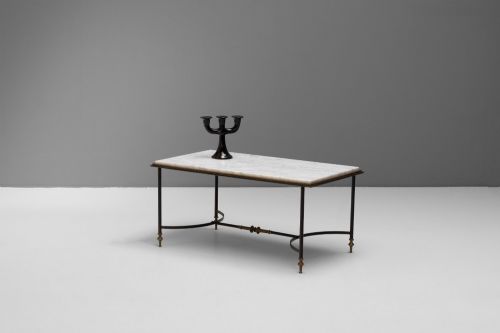
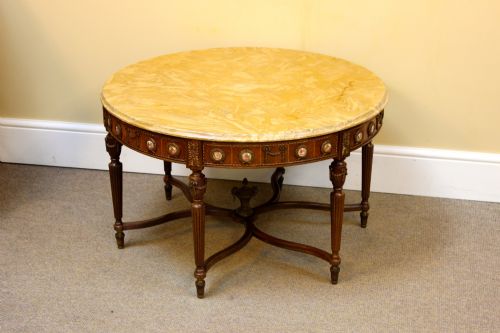
The primary materials uniting these pieces are brass and marble, frequently paired with wooden structures in walnut, mahogany, or burr walnut. Gilt metal and iron also appear in frames, while onyx marble is utilised in specific low table nests.
Construction techniques involve fitted stone slabs resting within metal or wooden galleries, secured by frames that range from cast brass to tubular or inlaid woodwork. Tables often incorporate detailed cast feet, fretwork, or inlaid marquetry around the stone insert.
Listings feature pieces spanning the early twentieth century, including Edwardian examples and items from the nineteen-thirties.
What separates the finest pieces
Quality rests in the weight and selection of the marble slab, the crispness of the brass casting, and the integration of secondary timbers like walnut. Superior examples display substantial stone with active veining and heavy, well-defined metal frames rather than pressed sheet components.
The distinction also lies in decorative restraint and stylistic coherence, whether following Louis XVI Revival lines or Amsterdam School geometry. Finer tables show precise joinery in the wooden frames and secure, clean mounting where the stone meets the metal.
The Brass Marble Coffee Table Glossary
- Brass
- A metal alloy of copper and zinc used to form frames, galleries, and decorative mounts. It provides a warm, golden tone that polishes to a bright finish.
- Marble
- A metamorphic rock prized for its natural veining and smooth surface, cut into thick slabs to form the tops of these tables.
- Gallery
- A low raised rim, often pierced or fret-cut in brass, running around the edge of a table top to secure items placed upon it.
- Neoclassical
- A style drawing on classical antiquity, frequently seen in the straight tapered legs, urn motifs, and symmetrical mounts of these tables.
- Inlaid
- A technique where contrasting woods or metals are set flush into the surface of the primary timber to create decorative patterns.
Brass Marble Coffee Table: Frequently Asked Questions
How do I clean a marble top?
Wipe the surface regularly with a soft, damp cloth and neutral soap to prevent staining. Avoid acidic cleaners or lemon juice, which etch polished stone.
Dry the marble thoroughly after wiping to maintain its finish and prevent water marks from settling into the porous stone.
Are these tables heavy?
Most pieces carry significant weight due to the solid stone slabs and metal frames. Moving them generally requires two people to avoid damaging the joints or flooring.
The substantial mass gives them stability as coffee tables, preventing them from shifting easily during daily use.
Where were these tables placed?
They served as central or occasional furniture in formal sitting rooms, drawing rooms, and studies. Smaller versions functioned as plant stands or lamp tables beside seating.
Their decorative qualities made them suitable for prominent positions where the polished stone and metal could catch the light.
How do I identify French style?
French style pieces often display refined lines, restrained carving, and classical mounts inspired by Louis XVI or Empire periods. Look for details like fluted legs, brass galleries, and symmetrical proportions.
These designs prioritise elegance and balance, contrasting with heavier or more rustic interpretations found in other European traditions.