




Gilt Brass Coffee Table
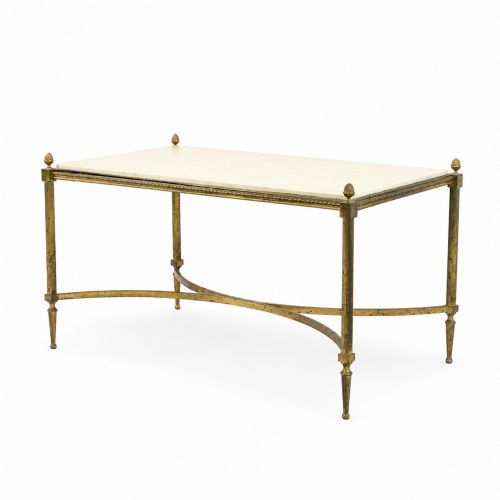
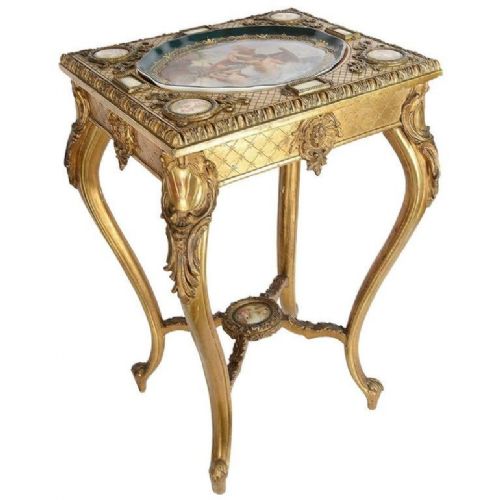
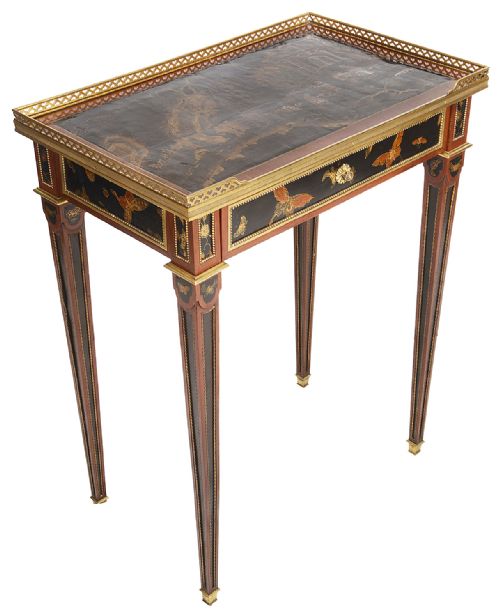
These gilt brass coffee table pieces combine metalwork and stone or lacquer to anchor a reception room with distinct period character.
Gilt Brass Coffee Table
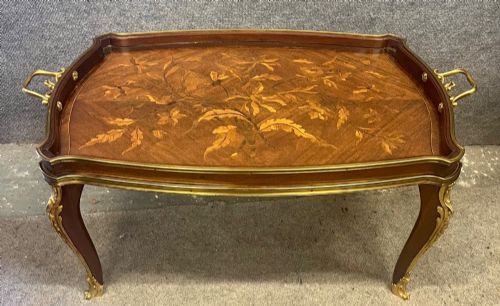
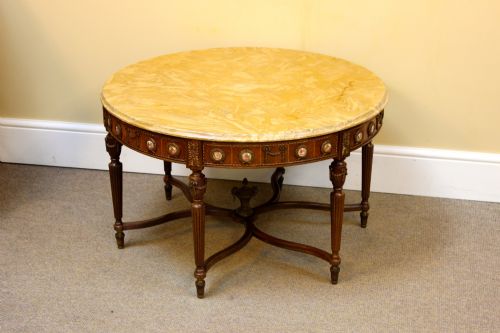
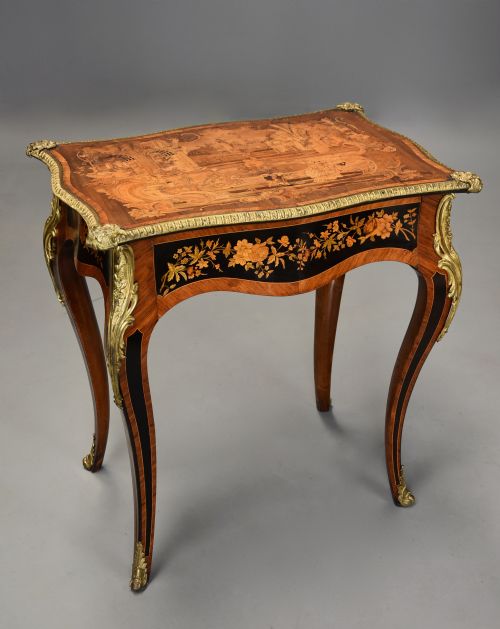
A gilt brass coffee table brings together metal frames with surfaces of marble, lacquer, or inlaid wood such as kingwood and mahogany. When searching for a gilt brass coffee table, buyers encounter forms ranging from mid-century French designs to nineteenth-century centre and occasional tables adapted for modern rooms.
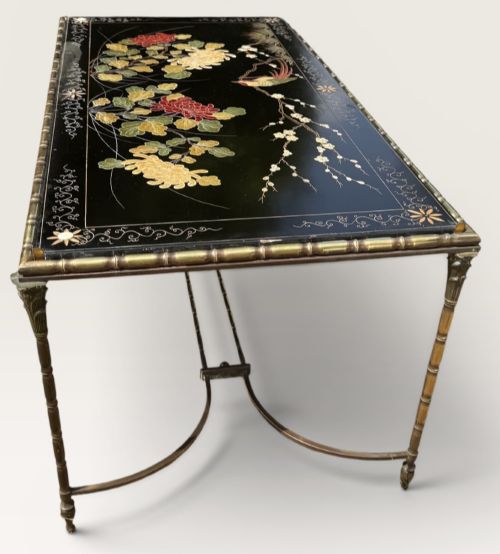
The selection on this page spans several distinct decorative vocabularies, including Louis XV revival, Chinoiserie, Art Deco, and Hollywood Regency. These pieces often originate from French and English workshops, utilising classic silhouettes like tray tops, nesting sets, and dolphin-supported bases.
How they were made
The construction of these pieces relies on cast and gilt metal elements combined with timber frames, frequently incorporating kingwood or mahogany veneers. Ormolu mounts and gilt brass sections are joined to structural supports that hold heavy decorative tops.
Surface decoration involves specialised techniques such as black lacquer work, porcelain plaques, and papier-mâché alongside polished marble and onyx slabs. Artisans fitted stone tops into metal galleries or secured wood inlays with precise joinery suited to daily use.
Several tables manage to incorporate brass dolphins directly into their support structure, proving that sea life makes an enthusiastic base for afternoon tea.
What varies in quality
Quality in these tables rests on the crispness of the metal chasing and the depth of the gilding across the brass and ormolu components. Superior examples display sharply defined cast ornamentation rather than soft, commercial finishing.
The choice of inset material significantly dictates the tier of the piece, with genuine marble, fine lacquer panels, and figured kingwood marking out the more ambitious workshops. Structural rigidity in the joints and the precise fit of inset tops distinguish standard production from finer craftsmanship.
Maison Bagues·Maison Ramsay
The Gilt Brass Coffee Table Glossary
- Ormolu
- Gilded bronze or brass used for decorative mounts on furniture. This technique creates a rich golden finish that defines much nineteenth-century and revival metalwork.
- Kingwood
- A dense, heavily figured timber prized for its contrasting dark violet and brown tones. Cabinetmakers used it for elaborate veneers on French-influenced tables.
- Chinoiserie
- European artistic imitation of Chinese and East Asian motifs. This style appears on lacquered table surfaces depicting traditional landscapes and figures.
- Tray top
- A tabletop designed with a raised rim resembling a serving tray. It prevents items placed on the surface from sliding off.
Gilt Brass Coffee Table: Frequently Asked Questions
How do I clean a marble topped coffee table?
Wipe the surface regularly with a soft damp cloth using mild, pH-neutral soap. Avoid acidic cleaners that etch stone.
Dry the marble thoroughly afterwards to prevent water marks from settling into the polished stone.
How do I identify Art Deco furniture?
Art Deco pieces display clean geometric lines, sleek materials, and stylized motifs popular during the interwar period. They frequently utilise contrasting veneers and streamlined metal accents.
These designs reject ornate nineteenth-century revival styles in favour of modern symmetry and elegance.
Where should I place a centre table?
Centre tables work best as freestanding focal points in the middle of a room rather than pushed against a wall. They provide 360-degree visual interest and serve as gathering spots for decorative objects.
Ensure there is enough surrounding floor space to walk comfortably around the piece.