
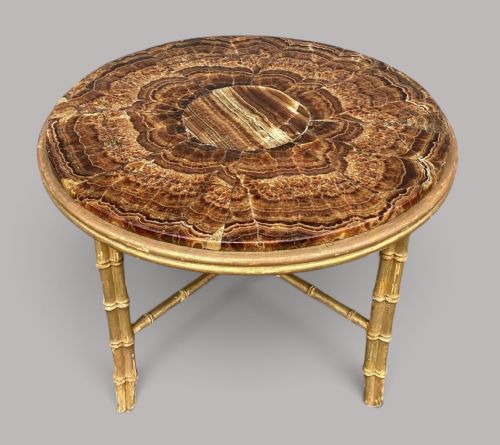
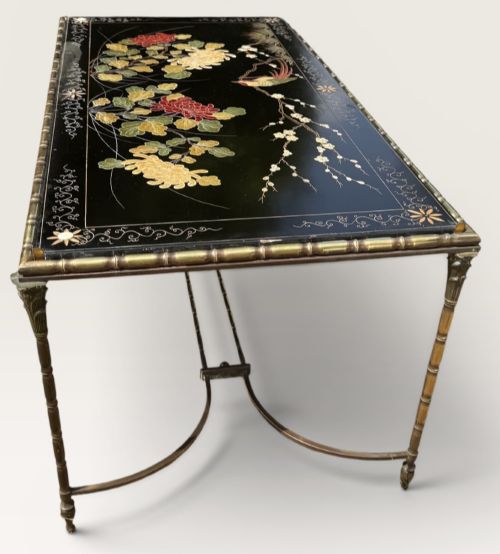
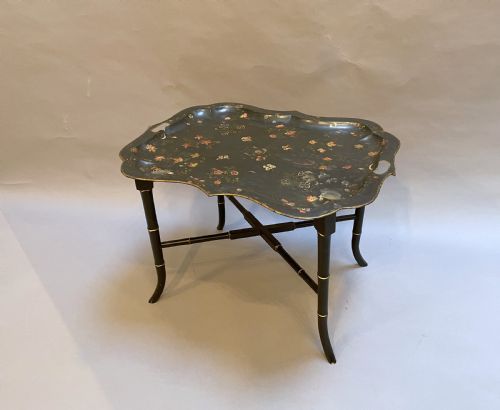


Faux Bamboo Coffee Table
These faux bamboo coffee tables bring together nineteenth-century ingenuity and decorative woodwork to anchor a room with character.
Faux Bamboo Coffee Table
A faux bamboo coffee table bridges the gap between formal historic seating areas and relaxed modern living spaces. When you search for this phrase, you find low tables that adapt nineteenth-century designs, folding frames, and tray tops for everyday use.
The versions most common on this page span the Victorian and Regency periods, alongside later twentieth-century interpretations. They appear as low occasional tables, serving trays on stands, and dedicated coffee tables with distinctive turned wooden legs.
Originating from British, French, and Chinese export traditions, these pieces often incorporate chinoiserie motifs, painted finishes, and lacquered surfaces. They function as versatile low tables that suit both eclectic interiors and traditional period rooms.
How they were made
Maker's workshops built these tables using hardwoods and timber, turning the wood on a lathe to mimic the segmented nodes of natural bamboo. Artisans applied giltwood, gold leaf, and lacquer to enhance the textured surfaces and simulate exotic materials.
Many examples utilise papier-mâché and toleware for the tabletops, forming robust surfaces that could be decorated with detailed hand-painted designs. Brass framing and marquetry inlays also appear, adding structural contrast to the turned wooden frames.
Listings on this site feature nineteenth-century and early twentieth-century pieces, utilising materials such as papier-mâché, lacquer, brass, and giltwood.
What varies in quality
The distinction between ordinary and exceptional pieces lies in the precision of the bamboo turning and the preservation of the painted decoration. Hand-carved or meticulously turned wooden nodes show crisp definition, whereas lesser examples blur these details.
Surface finish dictates the overall character of the piece, with original lacquered, gilt, or japanned finishes holding greater artistic integrity than later overpainting. The depth and skill of the original chinoiserie or floral motifs separate standard production items from finer studio work.
Maison Bagues
The Faux Bamboo Coffee Table Glossary
- Faux bamboo
- A decorative technique where wood is carved, turned, or painted to imitate the jointed stems of natural bamboo. This style gained popularity during the nineteenth century under the influence of Asian export goods.
- Papier-mâché
- A composite material made from paper pulp or layers of paper bound with glue, pressed into moulds, and dried. When finished with lacquer and paint, it provided a strong, lightweight surface for serving trays.
- Toleware
- Enamelled or lacquered metalware, usually iron or tin, painted with decorative scenes or floral motifs. It frequently formed the removable tops of nineteenth-century occasional tables.
- Japanned
- A European imitation of Japanese and East Asian lacquerwork, created by applying resin-based varnishes in layers. The finish is typically heat-cured and polished to a glossy sheen.
Faux Bamboo Coffee Table: Frequently Asked Questions
What is a faux bamboo coffee table?
A faux bamboo coffee table is a low table featuring wooden legs or frames carved and painted to resemble natural bamboo. These pieces draw on nineteenth-century design traditions and often incorporate tray tops or lacquered finishes.
They serve as practical living room furniture while adding a distinct decorative element derived from Victorian and Regency styles.
How were these tables used originally?
Many of these tables began as serving trays or butler's trays mounted on folding or fixed wooden stands. They were brought out to hold tea, drinks, or writing materials in sitting rooms.
Over time, many lower-height trays and occasional tables found a permanent second life as coffee tables in modern homes.
How do I care for a lacquered or painted surface?
Lacquered and painted surfaces require gentle treatment to preserve the historic finish. Dust them regularly with a soft, dry cloth and keep them away from direct sunlight and excessive moisture.
Avoid using modern chemical polishes or abrasive cleaners, which can damage the underlying varnish or gold leaf.
How can I tell a nineteenth-century piece apart from later revivals?
Examining the construction of the frame, the materials of the tabletop, and the wear on the finish helps indicate the period. Nineteenth-century pieces frequently use papier-mâché or solid hardwoods with hand-turned bamboo detailing and aged patination.
Later revival styles from the twentieth century often display different assembly methods and standardised modern fixings.