

Brass and Marble Table
A brass and marble table brings together cool stone and warm metal to anchor a room with classical balance.
Brass and Marble Table
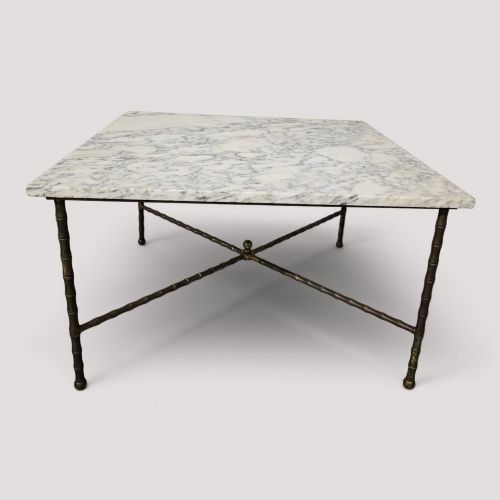
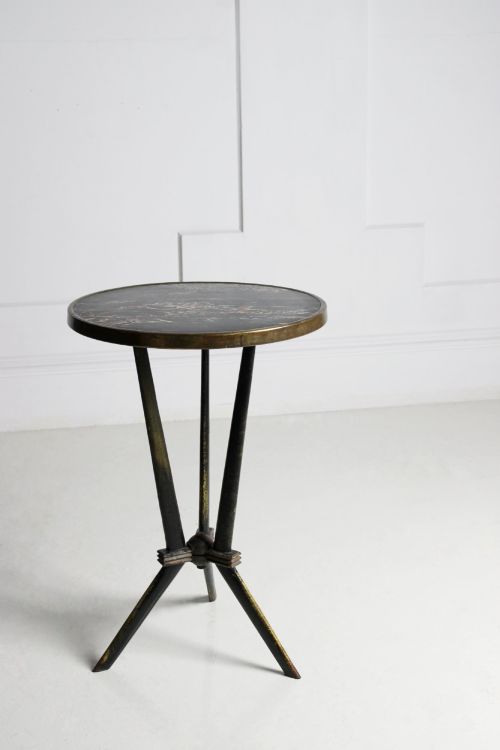
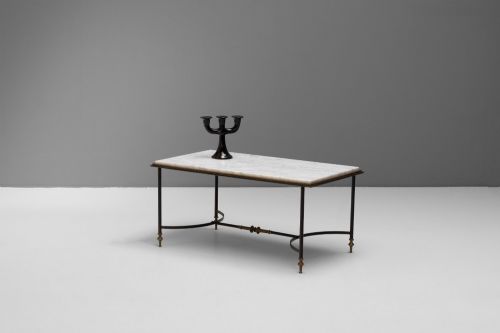
A brass and marble table combines a solid stone top with metallic framing, taking forms such as coffee tables, lamp tables, side tables, and console tables. These pieces draw heavily on Neoclassical, Louis XVI, and French Empire design vocabularies.
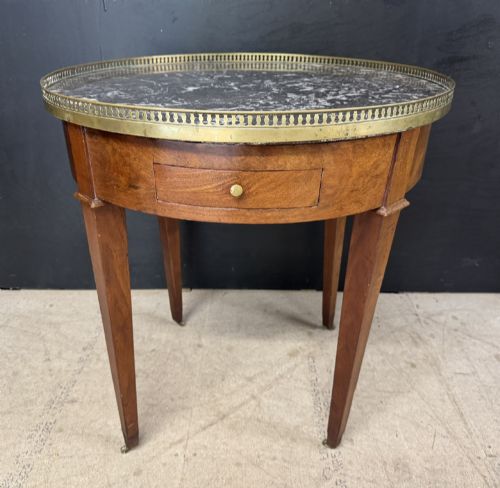
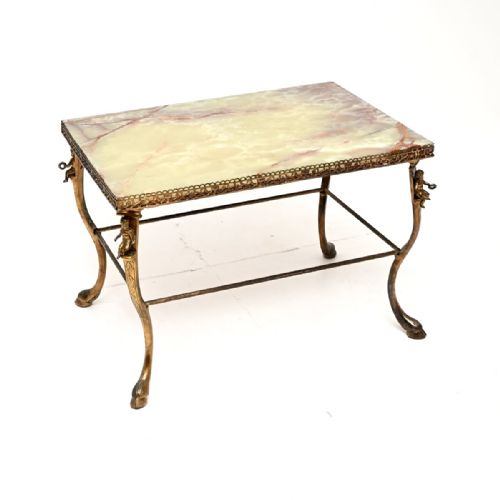
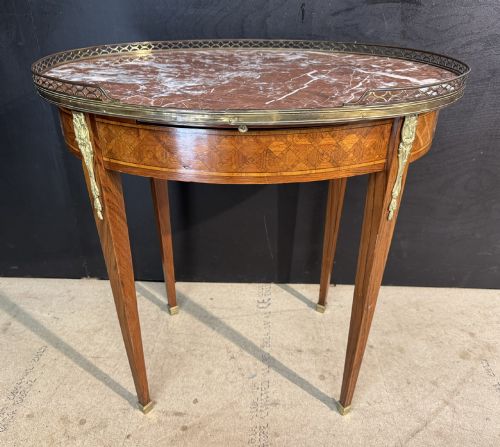
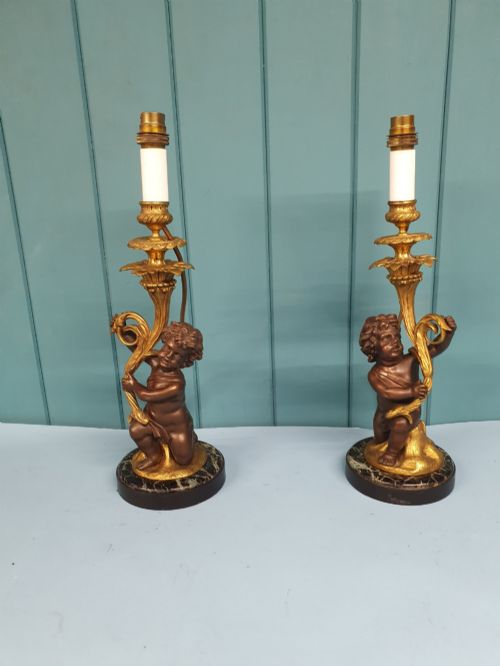
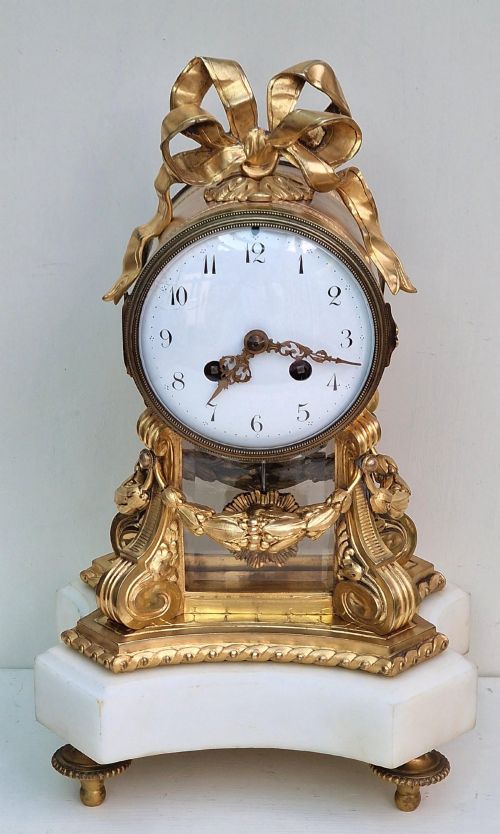
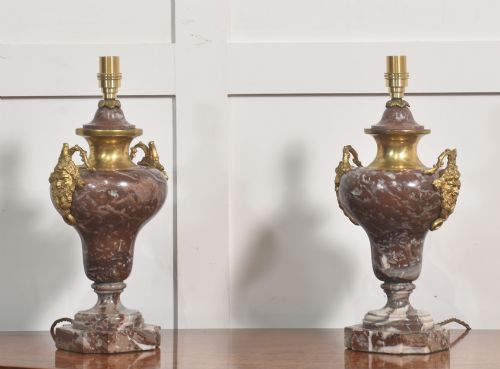
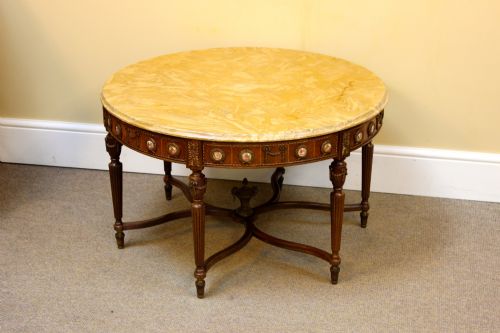
The version most commonly met on this page is the French lamp or coffee table dating from the nineteenth or early twentieth century. These incorporate cast brass, gilt bronze, or ormolu mounts alongside white, rouge, or black marble tops.
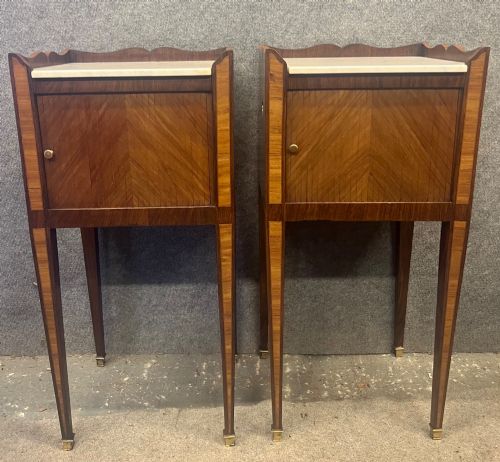
Makers and workshops across France and Britain produced these forms, often pairing the marble and brass with secondary timbers such as mahogany and walnut. The resulting furniture ranges from small bedside cabinets to large centre tables.
Materials and construction methods
Makers constructed the primary frames using cast brass, ormolu, or gilt bronze, frequently mounting these decorative elements onto mahogany, walnut, or rosewood structures. The metal components were often cast in sections and chased by hand before being fixed to the wooden carcass or stone support.
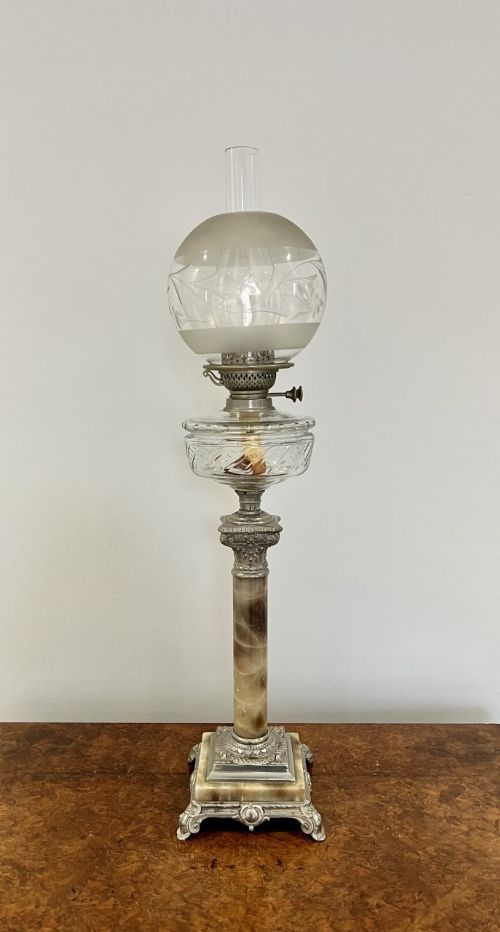
Marble slabs, selected for their colour and veining including white, black, rouge, and onyx varieties, were cut and polished to fit precisely within or upon the brass framing. Secondary materials such as glass, enamel, and cast iron appear in related lighting and auxiliary pieces.
Listings span periods from 1800 to 1930, uniting French Empire, Victorian, and Art Deco design vocabularies through brass and marble.
Judging the quality of the build
Quality rests in the crispness of the metal casting and the depth of the hand chasing on the ormolu and gilt brass mounts. Superior pieces display sharp relief and secure integration between the brass elements and the stone top.
The grade of the marble and the precision of its fit within the frame distinguish finer examples from standard production. Heavier, well-figured marble slabs paired with dense secondary timbers indicate higher workshop standards.
Maison Millet·Masion Ramsay·François Linke
The Brass and Marble Table Glossary
- Ormolu
- Gilt bronze mounted on furniture or decorative objects. The technique involves applying a gold amalgam to bronze before firing.
- Gueridon
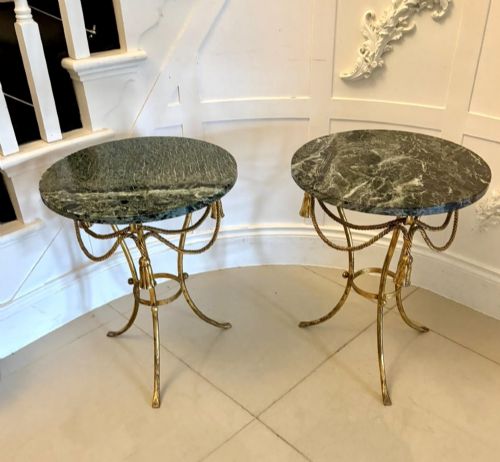
- A small French table supported by one or more columns or figures. These typically feature circular marble tops.
- Bouillotte table
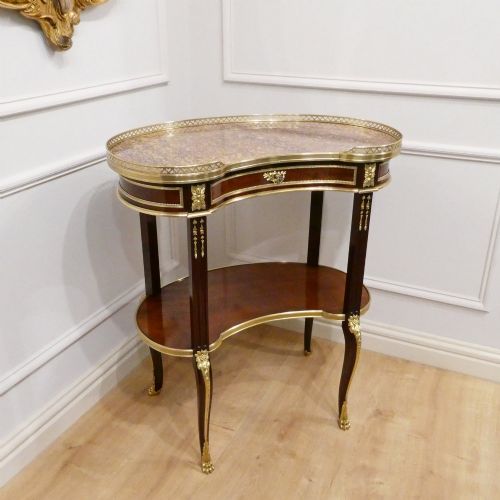
- A small French neoclassical card or occasional table with a raised gallery around the marble top. They usually include candle arms or light fittings.
- Neoclassical
- A style drawing on classical Greek and Roman art. It emphasises symmetry, straight lines, and architectural motifs.
- Rouge marble
- A deep red ornamental limestone with white or grey veining. It was widely used in French furniture and clock cases.
Brass and Marble Table: Frequently Asked Questions
How do I clean a marble top?
Use a soft cloth dampened with warm water and a neutral soap, avoiding acidic cleaners that etch the stone. Dry the surface thoroughly after wiping.
Polish the brass fittings separately with a dry cloth, keeping polishes away from the porous marble surface.
Were these tables used in bedrooms?
Many smaller versions served as bedside cabinets or boudoir tables, holding lamps and personal items. Their compact footprints suited intimate spaces.
Larger variations remained in reception rooms and hallways as display surfaces.
How do I date a brass mount?
Cast quality and finishing marks indicate the period of production, with nineteenth-century pieces showing hand-chased details. Earlier examples often feature heavier fire-gilt bronze.
Twentieth-century reproductions or later adaptations typically display more uniform machine casting.
Can these tables hold heavy lamps?
The combination of a stone top and metal frame provides natural stability for heavy table lamps and clocks. The dense marble weight anchors the base securely.
Ensure the floor is level so the rigid frame does not experience uneven stress.