

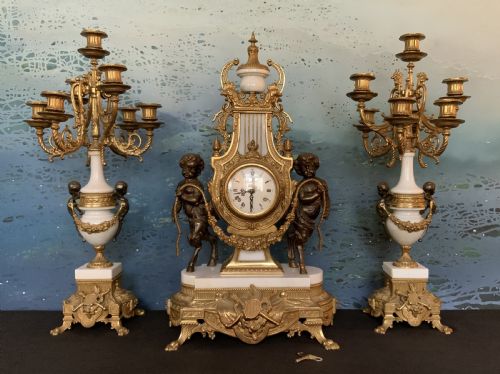


French Marble Clock Garniture
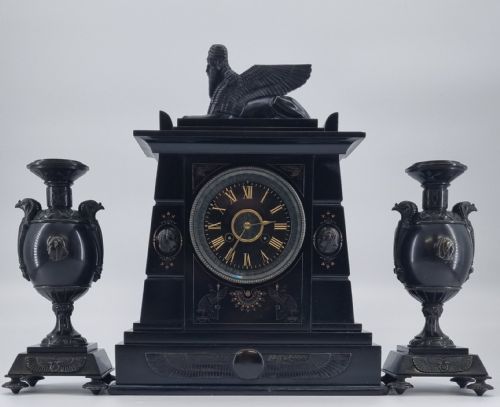
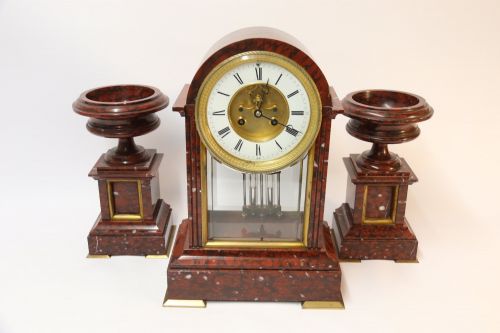
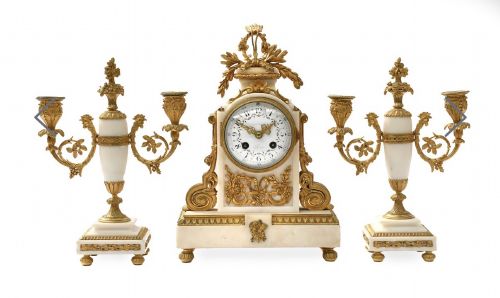
When you search for a french marble clock garniture, you find three-piece mantel centrepieces uniting a striking clock with matching side urns or candelabras.
French Marble Clock Garniture
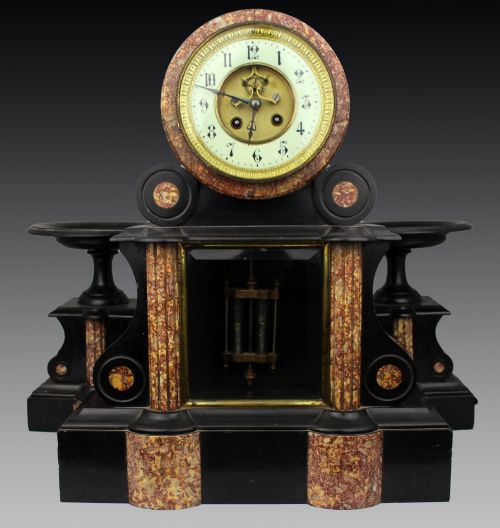
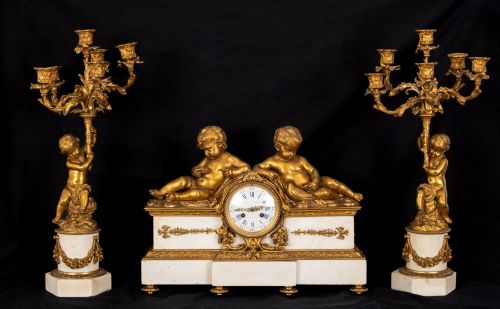
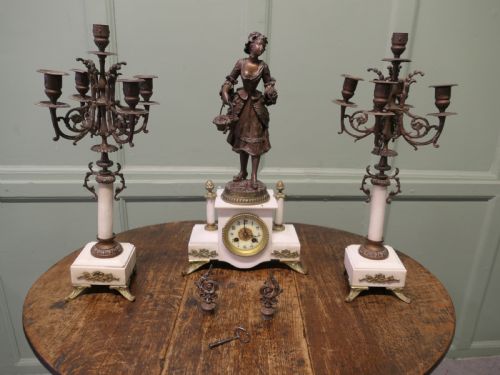
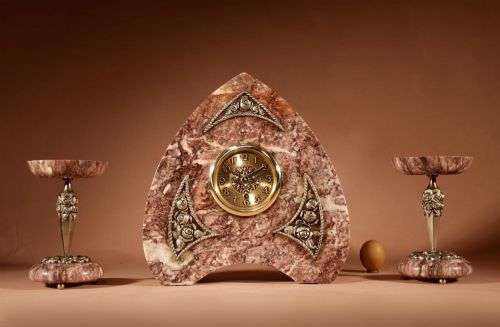
A french marble clock garniture comprises a central mantel clock accompanied by a matching pair of side pieces, such as candelabras, vases or sculptural urns. These sets are designed to create a balanced display across a fireplace mantel or sideboard.
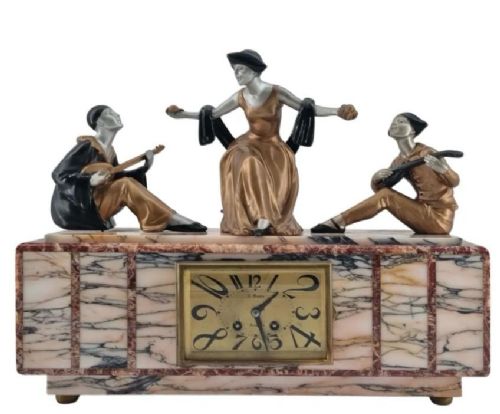
The pieces appearing on this page span from the nineteenth century through the Art Deco period of the 1920s and 1930s. Nineteenth-century examples often lean towards Louis XVI Revival or Second Empire styles, whilst later twentieth-century sets typically adopt streamlined Art Deco geometries.
Most configurations use a combination of black slate, white marble or coloured marble fitted with metal ornaments. The matching side garnitures echo the materials and design motifs of the central clock to form a cohesive ensemble.
How they were made
Clock makers and metalworkers combined heavy natural stone with cast and chased metal components. Marble and slate were sawn, turned and polished to form the architectural bodies of the clocks and garnitures.
Decorative mounts, cherubs and figures were cast in bronze, brass or spelter, then frequently gilded using ormolu techniques or patinated. Enamel dials and glass bezels protected the mechanical clock movements housed within the stone cases.
Materials recorded in current inventory include white marble, black slate, ormolu, brass and enamel.
What varies in quality
Maker attribution also influences standing, with signed movements from established Parisian horologists commanding greater attention. The choice and uniformity of the marble, alongside intact original gilding, separate standard production pieces from finer examples.
Japy Frères·Samuel Marti·H Luppens Paris·H & F Paris·Michel Decoux·Sega
The French Marble Clock Garniture Glossary
- Garniture
- A set of matched ornamental objects designed to be displayed together, typically consisting of a central clock flanked by two matching vases or candelabras.
- Ormolu
- Finely ground high-carat gold applied to a bronze base using a mercury amalgamation process, creating a rich golden surface finish. This technique was widely employed on nineteenth-century French clock mounts.
- Spelter
- An alloy of zinc and lead used as a cheaper alternative to bronze for casting sculptural figures on mantel clocks. It is softer than bronze and usually painted or patinated to imitate other metals.
- Portico clock
- A mantel clock featuring an architectural case supported by four columns, resembling a classical temple facade. These often include matching side garnitures in coordinating marble.
French Marble Clock Garniture: Frequently Asked Questions
How do I wind an antique French clock?
Antique French clocks typically utilise a key-wound, eight-day mechanical movement. You insert the winding key into the small apertures on the enamel dial to tension the springs.
Care should be taken not to over-wind the movement. Regular servicing by a horologist ensures the striking train and escapement function correctly.
How do I date a marble clock garniture?
Dating relies on stylistic clues, materials and maker signatures stamped on the clock movement backplate. Nineteenth-century pieces often feature ornate ormolu mounts and classical Revival styles.
Twentieth-century examples from the 1920s and 1930s transition into clean Art Deco lines, stylised animal figures and simplified geometric marble cases.
Where should I display a clock garniture?
These sets are traditionally placed on a fireplace mantelpiece, sideboard or large console table where the full three-piece arrangement can be viewed together. The central clock acts as the focal anchor.
Ensure the surface is level and sturdy enough to support the considerable weight of heavy marble and bronze components.