



French Louis XV Sofa
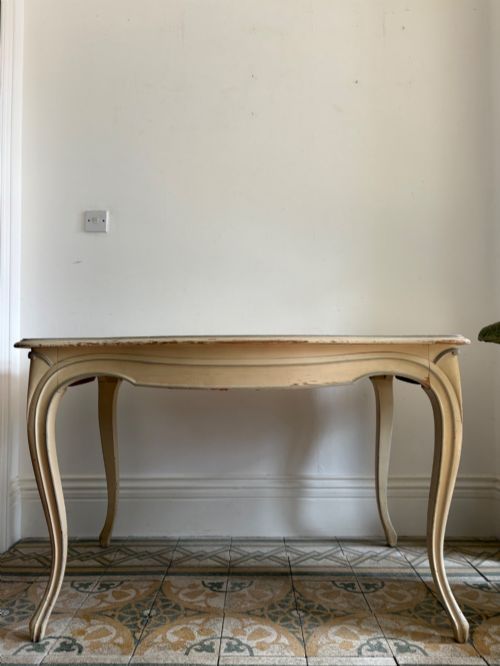
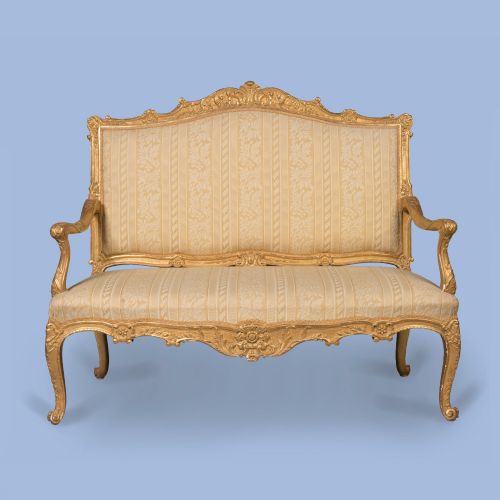
When you search for a french louis xv sofa, you are looking at serpentine frames and cabriole legs designed for graceful salon seating.

French Louis XV Sofa
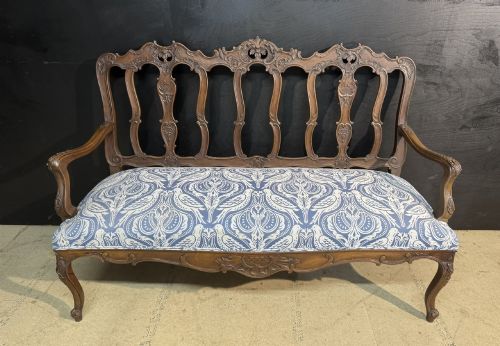
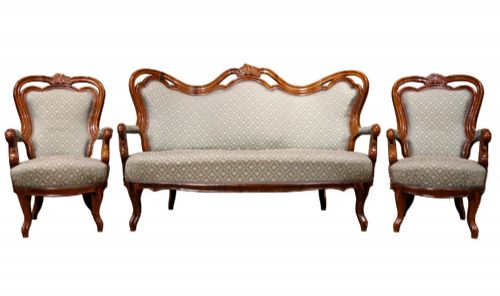
A french louis xv sofa encompasses both original 18th-century forms and the vigorous revival pieces produced throughout the nineteenth and early twentieth centuries. These seats appear as compact two-seater settees, larger three-seater couches, and expansive daybeds tailored for formal drawing rooms.
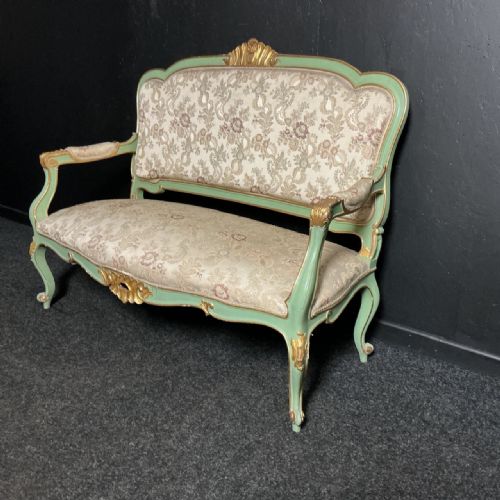
The dominant aesthetic draws heavily from Rococo revival traditions, featuring asymmetrical scrollwork and organic floral carving upon exposed timber frames. Makers frequently interpreted these historic curves in walnut, oak, and giltwood, occasionally pairing the exposed wood with painted or parcel-gilt finishes.
Buyers encounter numerous variations, including bergere frames with upholstered sides and caned versions that utilise woven rattan panels for lighter summer seating. Many survive within larger salon suites accompanied by matching armchairs and occasional tables.
Construction and Materials
Frames are constructed predominantly from solid walnut, oak, and exotic hardwoods such as rosewood, carved by hand to achieve the characteristic undulating contours of the style. Giltwood surfaces are achieved through the application of delicate gold leaf over a prepared gesso base, while painted finishes rely on layered oil paints often distressed by age.
Upholstery methods combine traditional sprung foundations with natural stuffing materials, traditionally finished in silk, velvet, damask, or heavy tapestry needlepoint. Caned variants incorporate tightly woven cane panels fitted directly into channeled wooden rebates along the backrest and arm terminals.
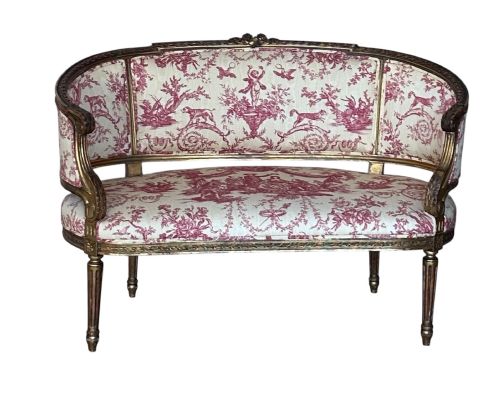
Several compact boudoir settees are specifically described as love seats designed for intimate conversation.
Evaluating Quality
The distinction between ordinary production and superior craftsmanship rests entirely in the crispness and depth of the hand carving upon the wooden frame. High-tier pieces display deeply undercut foliage and flowing asymmetrical lines that integrate seamlessly into the structural joints, whereas lesser examples rely on shallow, machine-milled detailing.
Proportion and material integrity also dictate worth, as master workshops balanced generous curves with structural stability without appearing heavy or clumsy. The retention of original gilding, untouched paint finishes, or period textile upholstery elevates a piece significantly above examples stripped and altered during later restorations.
The French Louis XV Sofa Glossary
- Canapé
- A traditional French term for a long settee or sofa, usually featuring an exposed carved wooden frame and upholstered backrest.
- Bergere
- An enclosed upholstered armchair or settee featuring closed sides filled with upholstery or woven cane panels.
- Cabriole leg
- A furniture leg that curves outward and then tapers inward, mimicking the shape of an animal's leg and terminating in a scroll or pad foot.
- Giltwood
- Timber that has been coated with a thin layer of gold leaf, creating a brilliant reflective surface popular in formal reception rooms.
- Toile de Jouy
- A traditional cotton or linen textile featuring printed pastoral scenes, frequently utilised as upholstery for period seating.
French Louis XV Sofa: Frequently Asked Questions
How do I use a French settee in a modern room?
These sofas provide an elegant focal point in contemporary living spaces when paired with clean-lined upholstery and neutral walls. Their curved silhouettes soften rigid architectural corners while offering practical seating for two or three people.
Position a compact two-seater opposite a modern sofa to create a balanced conversation area. They also function successfully as bedroom window seats or dressing room couches.
What is the difference between Louis XV and Louis XVI styles?
Louis XV furniture is characterised by exuberant curves, asymmetry, and naturalistic floral carvings that embody the Rococo aesthetic. Structural lines flow continuously without sharp angles or straight lines.
Louis XVI design marks a return to neoclassical straight lines, symmetry, and geometric forms. You will notice fluted straight legs and rectangular backrests rather than the curving cabriole shapes of the earlier period.
How can I tell an original 19th-century piece from a later copy?
Nineteenth-century revival pieces display authentic age in the timber shrinkage, hand-forged iron or early brass fixings, and wear patterns on the exposed frame. The joinery often relies on traditional hand-cut tenons rather than modern dowels.
Examine the underside and the interior framing for old tool marks and consistent patination. Modern reproductions frequently mimic antique finishes artificially without showing the natural degradation of older materials.
Are caned sofas sturdy enough for daily use?
Caned seating was originally designed for lighter seasonal use and requires gentle care to prevent the woven rattan from drying out and snapping. Modern owners should avoid placing caned sofas in direct sunlight or beside intense heat sources.
While vintage cane is surprisingly resilient when intact, heavily used seats benefit from occasional reinforcement beneath the mesh. Many surviving examples retain strong structural integrity after more than a century of careful ownership.