





French Empire Plant Stand
A french empire plant stand brings classical architectural dignity and rich mahogany to a room, offering an elevated perch for greenery or trailing foliage.
French Empire Plant Stand
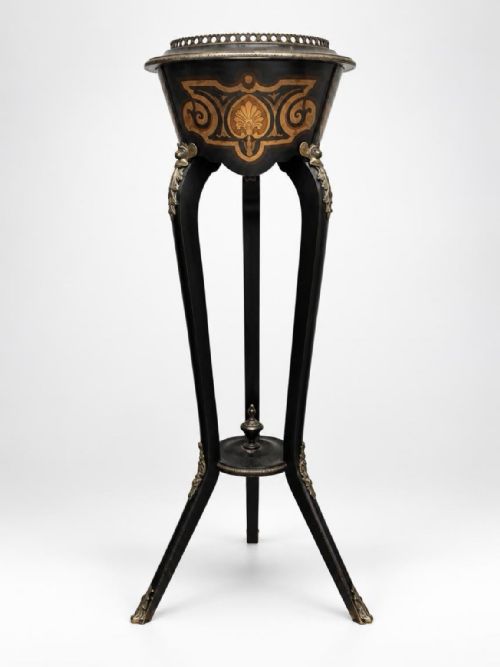
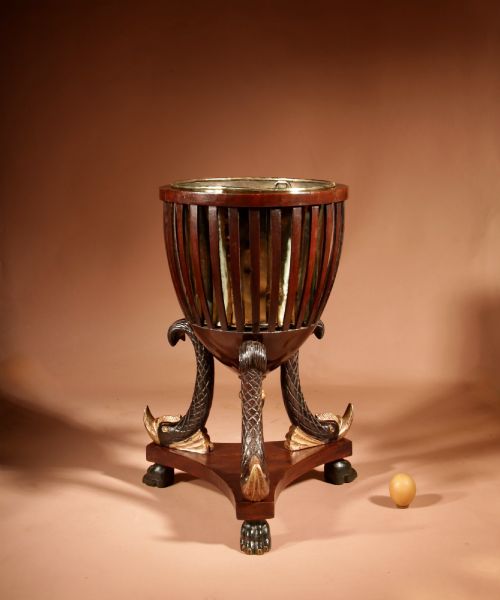
A french empire plant stand is designed to elevate horticulture within domestic interiors, drawing on classical forms and architectural motifs. You will encounter these pieces under various designations including jardinieres, planter stands, and pedestals from the nineteenth century and the Edwardian era.
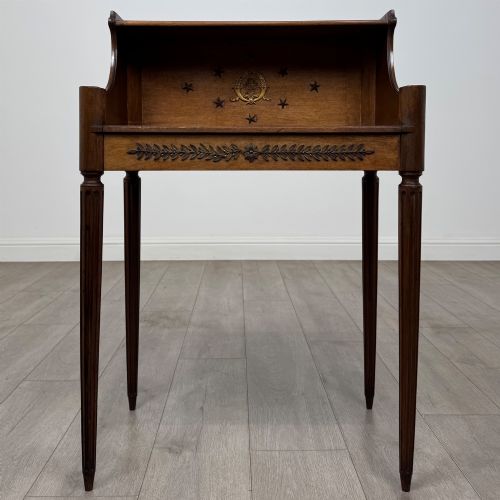
The selection ranges from strict French Empire and Empire Revival pieces to related occasional tables, side tables, and torcheres. Many incorporate functional brass galleries or marble tiers to protect timber from damp soil and water splashes.
Makers often utilised rich timbers such as mahogany and burr elm alongside contrasting mounts, creating striking silhouettes suited to both formal reception rooms and sunlit conservatories.
How they were made
Construction relies heavily on dense hardwoods like mahogany and ebonised wood, often enhanced by marquetry inlay or fine canework. These timbers provide the structural stability necessary to support heavy marble tops and planted jardinieres.
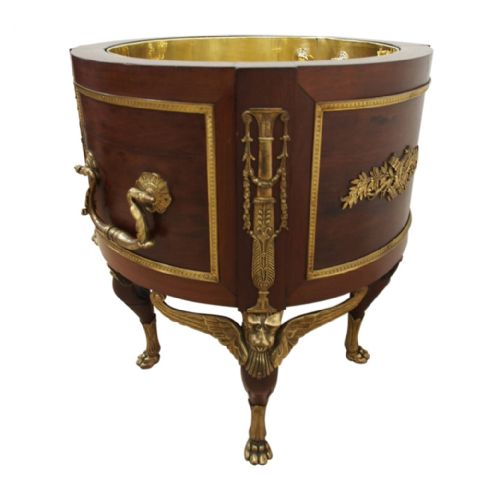
Gilt bronze and ormolu mounts are applied to accent architectural lines, while brass galleries secure delicate tiers and planter inserts. These metallic elements reflect the rigorous neoclassical taste that defined the style from its Regency origins through to later revivals.
French Empire Plant Stand Retail Price Guide 2026
Typical asking prices for french empire plant stand among the pieces listed under this phrase on Sellingantiques today, from the lower quarter to the upper quarter. They describe what is for sale here now, not the wider market.
Materials seen across these listings include brass, mahogany, marble, ormolu, ebonised wood, gilt bronze, marquetry inlay, and walnut.
What varies in quality
Quality rests in the crispness of the cast ormolu and bronze mounts, where finely chased details distinguish superior workshop output from simpler production. The selection of timber veneers, particularly figured mahogany or burr elm, dictates the visual depth of the piece.
Structural integrity is evident in the joinery of pedestals and the secure fitting of marble inserts and brass galleries. Pieces that balance heavy upper jardinieres with substantial, stable bases demonstrate considered proportion and careful engineering.
The French Empire Plant Stand Glossary
- Ormolu
- Gilded bronze applied as decorative mounts to furniture. This technique creates a rich golden contrast against dark timbers like mahogany.
- Jardiniere
- An ornamental stand or receptacle designed to hold growing plants or flowers. They frequently feature protective metal liners or galleries.
- Gueridon
- A small French table supported by one or more columns or figures. These often appear with multiple tiers for display.
- Torchere
- A tall stand designed to support a candelabrum or plant. They bring vertical height and classical presence to interior corners.
- Brass gallery
- A pierced metal rail fitted around the edge of a table top or plant stand. It prevents items from sliding off and adds a refined linear border.
French Empire Plant Stand: Frequently Asked Questions
What is a french empire plant stand?
A french empire plant stand is a decorative pedestal or table designed to hold potted plants, drawing on classical French design motifs from the nineteenth century and later revival periods.
These pieces typically combine dark hardwoods like mahogany with polished ormolu mounts, brass galleries, and occasionally marble tops to create an imposing architectural presence.
How were plant stands used historically?
Historically, these stands positioned prized exotic plants and flowers within elite drawing rooms, parlours, and conservatories where they could receive adequate light and be admired by guests.
The inclusion of brass galleries and durable surfaces protected fine wooden floors and furniture from moisture during watering.
How do I style a french empire plant stand?
You can place a trailing houseplant or a potted fern on top to contrast the rigid neoclassical lines with organic foliage.
They function well in corners, beside seating, or in hallways where their vertical form fills empty space without demanding a large footprint.
How do I tell periods apart?
Original pieces from the early nineteenth century often exhibit heavier classical proportions and hand-chased bronze work aligned with the Regency and Empire eras.
Later Edwardian Empire Revival pieces utilise similar vocabulary but frequently reveal lighter construction methods and machine-finished mounts.