



Ebonised Marquetry Plant Stand
An ebonised marquetry plant stand brings dark surfaces and intricate floral inlay together to hold your ferns and flowers with nineteenth-century elegance.
Ebonised Marquetry Plant Stand
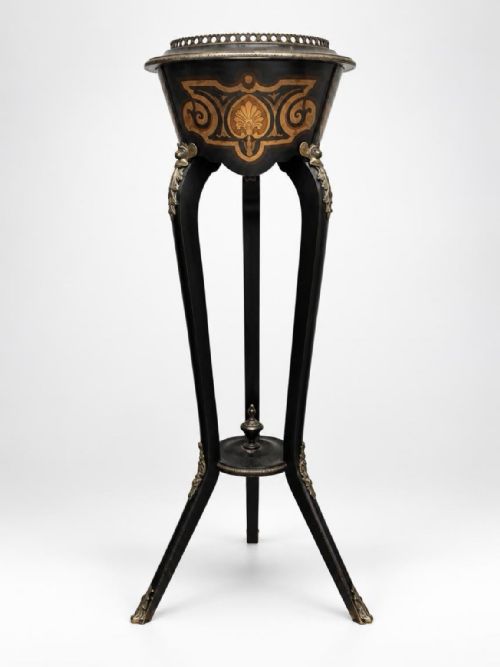
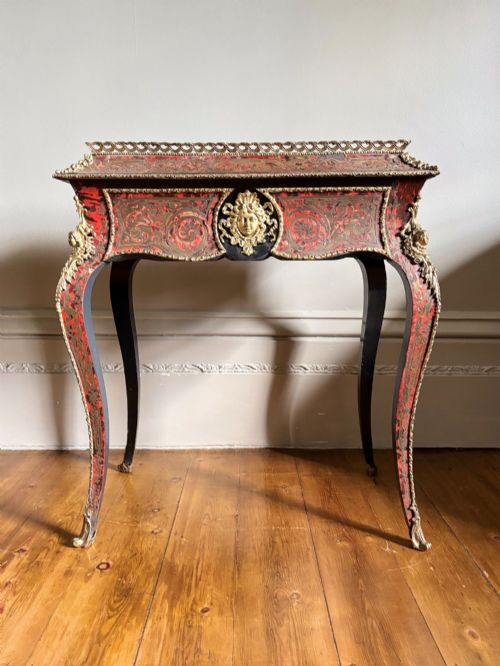
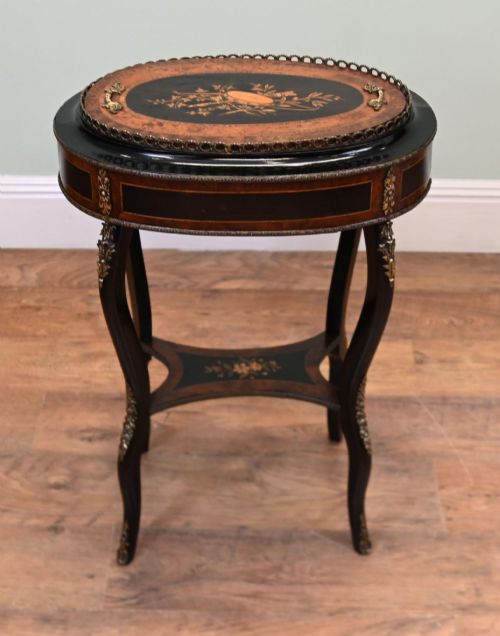
When you search for an ebonised marquetry plant stand, you encounter a selection of nineteenth-century French and Italian furnishings designed to display indoor plants and decorative flora. These pieces include jardiniere stands, planter side tables, tiered étagères, and pedestal occasional tables originating primarily from the Victorian and Napoleon III periods.
The versions you are most likely to meet on this page feature ebonised wood surfaces adorned with detailed marquetry inlay, brass mounts, and occasional bone or amboyna details. They take forms ranging from octagonal Moorish revival occasional tables to multi-tiered oval display shelves and fitted jardiniere tables with metal liners.
How they were made
Craftsmen built these stands using a timber core, often walnut or other hardwoods, finished with an ebonised coating to imitate expensive ebony. They applied intricate marquetry inlay using contrasting woods, bone, and brass to create floral and geometric patterns across the tops and tiers.
Many examples incorporate cast ormolu and gilt mounts, alongside brass stringing and inlay techniques reminiscent of Boulle work. Fitted metal liners were integrated into the jardiniere tops to hold water and plants safely without damaging the wooden structure beneath.
Ebonised Marquetry Plant Stand Retail Price Guide 2026
Typical asking prices for ebonised marquetry plant stand among the pieces listed under this phrase on Sellingantiques today, from the lower quarter to the upper quarter. They describe what is for sale here now, not the wider market.
Some nineteenth-century tables secretly doubled as wine coolers.
What varies in quality
The distinction between ordinary and exceptional pieces rests in the crispness of the marquetry and the precision of the metal mounts. Finer examples display meticulous hand-cut inlay using varied natural materials like bone and amboyna, whereas simpler pieces rely on painted details or sparse brass lines.
Structural harmony also dictates value, as superior stands maintain rigid tiers and stable pedestal bases despite the heavy use of mixed media. The quality of the ebonised finish and the preservation of the original gilt or ormolu mounts further separate standard production from masterwork output.
Liberty & Co.
The Ebonised Marquetry Plant Stand Glossary
- Ebonised
- Wood treated with a dark stain or finish to resemble solid ebony. This technique gained immense popularity during the nineteenth century for furniture requiring a dramatic, uniform black surface.
- Marquetry
- A decorative technique where thin veneers of wood, metal, or bone are fitted together to form pictorial or geometric designs. These patterns are then glued onto the structural surface of the table.
- Jardiniere
- A decorative container or stand specifically made to hold plants and flowers. In nineteenth-century interiors, these often featured removable metal liners to contain moisture.
- Ormolu
- Gilt bronze ornamentation applied to furniture mounts and feet. The technique involves treating bronze with a mixture of gold and mercury to achieve a bright golden finish.
- Étagère
- A piece of furniture consisting of a set of open shelves for displaying small objects. They appeared frequently in Victorian drawing rooms as tiered stands.
- Boulle
- A style of marquetry utilising tortoiseshell and brass inlay developed in France. It often appears on Napoleon III pieces associated with sophisticated cabinetmaking.
Ebonised Marquetry Plant Stand: Frequently Asked Questions
What is an ebonised marquetry plant stand?
An ebonised marquetry plant stand is a nineteenth-century table or tiered shelf finished in black with decorative wood and metal inlay designed to hold indoor plants.
These pieces combine decorative artistry with practical utility, serving as focal points for greenery in period drawing rooms and parlours.
How were these stands used originally?
Victorian and French households used these stands to display potted ferns, flowers, and ornamental jardiniere arrangements inside the home.
The metal liners protected the delicate wooden structures from water damage while bringing living nature directly into formal entertaining spaces.
How do I style one at home?
You can use an ebonised plant stand to elevate trailing houseplants, sculptural ferns, or as a surface for displaying ceramics and books.
Their dark finishes and detailed inlay complement both traditional interiors and modern minimalist spaces by adding historical texture.
How do I tell Victorian periods apart?
Victorian and Napoleon III pieces often feature distinct stylistic cues, such as heavy ormolu mounts, Boulle work, or Moorish revival geometric lattice designs.
Examining the choice of secondary woods like amboyna and the complexity of the bone inlay helps determine the exact stylistic origins of the piece.