


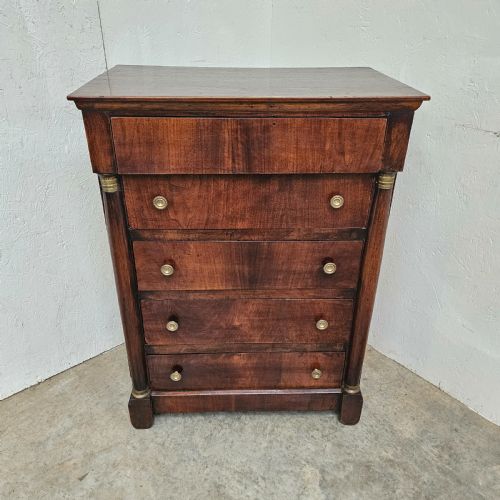


French Empire Commode Chest
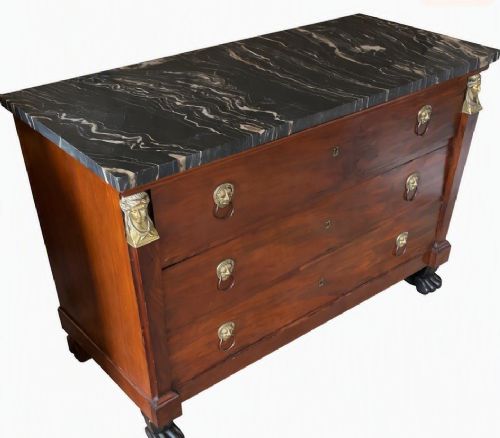
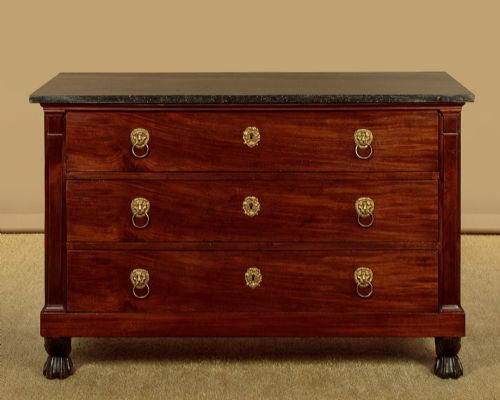
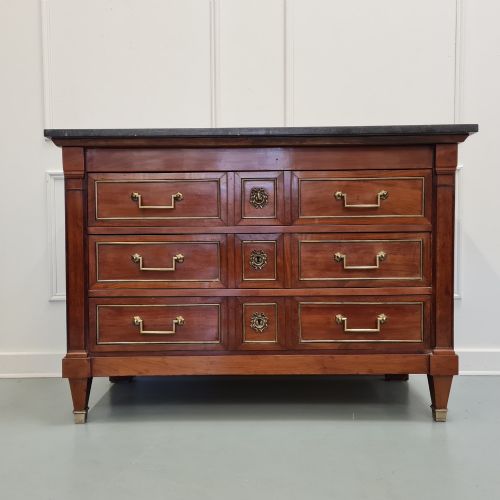
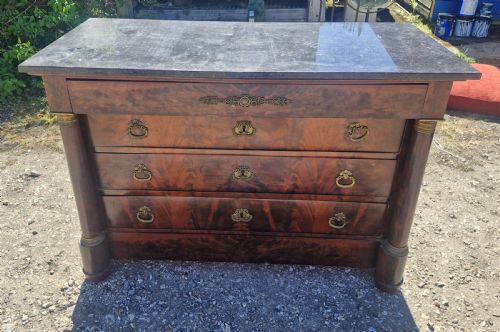
A french empire commode chest is a substantial continental storage piece built for imposing formal interiors.
French Empire Commode Chest
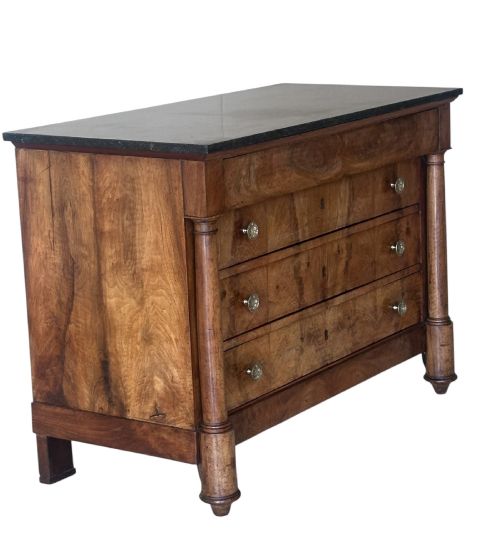
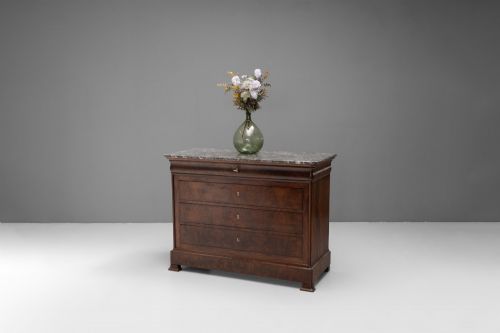
A french empire commode chest is a formal continental storage piece designed with strict symmetry and architectural presence. Buyers exploring this category encounter case furniture originating primarily from the nineteenth century, alongside related styles such as Charles X, Louis Philippe, and Empire Revival.
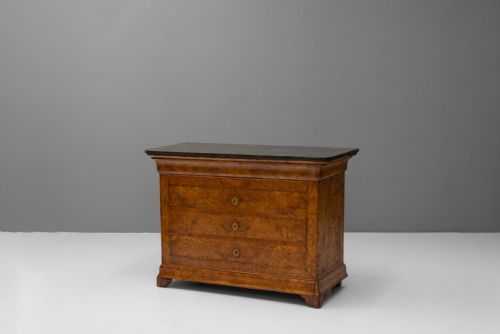
The primary forms on this page include large drawer chests, dressing tables, secretaire desks, and side cabinets. Walnut, mahogany, and burr elm dominate the selection, frequently paired with contrasting marble tops.
Pieces span multiple decades, incorporating both authentic early period examples and later nineteenth-century interpretations. These chests serve as practical storage while maintaining a strong decorative focus within a room.
Materials and Construction
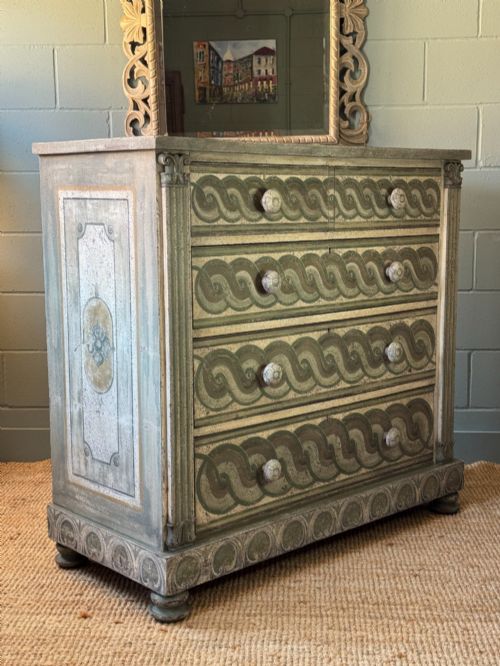
Cabinet makers built these pieces using dense timber carcases overlaid with figured veneers like flame mahogany, walnut, and burr elm. Structural woods such as chestnut and painted wood also appear beneath the exterior surfaces.
Heavy marble slabs form the upper surfaces on many examples, ranging from standard varieties to fossil marble. Metal mounts, brass details, and ormolu hardware punctuate the woodwork to emphasise architectural lines.
Secret drawers hidden behind heavy mouldings remind us that nineteenth-century makers loved a private hiding spot.
Evaluating Quality and Execution
The refinement of the timber selection largely dictates the standing of an individual french empire commode chest. Well-matched flame mahogany or figured walnut veneers show an intentional hand in planning the visual surface.
The integration of heavy marble tops and the precision of ormolu or brass mounts demonstrate the standard of workshop execution. Superior examples balance architectural proportions with crisp detailing across the drawer fronts and structural mounts.
The French Empire Commode Chest Glossary
- Ormolu
- Gilded bronze mounts applied to furniture. This technique adds decorative contrast to dark mahogany and walnut carcases.
- Commode
- A low chest of drawers originating in France. These pieces function as both decorative console storage and practical bedroom furniture.
- Marquetry
- Fitted wood veneers arranged in decorative patterns. Artisans use contrasting timbers to create geometric designs across drawer fronts.
- Secretaire
- A desk form incorporating a fold-down writing flap. These compartments often conceal smaller drawers and pigeonholes within the main chest structure.
French Empire Commode Chest: Frequently Asked Questions
How do I clean the marble top?
Wipe the stone surface using a soft cloth dampened with warm water and mild soap. Avoid acidic cleaners that can etch the polished finish.
Dry the marble thoroughly afterwards to prevent water spotting and protect the natural mineral patterns.
Where should I place a commode?
These substantial chests suit high-ceilinged bedrooms, grand hallways, or living rooms as a focal storage piece. Ensure the floor space accommodates the heavy proportions and projecting marble tops.
Keep the furniture away from direct heat sources to prevent timber shrinkage and veneer separation.
What is the difference between Empire and Charles X?
Empire pieces display strict neoclassical symmetry, dark timbers, and heavy cast metal mounts. Architectural severity defines the early nineteenth-century aesthetic.
Charles X designs introduce slightly softer lines, lighter woods, and subtler grain patterns while maintaining the foundational case proportions.