


French Marquetry Storage Chest
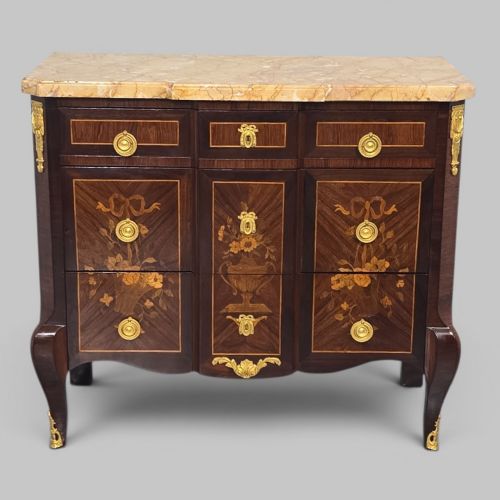
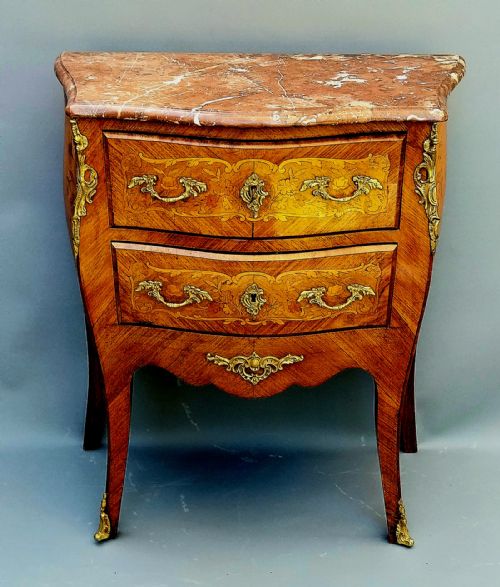
A french marquetry storage chest brings together intricate wood veneers and substantial marble tops to anchor a formal interior.
French Marquetry Storage Chest
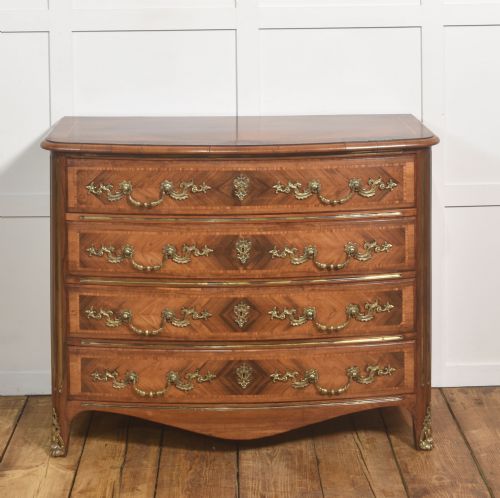
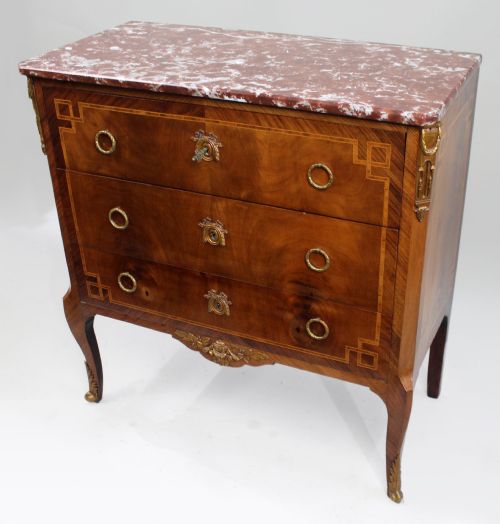
A french marquetry storage chest typically takes the form of a commode or chest of drawers, built in walnut, kingwood, or mahogany with contrasting inlaid timber patterns. These pieces appear frequently from the eighteenth, nineteenth, and early twentieth centuries, often following Louis XV or Louis XVI revival designs.
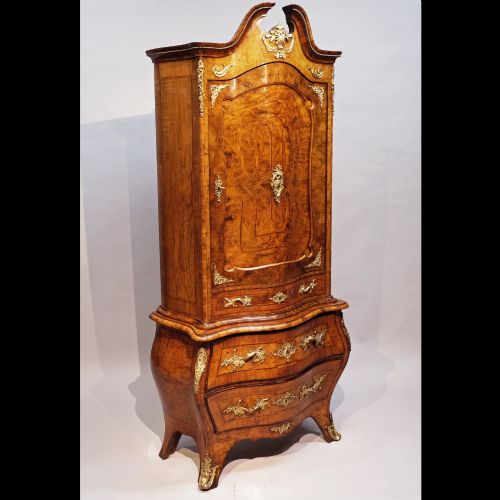
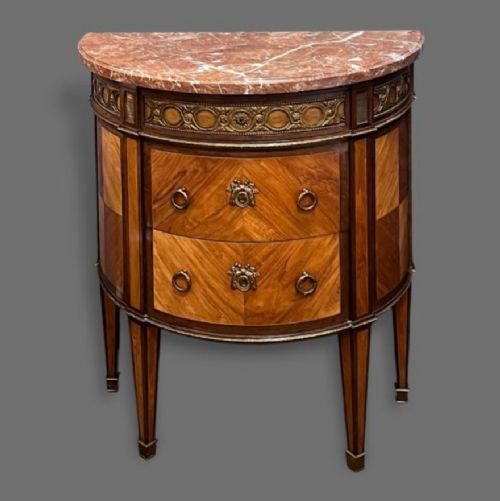
The assortment on this page includes serpentine, bombe, and demi-lune silhouettes alongside cabinets and smaller tea caddies. Makers working in these traditional styles constructed robust carcases designed to hold linens, garments, or precious objects while displaying elaborate floral and geometric veneers.
Most examples originate from French workshops spanning the 18th century through to the 1930s. Buyers select these items for their decorative veneer work and heavy stone tops, which combine practical storage with formal presence.
Materials and construction methods
Cabinet makers built the foundational carcase from native timbers such as walnut or oak before applying thin veneers of kingwood, rosewood, satinwood, and tulipwood to the exterior surfaces. These contrasting woods were cut and fitted by hand to form intricate floral, pictorial, or geometric marquetry panels.
Mounts cast in ormolu and gilt bronze were applied to corners, legs, and apron mounts to accentuate the curved contours of the furniture. Heavy marble tops, including rouge and breccia varieties, were custom-fitted to the upper surface of commodes and cabinets.
Joinery relied on traditional techniques including dovetailing for drawer construction and mortise and tenon frames to support the heavy stone slabs and decorative metal mounts without warping.
A few antique tea caddies hide tiny inner canisters behind locked doors, ready for a miniature Victorian tea service.
Standards of craftsmanship
The distinction between tiers of manufacture lies in the precision of the veneer cutting and the depth of the bronze or ormolu mounts. Finer pieces demonstrate seamless transitions between disparate timber species where the grain aligns with the composition of the marquetry design.
The weight and selection of the marble top also indicate the grade of the piece, with thicker, profiled stone slabs reserved for superior workshops. Structural integrity within the drawer linings and the crispness of the cast metal mounts further separate standard production items from exceptional cabinet work.
Jean-Henri Riesener·Mercier Frères·Leonard Boudin
The French Marquetry Storage Chest Glossary
- Marquetry
- Decorative veneer work cut and assembled to create pictorial or geometric patterns on furniture surfaces. Craftsmen arrange thin slices of coloured wood to form intricate motifs.
- Ormolu
- Gilded bronze mounts applied to the corners, handles, and feet of formal furniture. This decorative metalwork highlights the structural lines of the piece.
- Bombe
- A swollen or bulging profile characteristic of certain commode designs. This curved contour requires advanced woodworking skill to veneer accurately.
- Serpentine
- A front edge or surface shaped with a wavy contour that curves inward and outward. It adds fluidity to the rigid form of a storage chest.
- Commode
- A low chest of drawers originating in France during the seventeenth century. These pieces usually feature decorative mounts and prominent marble tops.
French Marquetry Storage Chest: Frequently Asked Questions
How do I care for a marble top?
Clean the stone surface using a damp cloth and mild soap, avoiding acidic liquids or harsh chemical cleaners that can etch the polish.
Lift heavy decorative objects rather than dragging them across the stone to prevent scratching the polished finish.
Where should I place a commode?
Position the piece against a principal wall in a reception room or hallway where the marquetry pattern can catch natural light.
Keep the timber away from direct heat sources and strong sunlight to protect the fragile veneers from drying out.
How do I distinguish revival periods?
Examine the interior secondary timbers and construction marks, which often reveal nineteenth-century mechanical saw use rather than eighteenth-century hand tools.
Stylistic cues such as sharper ormolu casting details and standardised drawer linings point towards later revival workshops.
What were these chests used for?
These pieces served as formal storage in grand bedrooms and salons for linens, clothing, and personal documents.
The flat marble surface also provided a sturdy display ledge for candelabras, clocks, and porcelain ornaments.