



French Empire Centrepiece
A french empire centrepiece brings monumental neoclassical symmetry to a table, combining cast bronze and marble in bold architectural forms.
French Empire Centrepiece
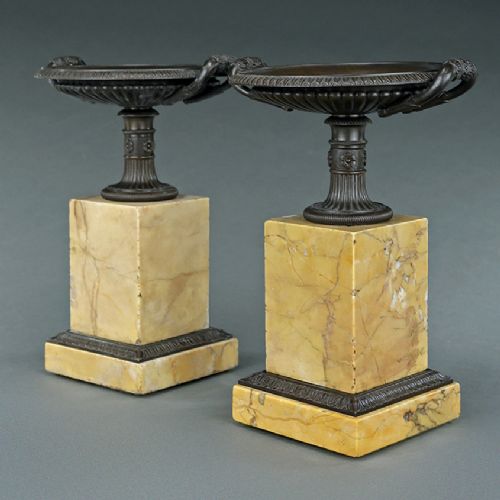
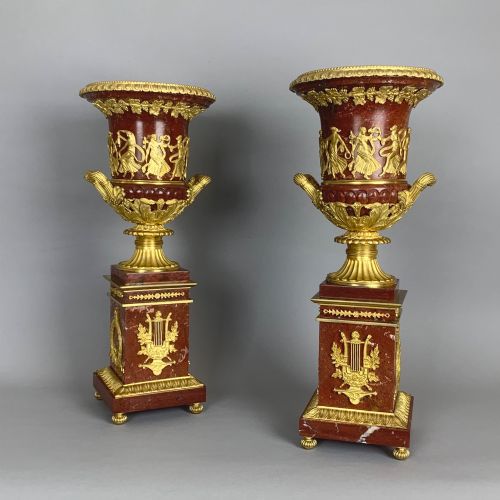
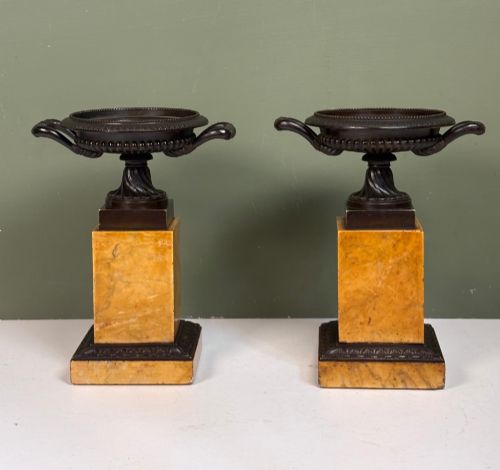
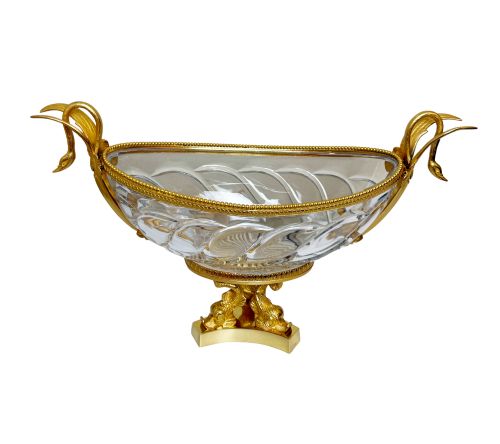
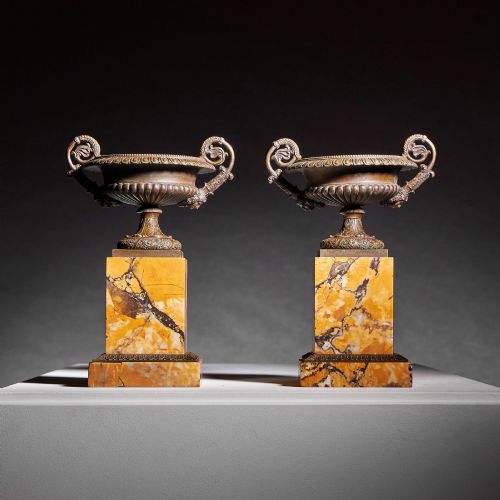
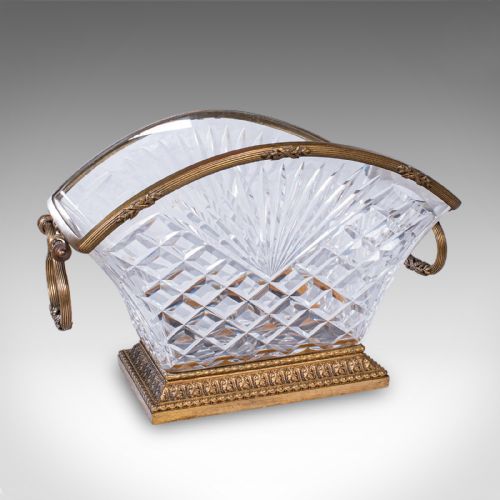
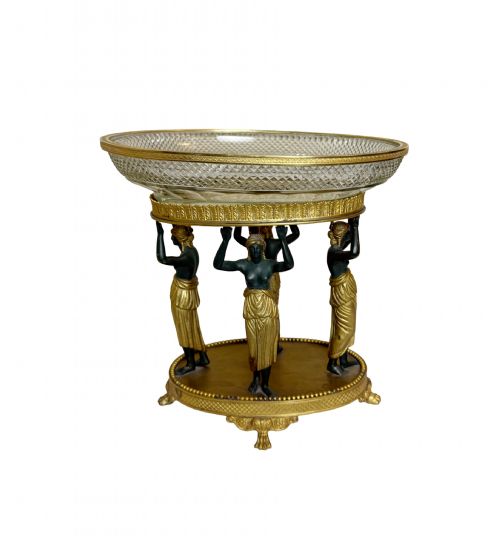
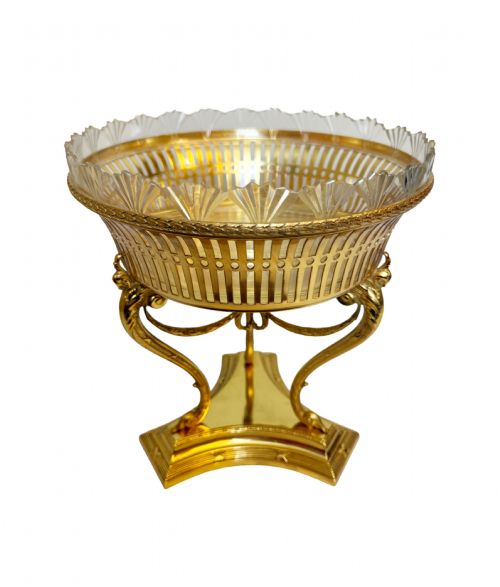
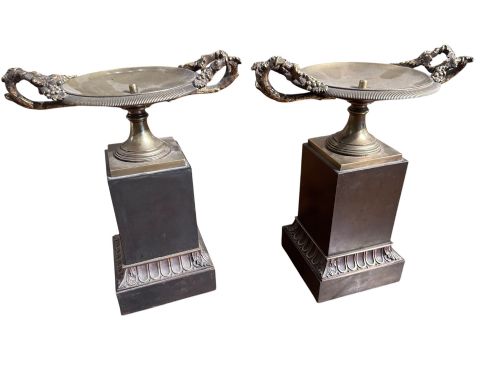
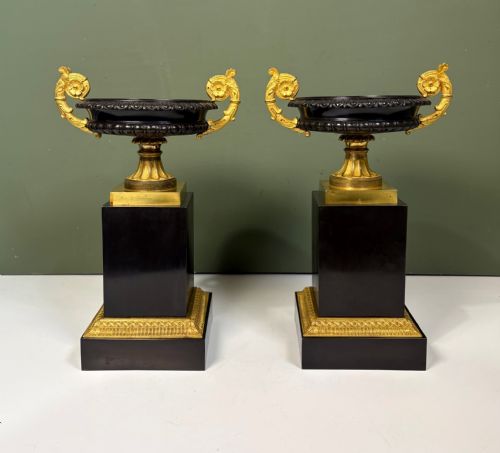
When you search for a french empire centrepiece, you encounter grand decorative items designed to anchor a dining table or sideboard. These objects take various sculptural forms, from monumental tazzas and urns to large crystal bowls framed in metal mountings.
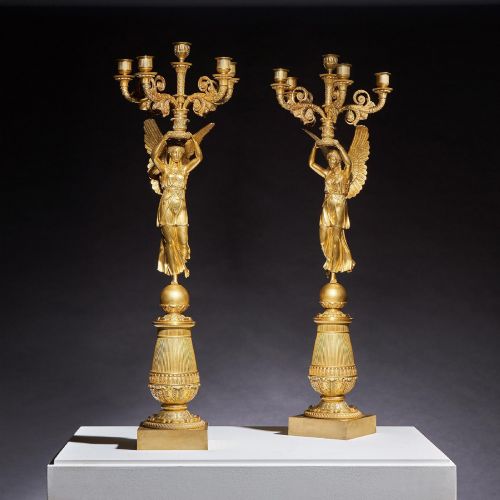
The pieces listed on this page span the nineteenth century, including examples from the Regency and Napoleon III periods. Alongside dedicated centrepieces, you frequently meet associated forms such as candelabra and tazzas created in the same neoclassical vocabulary.
How they were made
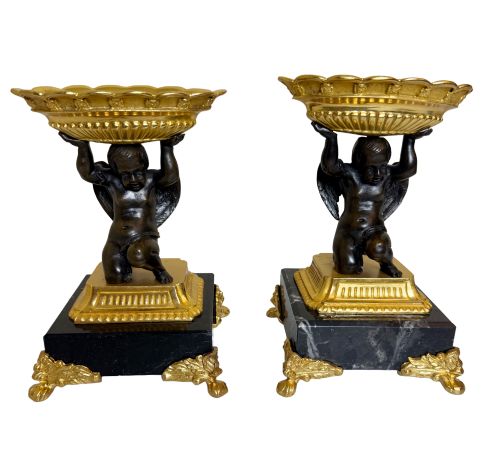
Maker's workshops built these objects using heavy cast metals combined with contrasting natural stone and glass. Gilt bronze and ormolu provide bright surface enrichment, while patinated bronze and brass add depth and tonal variation.
Marble bases and columns support metal mounts, often incorporating cut glass inserts or crystal bowls. Skilled artisans chased the bronze surfaces by hand after casting to sharpen the floral and figural details.
What varies in quality
The standard of chasing across the bronze and ormolu elements defines the upper tiers of production. Sharp relief work and deep, crisp texturing indicate skilled hand-finishing rather than a generic cast.
The weight and selection of materials also differentiate the objects, particularly the density of the marble plinths and the clarity of the cut glass or crystal components.
Pierre Philippe Thomire·Christofle Paris
The French Empire Centrepiece Glossary
- Ormolu
- A technique of applying finely ground high-carat gold to a bronze object using a mercury amalgamation process. This creates a durable, warm metallic finish characteristic of the period.
- Tazza
- A shallow bowl or vase raised on a high foot and stem. These items served ornamental functions or held fruit and sweetmeats on grand tables.
- Patinated bronze
- Bronze treated with chemical solutions to produce a dark, uniform surface colour. This contrasting dark tone highlights adjacent bright gilding.
- Neoclassical
- An artistic style drawing inspiration from the classical art and culture of ancient Greece and Rome. It emphasises strict symmetry, columns, and classical motifs.
French Empire Centrepiece: Frequently Asked Questions
What is a french empire centrepiece used for?
These large vessels served as ornamental focal points on dining tables or sideboards during formal meals and receptions. They frequently held fruit, flowers, or sweetmeats to complement the dining service.
Over time, many of these pieces transitioned into standalone decorative objects displayed on console tables and mantelpieces for their sculptural presence.
How do I clean gilt bronze and ormolu?
Dust these metal surfaces gently with a soft, dry brush to prevent the accumulation of grit in the chased recesses. Avoid harsh chemical cleaners and commercial metal polishes, which strip the thin gold layer from the bronze underneath.
Professional conservation is recommended if deeper cleaning becomes necessary to remove old grime or tarnish.
How do I tell nineteenth century pieces apart?
Examine the casting quality, the weight of the marble, and the method of assembly beneath the base. Earlier nineteenth-century examples often feature heavier hand-chased bronze work and more substantial stone plinths.
Later Victorian and Napoleon III interpretations sometimes utilise brighter, more uniform gilding methods and lighter structural components.
Are glass inserts original to the pieces?
Many centrepieces and tazzas include cut glass or crystal bowls designed specifically to fit within the metal framework. These glass elements are frequently original to the piece, though replacements do occur due to breakage.
Check the rim thickness and any minor surface wear to determine whether the glass matches the age of the metal mount.