



Bronze Urn Marble Base
A bronze urn marble base combines heavy cast metalwork with polished stone plinths to anchor a classical interior.
Bronze Urn Marble Base
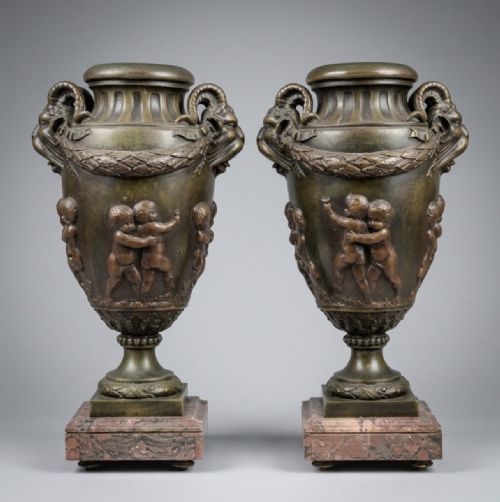
When you search for a bronze urn marble base, you encounter ornamental vessels and lighting fixtures rooted in nineteenth century revival movements. These pieces typically originate from French and Italian workshops, channelling neoclassical and Grand Tour tastes.
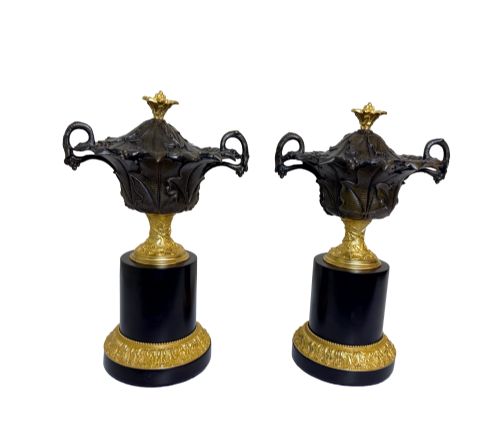
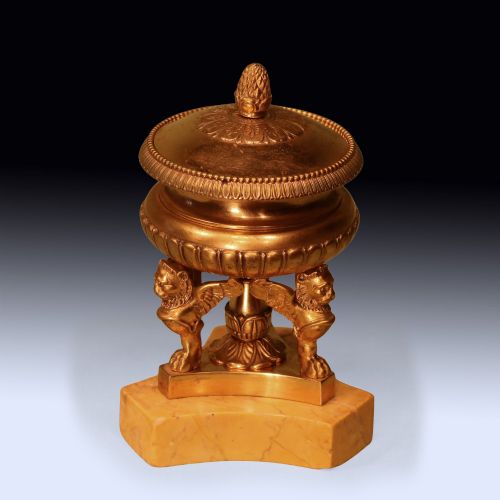
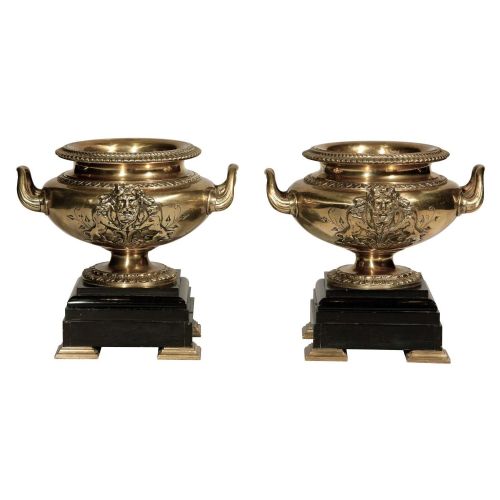
The objects take many forms on this page, including lidded urns, campana shaped vases, inkwells, mantel clocks, and converted table lamps. Pairs dominate the selection, often designed symmetrically for mantelpieces or side tables.
Materials interact directly through the contrast of dark patinated metal or bright gilt bronze against variegated stone plinths. White, black, siena, and rouge griotte varieties supply distinct visual weights beneath the metal vessels.
Materials and construction methods
Foundry work relied on bronze, brass, spelter, and ormolu for the upper vessels, frequently enhanced with cold painted patination or fire gilding. Metal components were cast, chased, and mounted securely to heavy stone plinths.
The bases utilise solid marble in various natural tones, shaped into square plinths, stepped pedestals, or column sections. Turning and polishing the stone created smooth surfaces that complement the detailed metal castings above.
Grand Tour souvenirs let nineteenth century travellers bring home miniature Roman architecture without packing a whole temple in the carriage.
Distinctions in craftsmanship
Quality separates sharply between crisp, hand chased metalwork and softer cast spelter alternatives. Superior pieces display deep chisel work in the bronze foliage and drapery, whereas lower tiers show blurred surface details.
The connection between the urn and its stone base indicates overall rigour. Heavier, dense marbles with precise turned edges distinguish higher grade examples from simpler or later assembled counterparts.
The Bronze Urn Marble Base Glossary
- Ormolu
- Gilded bronze produced by applying a mercury and gold amalgam to the metal surface before heating. This historic French technique yields a distinctive warm lustre.
- Campana
- An inverted bell shaped vessel form modelled after ancient Roman pottery. These urns frequently feature flared rims and integral footed bases.
- Grand Tour
- Nineteenth century souvenirs collected by travellers touring classical sites in Italy. These objects adapt ancient architectural and sculptural motifs for domestic display.
- Spelter
- A zinc alloy utilised as a cost effective substitute for bronze. It accepts bronze paint or patination readily.
- Rouge Griotte
- A deep red, multi tonal French marble marked by white calcite veins. It provides a dramatic plinth for neoclassical gilt metalwork.
Bronze Urn Marble Base: Frequently Asked Questions
How do I date a bronze urn?
Dating relies on stylistic markers, patination methods, and the type of construction used to secure the vessel to its stone plinth. Nineteenth century examples often display hand chased detailing and specific regional casting characteristics.
Later revival pieces from the early twentieth century may utilise simplified joints or alternate metal alloys like spelter. Examining the wear on the underside of the marble base also helps confirm the age.
Were these urns originally lamps?
Many of the decorative urns and vases were later adapted into table lamps during the twentieth century to suit modern domestic lighting needs. Original period lamps do exist from the late nineteenth and early twentieth centuries.
When evaluating a lamp conversion, check whether the wiring passes cleanly through the original vessel without compromising the historical metalwork or the stone base.
What is the difference between bronze and spelter?
Bronze is a durable copper alloy that accepts fine chasing and holds a rich, stable patina over decades of handling. Spelter is a softer zinc based metal that was frequently used in the nineteenth century for more accessible decorative items.
Under close inspection, bronze feels heavier and displays sharper cast details, while spelter can show a lighter weight and softer surface transitions.
How do I clean the marble base?
Maintenance requires only a soft, dry cloth to remove dust from the polished stone surface and the metal vessel above. Avoid abrasive cleaners, moisture, and chemical polishes that can strip historic patination or etch the marble.
If the stone requires deeper cleaning, a damp cloth with mild soap should be dried immediately to protect vulnerable seams and mounts.