



Dark Bronze Centrepiece
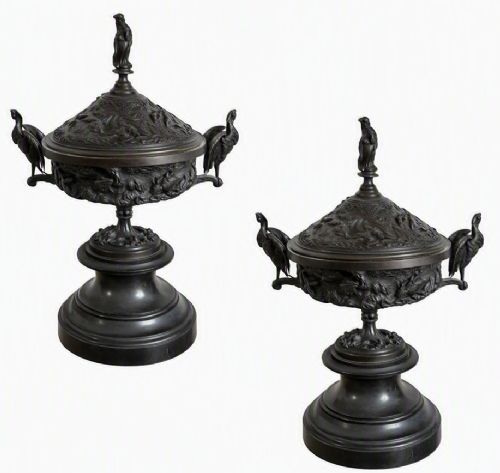
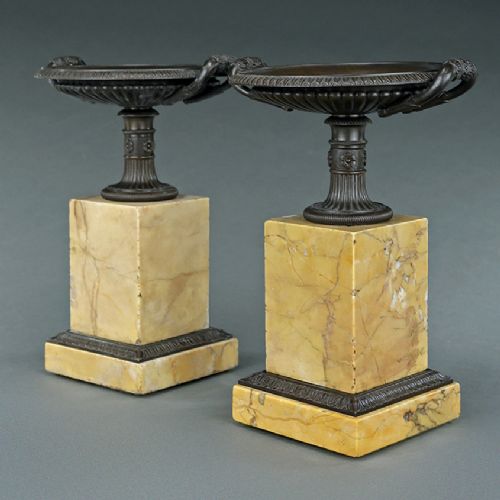
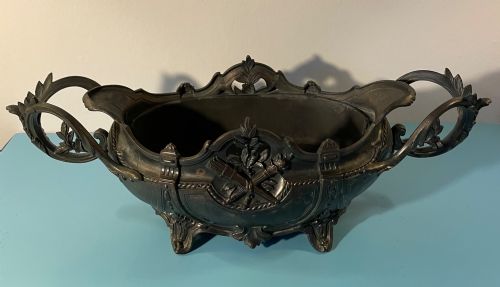
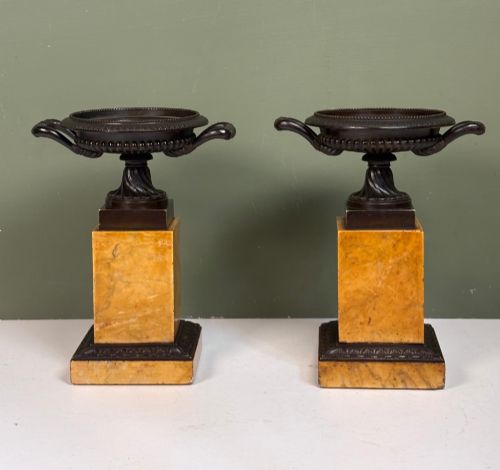
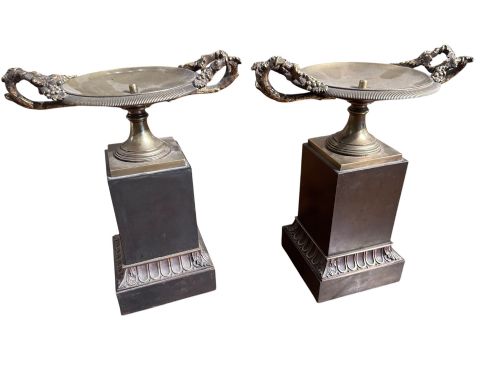
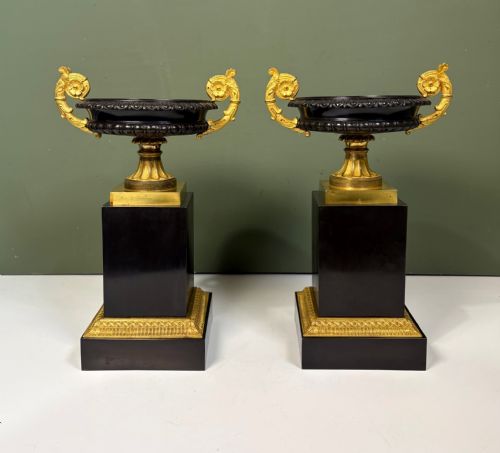
A dark bronze centrepiece commands a dining table or sideboard with heavy, tactile weight and classical form.
Dark Bronze Centrepiece
A dark bronze centrepiece serves as a striking focal point for large surfaces, drawing the eye with sculptural weight and rich metalwork. These pieces take various forms across the selection, ranging from classical tazzas and decorative bowls to grand urns, jardinieres, and figural groups.
The objects frequently channel French 19th-century taste, Neoclassical design, and Italian Grand Tour souvenirs, reflecting a historical fascination with antique forms. Buyers encounter paired items designed for symmetrical placement alongside singular, heavy vessels meant to anchor a room.
The materials span patinated bronze, cast metal, and ormolu, often combined with white or coloured marble bases that elevate the dark metalwork. These items emerge from the nineteenth century, capturing periods from the Regency era through to the late eighteen-hundreds.
Materials and Construction
The creation of these objects relies on metal casting techniques, utilising bronze, brass, and spelter to shape intricate figures, bowls, and handles. Skilled artisans applied dark patination to the bronze surfaces, producing a deep, sombre tone that contrasts with bright highlights.
Gilding and ormolu details frequently accent the dark bronze body, introducing warm golden tones to rims, mounts, and figures. Many examples incorporate polished marble bases, turning metal castings into stable, substantial table objects through careful assembly.
Winged cherubs and Bacchonian revellers frequently inhabit these heavy metal bowls, keeping watch over the fruit.
Assessing Quality and Execution
The standard of a piece rests heavily on the crispness of the casting and the sensitivity of the chasing work on the metal surface. Superior examples display sharp relief in figures, foliage, and classical motifs, whereas lesser items show softened details from worn moulds.
The harmony between materials dictates the visual success of the object, particularly where patinated bronze meets marble, ormolu, or gilt bronze. Well-executed pieces integrate these elements seamlessly, while lesser works reveal heavy-handed joins or coarse surface textures.
Jules Moigniez·Clodion
The Dark Bronze Centrepiece Glossary
- Tazza
- A shallow bowl or cup mounted on a stem and foot, frequently utilised as a decorative centrepiece or serving vessel in classical design.
- Ormolu
- Gilt bronze produced by applying a finely ground high-carat gold-mercury amalgam to a bronze object, creating a durable golden finish.
- Patination
- The surface finish or colour achieved on metal through age, chemical treatment, or application, giving dark bronze its distinctive tone.
- Grand Tour
- A cultural journey undertaken by nineteenth-century Europeans, collecting classical souvenirs such as bronze vases and tazzas.
- Jardiniere
- A decorative container, often in bronze or ceramic, designed to hold plants or floral arrangements for table display.
- Regence
- A French decorative style bridging the classical Louis XIV period and the lighter Rococo movement, marked by symmetry and mythological motifs.
Dark Bronze Centrepiece: Frequently Asked Questions
How do I style a bronze centrepiece?
Place the piece in the middle of a large dining table or heavy wooden sideboard to let the dark metal anchor the room.
Keep surrounding objects minimal to allow the sculptural form and patination of the bronze to draw the eye.
Were these vessels used for dining?
Many tazzas, bowls, and jardinieres served decorative purposes or held fruit and flowers during formal nineteenth-century meals.
Heavier figural groups and candelabra functioned primarily as interior ornaments and lighting supports rather than practical tableware.
How do I care for patinated bronze?
Dust the surface regularly with a soft, dry cloth to prevent grime accumulation without disturbing the historical patination.
Avoid liquid cleaners, polishes, and abrasive cloths, as these can strip away the dark finish and exposed ormolu.
What indicates a Grand Tour piece?
Grand Tour pieces often replicate famous antique sculptures and architectural ruins encountered by travellers in Italy during the nineteenth century.
These items were produced as high-end souvenirs, frequently combining patinated bronze with classical marble plinths.