




French Bronze Jardiniere
A french bronze jardiniere brings floral elegance into a room, combining cast metal work with practical plant display.
French Bronze Jardiniere
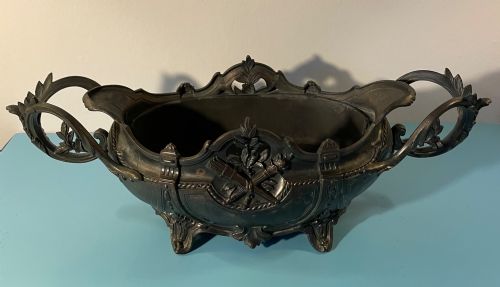
A french bronze jardiniere is an ornamental vessel designed to hold plants or flowers, appearing frequently across the nineteenth century in various decorative styles. Pieces range from table top bowls and centrepieces to large free standing plant stands and jardiniere tables.
The selection here includes examples from the Victorian era and periods spanning eighteen fifty to nineteen twenty. Designs draw upon French Louis XV revival, Napoleon III, and French Empire styles, alongside occasional Japanese style and Louis XVI influences.
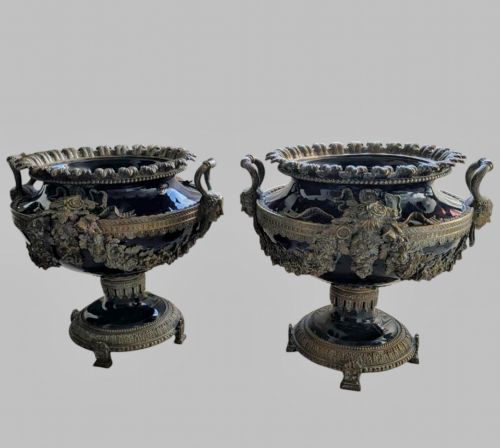
Formats vary from simple bronze bowls and lion jardiniere pairs to elaborate pedestals, display cabinets, and wine cooler conversions. Many incorporate fitted metal liners to protect the wooden or ceramic bodies from moisture.
Materials and construction
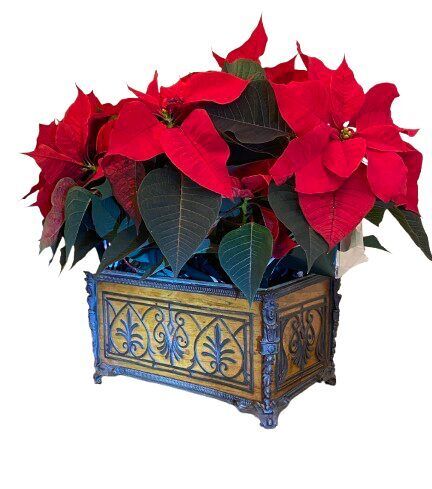
Maker construction combines cast bronze, ormolu, and gilt metal mounts with rich timber carcases. Kingwood, burr walnut, satinwood, mahogany, and ebonised woods provide the primary bodies for inlaid and marquetry decorated planters.
Decorative elements frequently incorporate porcelain plaques, cloisonné enamel, cut glass, and ceramic inserts. Zinc and mixed metal liners sit within the frames to handle soil and water during plant display.
Casting methods deliver detailed relief ornamentation, handles, and feet, while mounts are secured to wood using traditional brass pins and screws. Gilt bronze and silvered bronze finishes complete the decorative scheme.
Listings feature pieces spanning the nineteenth and twentieth centuries, utilising materials like ormolu, kingwood, porcelain, and bronze across Louis XV and Empire styles.
Quality and craftsmanship
Quality rests in the crispness of the bronze casting and the depth of the chased detail across mounts and handles. Finer examples display sharp definition in foliage, scrollwork, and figurative elements without soft edges.
Material selection marks the distinction between standard and superior pieces, seen in choice timbers like figured kingwood and burr walnut with precise marquetry inlay. The integration of high status additions such as Sevres style porcelain plaques or cloisonné enamel elevates a piece.
Structural integrity and the survival of original liners, mounts, and stands dictate worth. Pieces that retain their matched components and original fire gilt surfaces demonstrate superior workshop origin.
A Moreau Paris·Lerolle Fres
The French Bronze Jardiniere Glossary
- Ormolu
- Gilded bronze, produced by applying a mercury and gold amalgam to cast bronze before heating. This technique creates a durable golden finish characteristic of French decorative arts.
- Jardiniere
- An ornamental pot or stand designed for holding plants or flowers. These vessels function as interior display pieces in dining rooms and drawing rooms.
- Marquetry
- The art of applying pieces of veneer to a structure to form decorative patterns and pictures. Workshops utilise various exotic timbers to create contrasting geometric or floral designs.
- Athenienne
- A decorative stand or tripod supporting a bowl, modelled after ancient Greek furniture forms. These pieces serve as plant holders or display vessels in classical revival interiors.
- Napoleon III
- A decorative style spanning the mid to late nineteenth century, noted for eclectic revivals of Louis XIV, Louis XV, and Louis XVI aesthetics. Furniture and metalwork from this era combine opulent mounts with rich timbers.
French Bronze Jardiniere: Frequently Asked Questions
What is a french bronze jardiniere used for?
These vessels were created to hold potted plants and floral arrangements inside nineteenth century homes. They brought greenery into formal reception rooms while protecting surfaces using fitted metal liners.
Today they function effectively as standalone decorative objects, centrepieces, or functional planters. Many collectors place them on side tables or plant stands to display fresh or dried arrangements.
How do I distinguish between periods?
Dating relies on stylistic clues and wood choices, such as ebonised finishes and gilt mounts pointing to Napoleon III and Victorian periods. Earlier nineteenth century pieces often feature Empire styling or classic bronze work.
Examining construction techniques, mount fixings, and secondary woods helps narrow down the decade of production. Reviewing the specific revival style provides a reliable guide to the era of manufacture.
Are original liners usually included?
Many surviving pieces retain their original zinc or metal liners, which protected the wooden frames from water damage. Finding a jardiniere with its matching liner enhances its completeness and utility.
When liners are missing, replacements can be sourced, but an intact original interior remains a positive indicator of preservation. Collectors look for evidence of continuous use and minimal structural alteration.
How do I care for wood and bronze?
Maintenance requires gentle dusting of bronze mounts using a soft brush to prevent dust accumulation. Harsh chemical cleaners must be avoided on both gilt surfaces and polished wood veneers.
Timber sections benefit from occasional application of microcrystalline wax to nourish the grain. Moisture control remains essential to protect both the metal liners and the surrounding decorative woodwork.