








Antique Bronze Compote Bowls
These antique bronze compote bowls bring raised display and classical weight to a table, combining cast metal with marble, crystal and porcelain.
Antique Bronze Compote Bowls
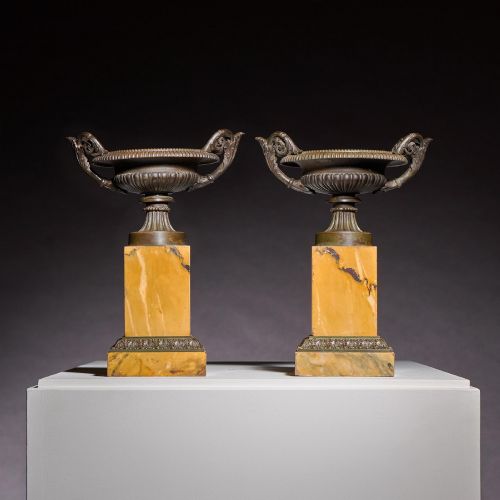
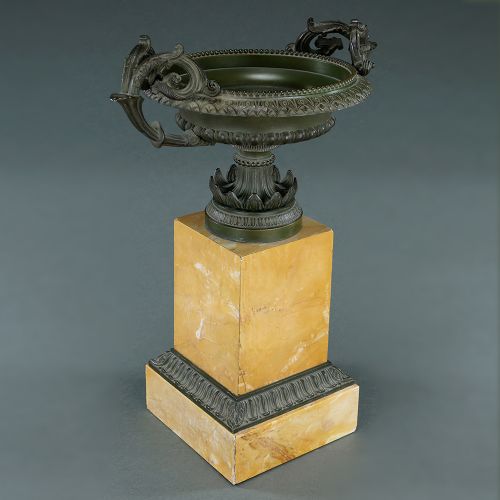
When you search for antique bronze compote bowls, you encounter elevated pedestal vessels designed for display, including tazzas, centrepieces and comports. These pieces emerge predominantly from nineteenth-century French workshops, drawing on Neoclassical, Empire and Rococo Revival styles.
Materials and construction methods
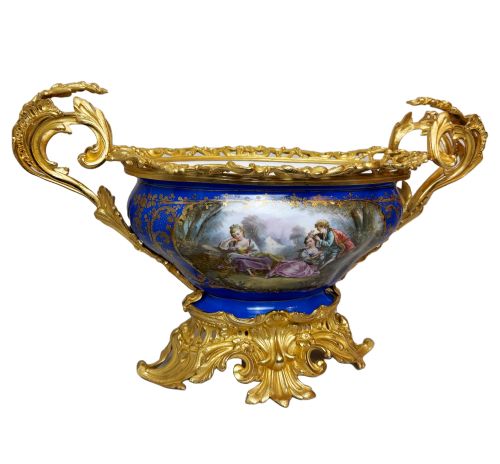
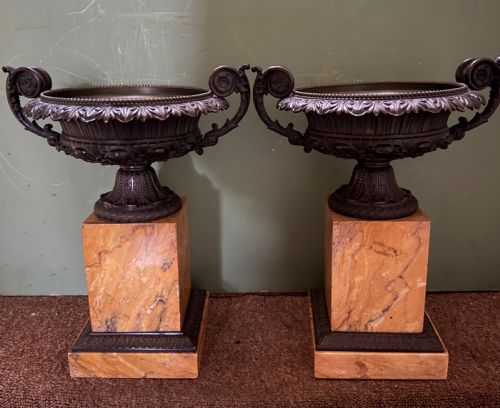
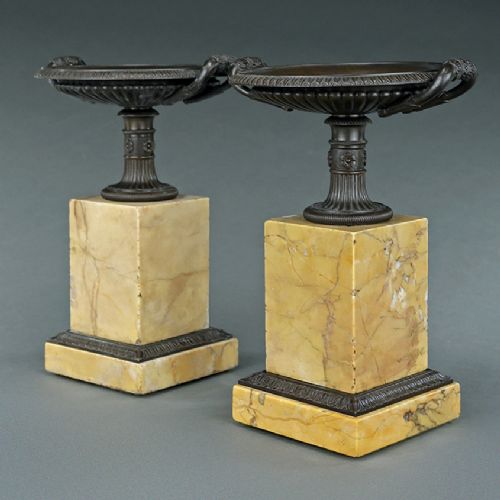
Foundry work combines cast bronze, gilt bronze and ormolu, often patinated to contrast bright gilding against dark metal surfaces. Artisans mount these metallic structures onto heavy bases of Siena marble or incorporate delicate inlays of champleve enamel, cloisonne, agate cabochons and malachite.
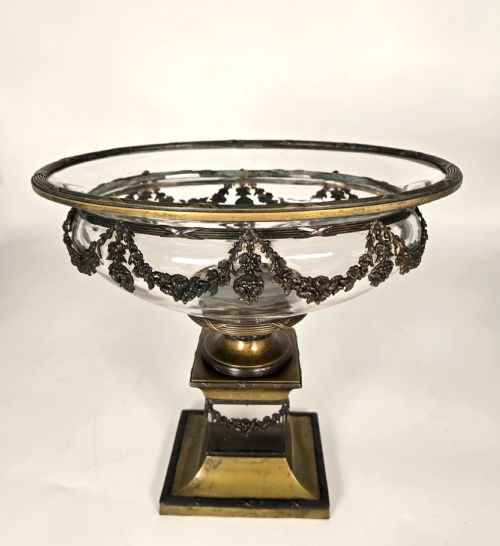
Vessels integrate varied bowls formed from cut crystal, pressed glass, Sevres style porcelain and Paris porcelain, secured with threaded bolts or pins. Silvered bronze and mother-of-pearl dishes also appear, requiring precise mechanical joining between disparate materials.
Antique Bronze Compote Bowls Retail Price Guide 2026
Typical asking prices for bronze compote bowls among the pieces listed under this phrase on Sellingantiques today, from the lower quarter to the upper quarter. They describe what is for sale here now, not the wider market.
Listings combine bronze with Siena marble, cut crystal, cloisonne enamel and Sevres style porcelain across the nineteenth century.
Evaluating craftsmanship and detail
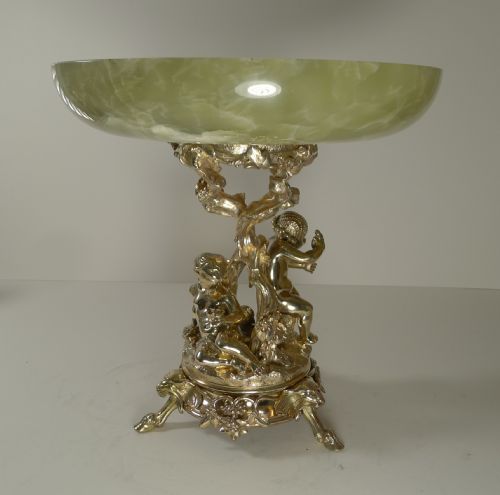
Quality rests in the crispness of the bronze chasing and the depth of the mercury gilding. Superior examples display sharply defined figures, such as cherubs, and secure, balanced mounts that sit plumb on their marble plinths.
Material selection divides the ordinary from the exceptional. Vessels incorporating hardstones like Blue John or fine hand-painted porcelain panels demonstrate greater ambition than standard cast metal alone.
Christofle Paris·Christofle et Cie
The Antique Bronze Compote Bowls Glossary
- Compote
- An elevated bowl used for serving fruit or sweets, standing on a central stem or foot.
- Tazza
- A shallow saucer-like bowl mounted on a stem and foot, originating from classical forms.
- Ormolu
- Gilded bronze produced by applying a mixture of gold and mercury to a cast bronze base.
- Champleve
- An enamelling technique where troughs are dug into the metal surface and filled with vitreous paste before firing.
- Grand Tour
- Cultural travel undertaken by nineteenth-century elites, inspiring the acquisition of classical bronzes and marbles.
Antique Bronze Compote Bowls: Frequently Asked Questions
What is an antique bronze compote bowl used for?
These vessels functioned historically as centrepieces for dining tables or decorative ornaments on sideboards and mantelpieces. They held fruit, sweetmeats or simply served to display fine materials.
Today, they serve primarily as decorative objects that add height and classical proportion to a room. Placing them on a table or console highlights their mixed media construction.
How do I identify French Empire style in these bowls?
French Empire pieces draw heavily on classical Greek and Roman motifs, featuring formal symmetry, military trophies, and mythological figures. You notice crisp cast details and disciplined proportions.
This aesthetic flourished around the turn of the nineteenth century. It contrasts with the later, more exuberant curves of Rococo Revival designs.
What distinguishes a tazza from a centrepiece?
A tazza is specifically a shallow dish raised on a single central stem and foot, following ancient forms. A centrepiece covers a broader category of large table ornaments.
Centrepieces often incorporate more complex multi-material assemblies, such as porcelain bowls with elaborate bronze mounts or matching garniture sets.
How should I clean bronze and marble mounts?
Dust bronze and marble gently with a soft, dry cloth to prevent accumulation in recessed chasing. Avoid liquid cleaners and harsh abrasives that strip original gilding or patina.
Marble plinths tolerate careful wiping with a barely damp cloth if dried immediately. Protecting delicate porcelain or crystal inserts requires lifting them out separately during maintenance.