

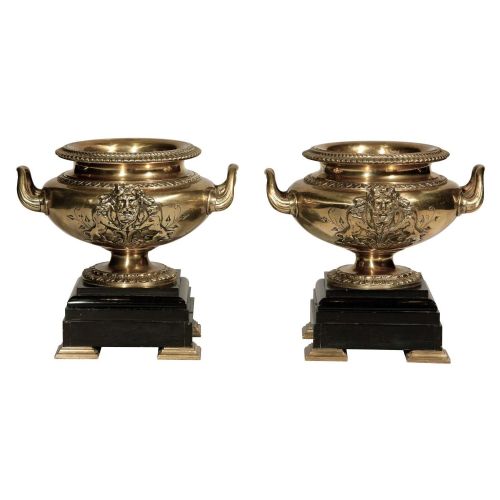


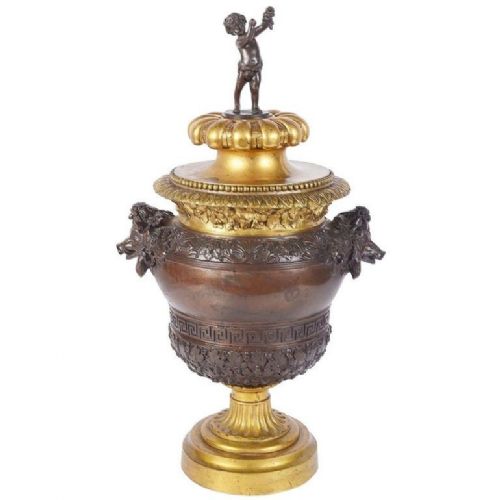


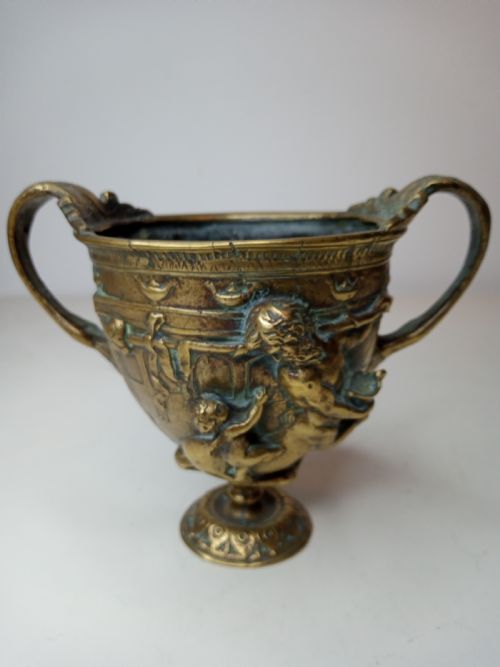
Neoclassical Bronze Vessel
These neoclassical bronze vessel pieces bring classical antiquity directly into the room, offering heavy cast metal forms and grand architectural lines.
Neoclassical Bronze Vessel
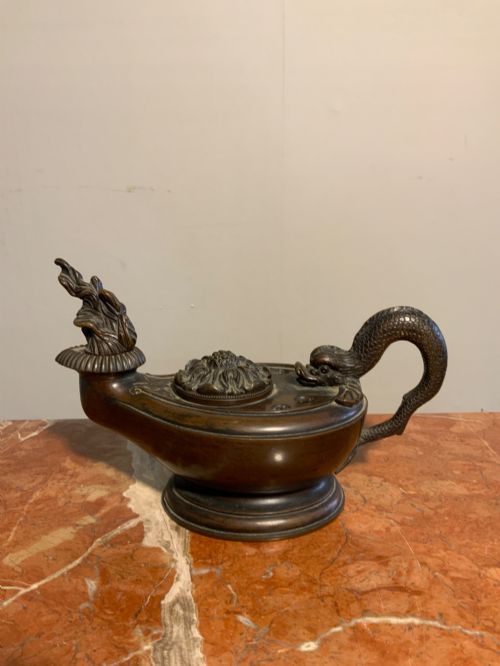
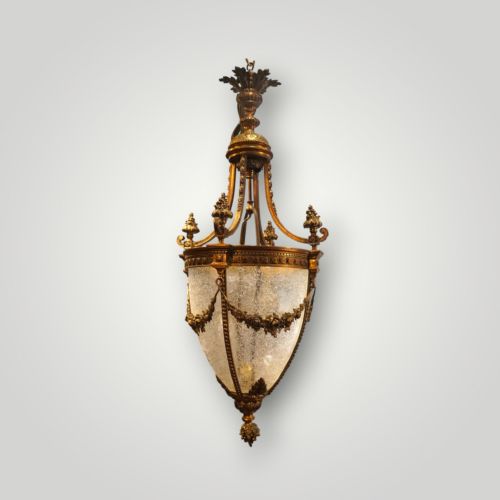
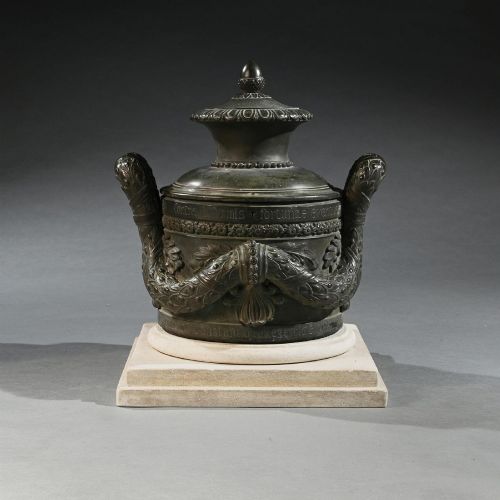
When you search for a neoclassical bronze vessel, you encounter items shaped by classical antiquity and the Grand Tour tradition. The selection here ranges from lidded urns and campana vases to inkwells and hall lanterns.
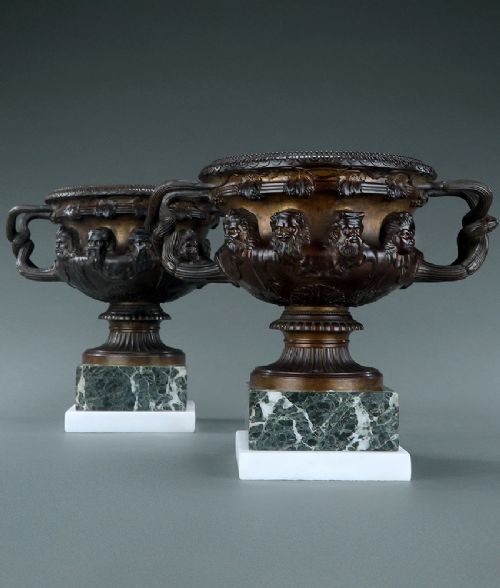
Most examples date from the nineteenth century, reflecting European travel and souvenir culture. You will frequently find pieces mounted on marble or stone bases, echoing ancient excavation finds.
Forms include reductions of famous archaeological monuments like the Warwick Vase and the Albani Vase alongside ewers, tazzas, and campana-shaped wine coolers.
How they were made
Foundry work relies on traditional casting methods to capture crisp relief details on figures, handles, and friezes. Bronze and gilt bronze predominate, frequently combined with ormolu mounts and green or rouge griotte marble.
Surface treatments vary between polished highlights and darker patination that mimics excavated antiquities. Secondary elements incorporate cut glass, stone, and alabaster to contrast with the heavy cast metal bodies.
Listings feature nineteenth-century items incorporating bronze, gilt bronze, marble, and alabaster across urn, vase, and inkwell forms.
What varies in quality
The precision of the casting and chasing distinguishes superior pieces from standard workshop output. Sharply defined facial expressions, clean undercut foliage, and crisp architectural mouldings mark the better specimens.
Base integration also matters, particularly how securely the bronze fixes to its marble or stone plinth. Heavier gauge metal and careful patination without excessive lacquer indicate a higher grade of production.
The Neoclassical Bronze Vessel Glossary
- Campana
- A bell-shaped vessel profile derived from ancient pottery and metalwork. This form is common in nineteenth-century decorative urns.
- Grand Tour
- A traditional journey through Europe undertaken by upper-class scholars and travellers. Souvenirs from this trip included bronze reductions of classical antiquities.
- Ormolu
- Gilded bronze used for decorative mounts and decorative objects. The technique involves applying a mercury-gold amalgam to the bronze surface.
- Tazza
- A shallow cup or vase raised on a stem and foot. These pieces often sit upon decorative marble bases.
- Patination
- The surface coloration and ageing applied to bronze. This finish develops naturally over time or through chemical treatments.
Neoclassical Bronze Vessel: Frequently Asked Questions
What is a neoclassical bronze vessel?
A neoclassical bronze vessel is a decorative object inspired by ancient Greek and Roman art, popularised during the eighteenth and nineteenth centuries.
These pieces typically take the form of urns, vases, or ewers cast in bronze, often featuring classical figures, foliage, and handles.
How were these vessels used?
Many of these items served as decorative mantel ornaments, centrepieces, or souvenirs brought back from European travels.
Certain pieces functioned as inkwells, wine coolers, or small lidded containers rather than purely static display objects.
What is a Grand Tour souvenir?
A Grand Tour souvenir is a portable work of art or antiquity purchased by travellers exploring cultural sites in Italy and France.
Bronze reductions of famous ancient vases allowed collectors to bring classical architecture and sculpture into their home studies.
How do I date a bronze vessel?
Dating relies on examining the casting technique, the style of patination, and the construction of any attached marble bases.
Nineteenth-century pieces often display specific foundry marks, machine-turned fitting screws, or particular patination styles associated with European workshops.
How do I clean antique bronze?
Antique bronze requires gentle dusting with a soft, dry brush to prevent the accumulation of abrasive particles.
Avoid chemical polishes or water, as harsh cleaning agents can strip away the historical patination and damage the underlying metal.