


Decorative Bronze Urn Planter
These decorative bronze urn planter pieces bring classical stateliness and intricate oriental metalwork into a room.
Decorative Bronze Urn Planter
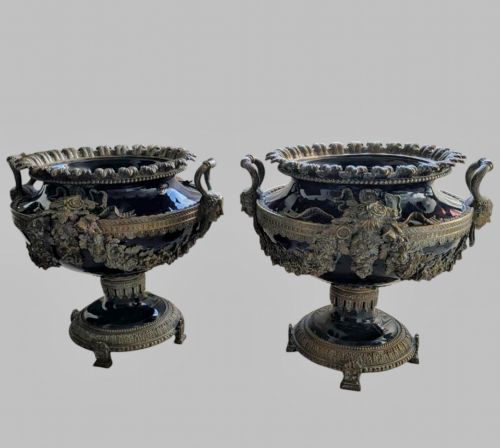
A decorative bronze urn planter functions as a commanding focal point, taking forms such as campana urns, Warwick vases, and jardinieres designed for botanical display or ornamental presence. When you search for decorative bronze urn planter, you encounter vessels that bridge the gap between functional gardenware and grand interior sculpture.
The selections span distinct cultural and aesthetic traditions, ranging from the classical restraint of Italian Grand Tour souvenirs to the elaborate detail of Japanese Meiji period metalwork. Pieces from the Regency and Victorian eras sit alongside continental French Rococo Revival and Chinoiserie interpretations, offering considerable variety in scale and silhouette.
Makers and workshops across Europe and East Asia produced these heavy vessels to serve as plant holders, bouquet vases, or standalone decorative objects. They appear in forms labelled as vases, jardinieres, and stem vases, each adapted for interior display through patinated or gilded surfaces.
What varies in quality
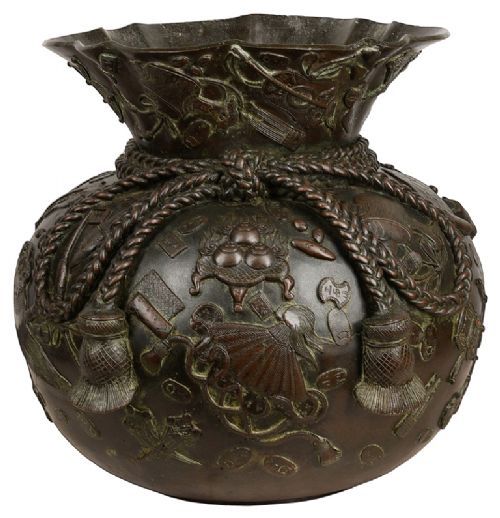
The refinement of the cast separates standard production from exceptional works, visible in the crispness of relief decoration and the depth of chased details on handles and rims. Superior examples display careful finishing that conceals casting seams and highlights the natural texture of the metal.
Surface treatment dictates much of the visual appeal, where rich, stable patinas or well-preserved gilding enhance the sculptural form rather than masking imperfections. The integration of auxiliary materials, such as enamel work or stone bases, demands technical precision that distinguishes master foundries from lesser workshops.
Listings feature items spanning the Victorian era, Regency period, and the Japanese Meiji timeframe, constructed from bronze, brass, ceramic, and marble.
Barbedienne Paris
The Decorative Bronze Urn Planter Glossary
- Bronze
- An alloy primarily composed of copper and tin, valued for its strength and ability to take fine cast details and patination.
- Campana urn
- A bell-shaped vessel with a flaring rim and a pedestal base, originating in classical antiquity and revived during the neoclassical period.
- Cloisonné enamel
- A decorative technique where thin metal wires are soldered to a metal base to create compartments filled with vitreous enamel paste and fired.
- Grand Tour
- A traditional trip through Europe undertaken by upper-class young men in the 18th and 19th centuries, resulting in the acquisition of art and antiquities.
- Jardiniere
- An ornamental pot or stand designed to hold growing plants or flower arrangements indoors.
- Warwick vase
- A monumental Roman marble vase discovered in the 18th century, widely reproduced in bronze during the 19th century in various scales.
Decorative Bronze Urn Planter: Frequently Asked Questions
Where should I place a bronze urn planter?
These heavy vessels suit prominent interior locations such as console tables, pedestals, or large mantelpieces where their sculptural weight can anchor the room. They sit well as standalone decorative objects or holding botanical arrangements.
Because bronze is durable, certain examples can transition to sheltered garden settings, though most historical pieces are preserved indoors to protect their patinas and delicate surfaces.
How do I care for antique bronze?
Maintenance requires only gentle dusting with a soft, dry cloth to prevent the accumulation of grit in the chased details and recesses of the metal. Avoid liquid cleaners and chemical polishes, which strip historical patinas.
If the piece incorporates glazed ceramic or cloisonne enamel sections, keep those areas clean with a damp cloth, ensuring moisture does not linger on exposed metal joints.
What is a Grand Tour bronze?
Grand Tour bronzes are souvenir pieces acquired by travellers visiting classical sites in Italy during the nineteenth century. Workshops in Rome and Florence cast these reduced-scale models of famous antiquities.
These items reflect the classical revival taste of the period, offering collectors portable versions of monumental sculpture and architectural vases.
How do I distinguish Japanese Meiji bronze pieces?
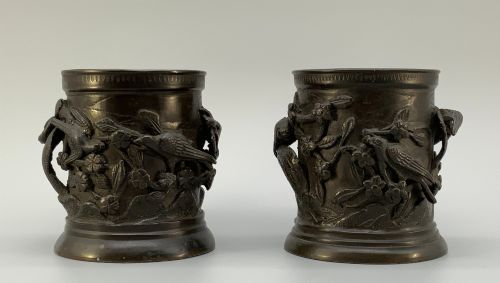
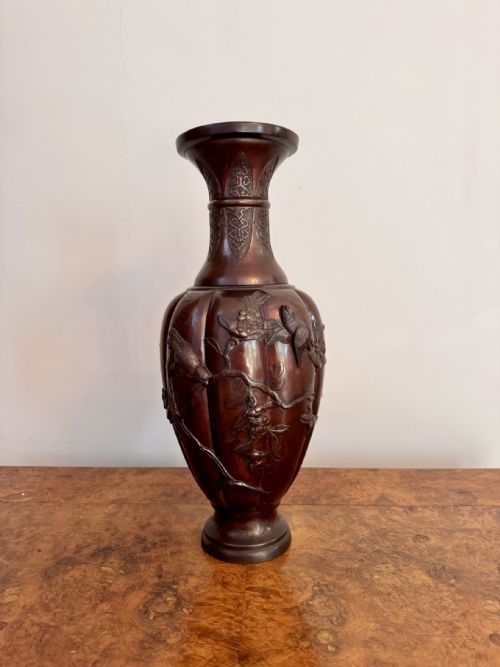
Meiji period bronzes often display naturalistic motifs such as birds, blossoms, and flowing water, rendered with high technical skill in the casting and surface finishing. These pieces reflect the opening of Japan to Western trade.
They frequently feature distinct patination techniques that mimic older patinas or introduce contrasting metallic tones to highlight specific elements of the design.