



French Empire Bronze Ornaments
French empire bronze ornaments combine monumental weight with classical restraint, bringing neoclassical authority and rich patination to any mantelpiece.
French Empire Bronze Ornaments
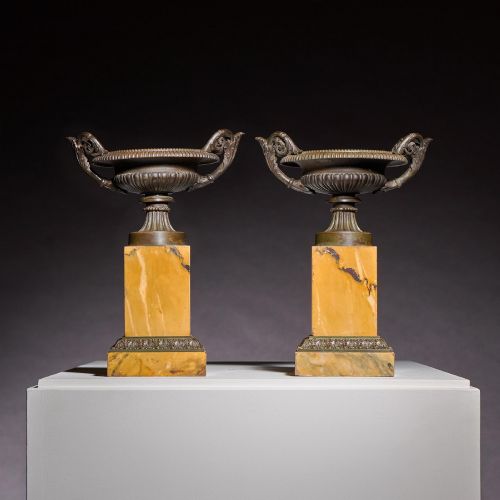
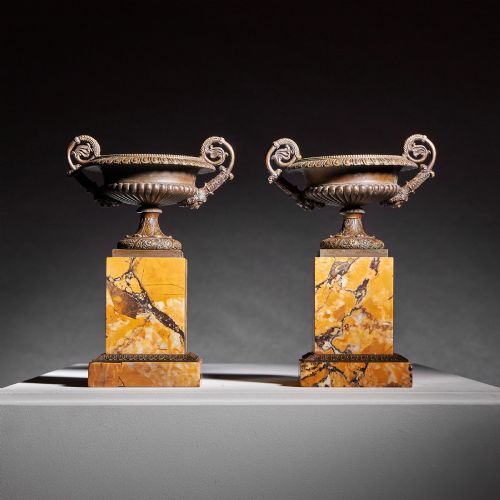
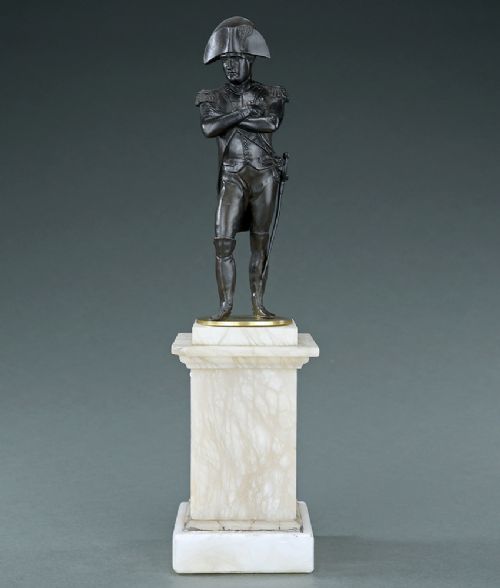
French empire bronze ornaments encompass sculptural figures, decorative tazzas, and architectural models cast during the nineteenth century. These pieces draw heavily on classical antiquity and the Grand Tour tradition, translating ancient forms into domestic display objects.
The objects appearing here range from equestrian figures of Napoleon to classical urns and marble-mounted inkwells. Buyers meet both original pieces from the early nineteenth century and later nineteenth-century revivals.
Forms such as the Vendome Column and classical cassolettes demonstrate the enduring appetite for Roman and Napoleonic iconography. Each piece utilises solid metal casting paired with contrasting stone bases to achieve architectural presence.
Materials and Casting Methods
Foundries utilised bronze and gilt bronze, often known as ormolu, to create these ornaments. The metal was cast and subsequently chased to refine surface details before receiving gilding or dark patination.
Marble bases, including Siena, yellow, and green varieties, provide structural weight and a classical foundation for the metalwork. The combination of dense stone and cast metal required precise fitting and pinning to secure the components together.
French Empire Bronze Ornaments Retail Price Guide 2026
Typical asking prices for french empire bronze ornaments among the pieces listed under this phrase on Sellingantiques today, from the lower quarter to the upper quarter. They describe what is for sale here now, not the wider market.
Listings feature nineteenth-century periods alongside materials like Siena marble, gilt bronze, and onyx.
Distinctions in Quality and Execution
The choice and preparation of the stone plinth also mark differences in grade. Selected marbles with rich veining and polished finishes elevate the overall execution of the ornament.
Emile Guillemin
The French Empire Bronze Ornaments Glossary
- Ormolu
- Gilt bronze produced by applying a mixture of gold and mercury to a bronze base and heating it. This technique creates a durable golden surface characteristic of luxury objects.
- Tazza
- A shallow bowl or cup on a pedestal, frequently rendered in bronze and marble for display purposes. Such vessels derive from classical drinking vessels repurposed as decorative ornaments.
- Grand Tour
- The nineteenth-century travel tradition where wealthy collectors acquired bronzes and architectural models across Europe. These items served as tangible evidence of classical education and refined taste.
- Cassolette
- A decorative vase or urn featuring a reversible lid that functions either as an incense burner or a solid vase. They appear frequently in neoclassical decorative schemes.
- Patination
- The surface coloration and finish developed on bronze through age or chemical treatment. Controlled patination ranges from deep brown to near black.
French Empire Bronze Ornaments: Frequently Asked Questions
What are French empire bronze ornaments?
These pieces are cast metal sculptures, tazzas, and inkwells produced in nineteenth-century France and inspired by classical antiquity.
They combine patinated or gilded bronze with marble bases to create decorative objects for interiors.
How were these bronze ornaments used?
Owners placed them on mantelpieces, desks, and side tables as displays of classical learning and refined taste.
Some objects, such as inkwells and cassolettes, served practical functions alongside their decorative role.
How do I date a nineteenth-century bronze?
Dating relies on stylistic clues, casting techniques, and the character of the marble base used.
Early nineteenth-century pieces often reflect direct Napoleonic influence, while later examples show Victorian revival characteristics.
How do I care for gilt bronze?
Maintenance requires gentle dusting with a soft, dry brush to prevent the accumulation of dirt on the metal surface.
Harsh cleaning agents must be avoided to preserve the original gilding and historic patination.