

French Classical Urns
French classical urns embody the enduring architectural symmetry of the 19th century, bringing sculptural weight and classical ornament to domestic interiors.
French Classical Urns
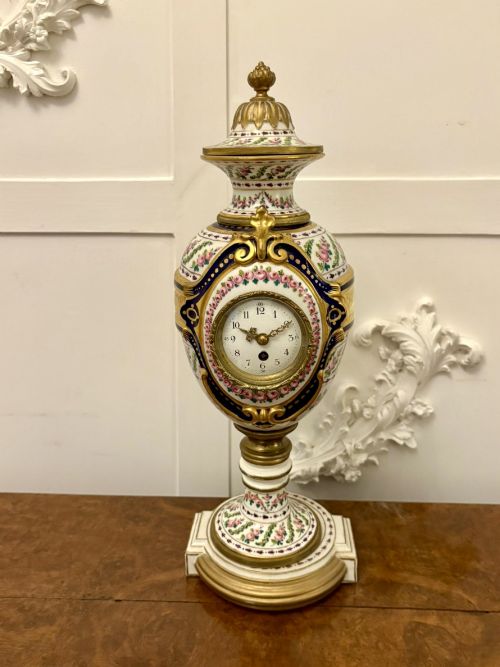
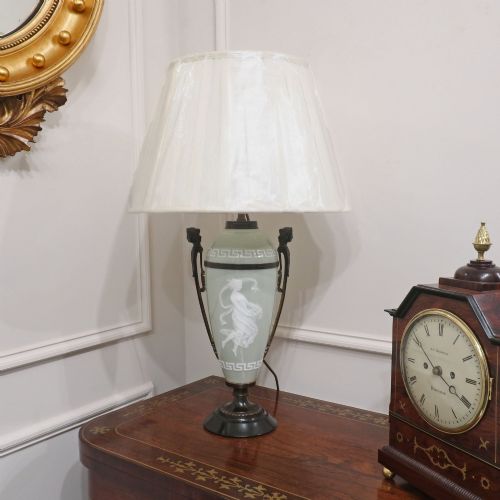
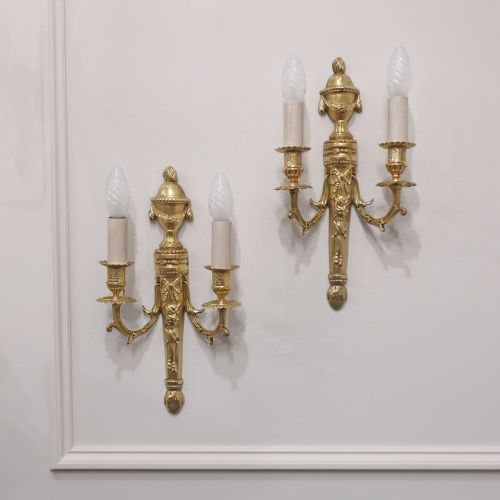
French classical urns encompass decorative vessels, table lamps, mantel clocks, and wall lights drawn from 19th-century interpretations of antiquity.
The objects on this page largely date from the 19th century, spanning periods such as 1880, 1890, and 1870, alongside Victorian and French Chateau styles.
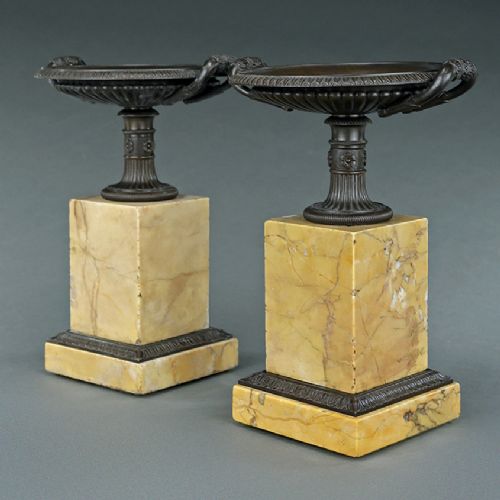
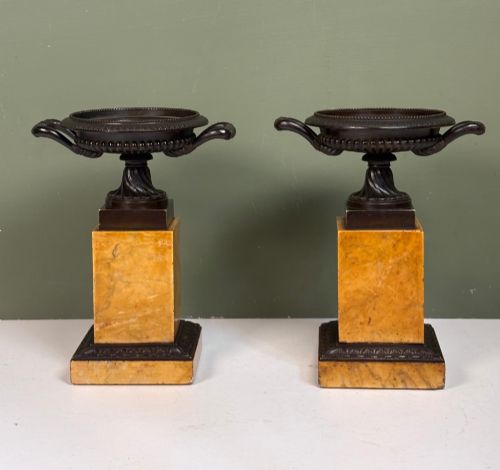
Buyers encounter forms derived from Grand Tour souvenirs, classical tazzas, and architectural garden ornaments rather than plain utilitarian vessels.
Materials and construction
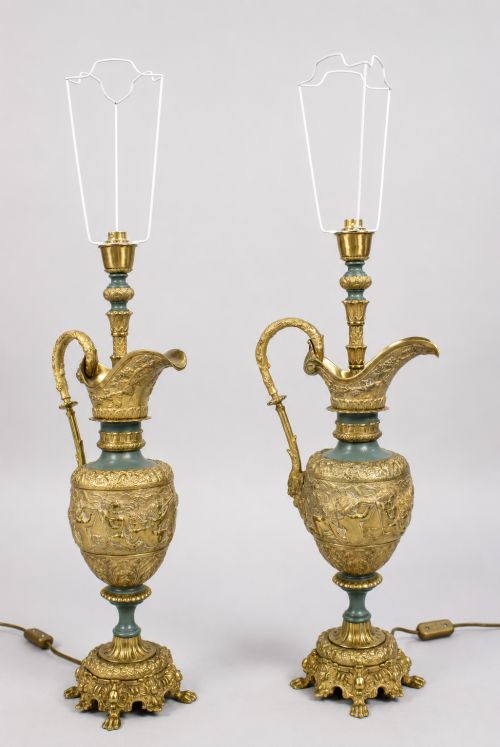
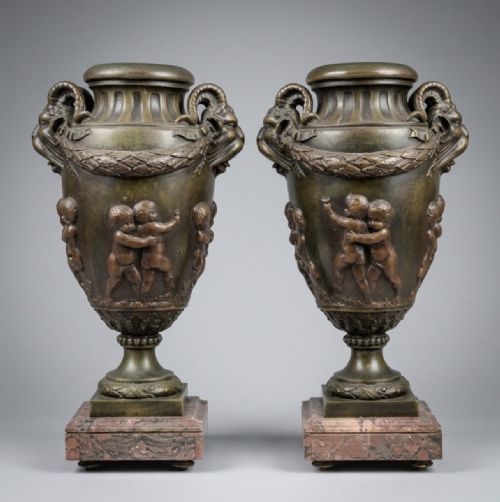
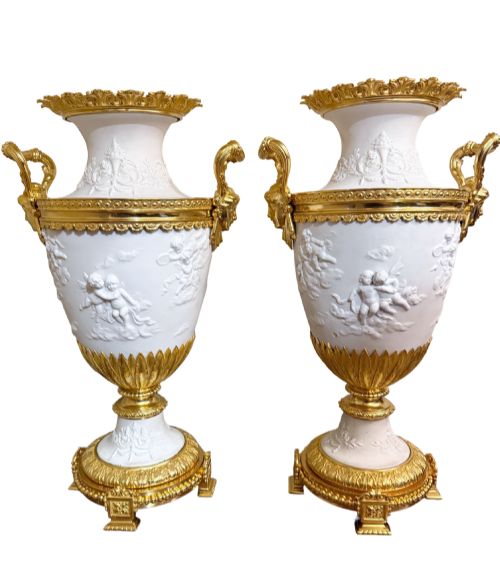
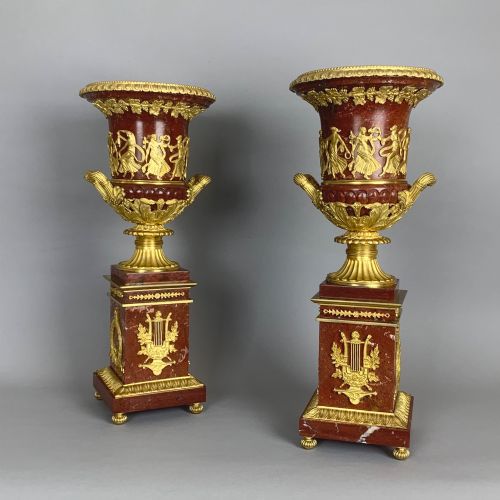
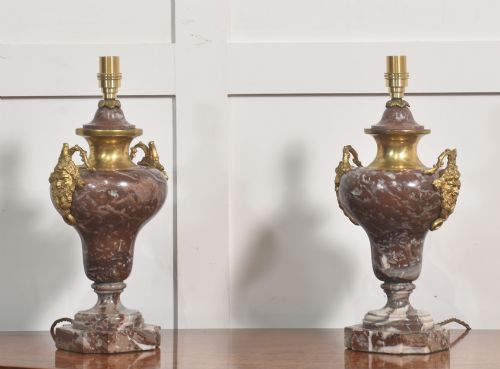
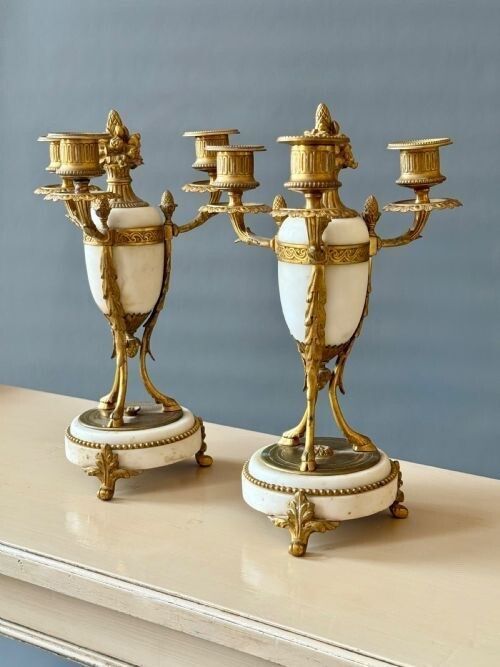
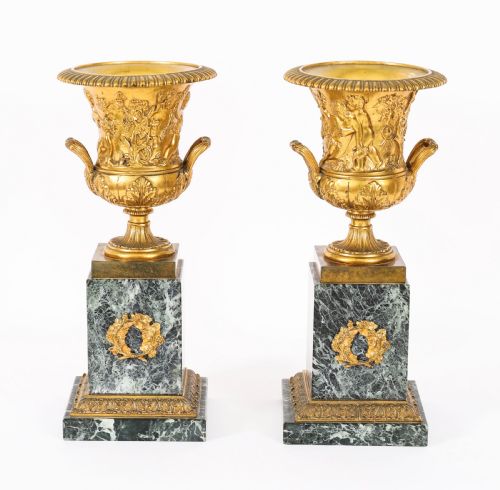
Foundries and workshops cast these pieces in bronze, spelter, cast iron, or gilt brass, mounting them upon bases of white, rouge, or Siena marble.
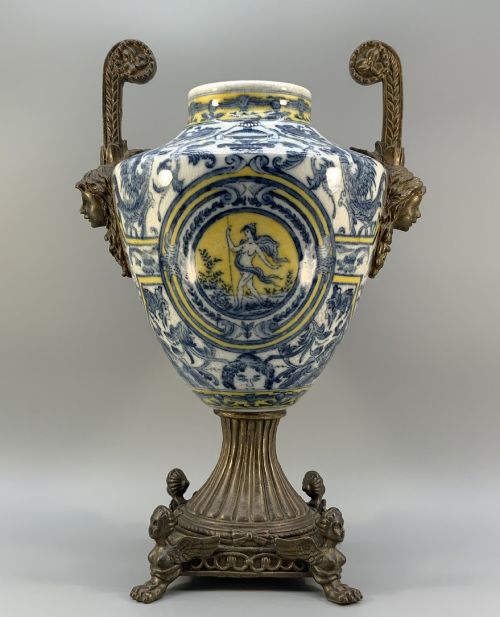
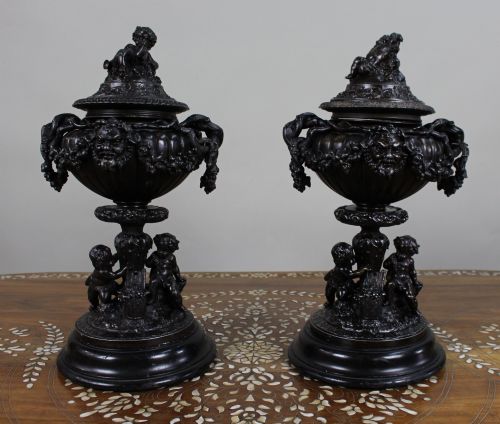
Gilding, ormolu, hand-painted porcelain, and patinated finishes define the surface work, frequently complemented by cast details such as Bacchic masks and putti.
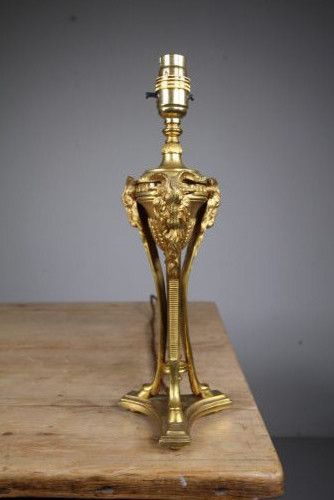
The listings show 19th-century pieces rendered in gilt bronze, marble, ormolu, and cast iron.
What determines quality
The integration of materials sets the tier, seen in the density of the marble base and the proportional harmony between the vessel and its metal mounts.
Casier·R Lalique·VAL D'OSNE FOUNDRY·Sevres
The French Classical Urns Glossary
- Ormolu
- Gilded bronze applied as mounts and decorative highlights to marble and wood. This technique creates a rich contrast against patinated bronze surfaces.
- Tazza
- A shallow saucer-like vessel raised on a stem and foot. Grand Tour examples often utilise this classical shape in bronze and Siena marble.
- Grand Tour
- The 19th-century practice where travellers collected classical antiquities and continental bronzes. These objects reflect that taste for neoclassical sculpture and architecture.
- Spelter
- A zinc alloy utilised as a less costly alternative to bronze for casting figures and urns. It is frequently bronzed to mimic heavier metal.
- Cassolette
- A decorative vase fitted with a reversible lid that functions either as an urn or a burner. They often feature ormolu mounts and marble bodies.
French Classical Urns: Frequently Asked Questions
What are french classical urns?
These pieces are ornamental vessels and lighting fixtures created during the 19th century in emulation of ancient Greek and Roman forms. They incorporate classical motifs like ram heads and acanthus leaves.
Craftsmen produced them in materials ranging from cast bronze and marble to porcelain and spelter, often adapting them as lamps or candleholders.
How were french classical urns used?
In 19th-century interiors, such urns served primarily as decorative mantel ornaments, library table centrepieces, or architectural accents in formal rooms. Many were later converted to electricity to function as table lamps.
Garden versions cast in iron were placed on terraces or lawns to echo classical landscape design and provide permanent sculptural focal points.
How do you style french classical urns?
Their symmetry and metallic finishes allow them to anchor mantelpieces, sideboards, or console tables as sculptural pairs. They complement both traditional period rooms and modern spaces needing architectural weight.
Placement benefits from simple surfaces that highlight the contrast between polished marble, gilt bronze, and patinated metal.
How to tell periods apart?
Nineteenth-century pieces often reference Louis XVI or French Empire styles through strict symmetry, laurel wreaths, and neoclassical drapery. Later items from around 1900 introduce eclectic revival details or softer paste-painting techniques.
Material choices also guide dating, as heavier marbles and fire-gilt ormolu typically point to earlier decades, while spelter usage expands later in the century.