
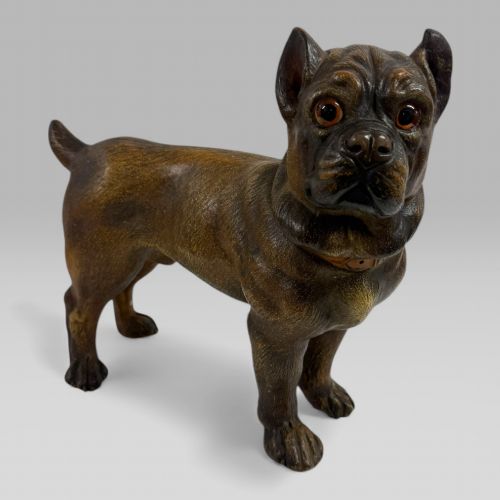


French Ceramic Ornaments
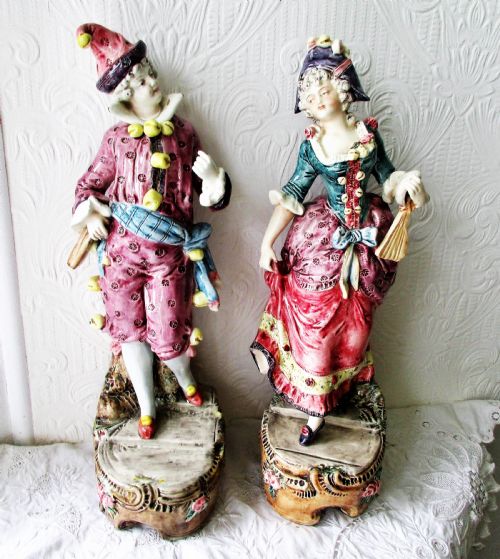
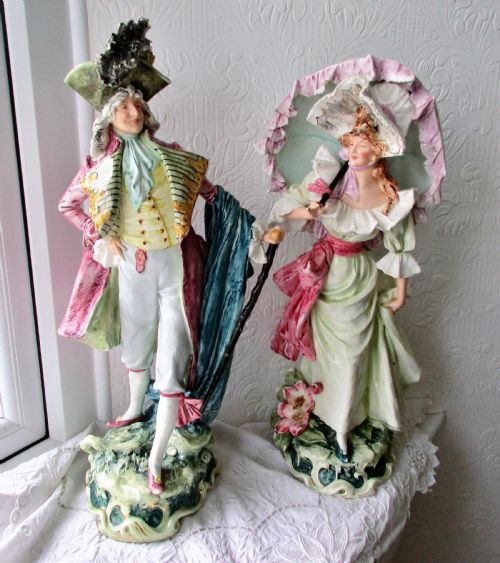
These French ceramic ornaments bring character to a room through modelled figures, animals, and classical groups crafted across the nineteenth and early twentieth centuries.
French Ceramic Ornaments
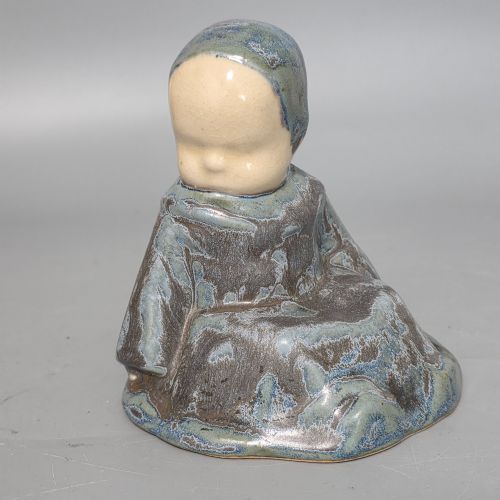
These pieces encompass porcelain figures, earthenware groups, and terracotta sculptures produced by continental factories and independent modellers. The selection centres heavily on nineteenth-century examples, spanning soft-paste and hard-paste porcelain alongside folk art pottery.
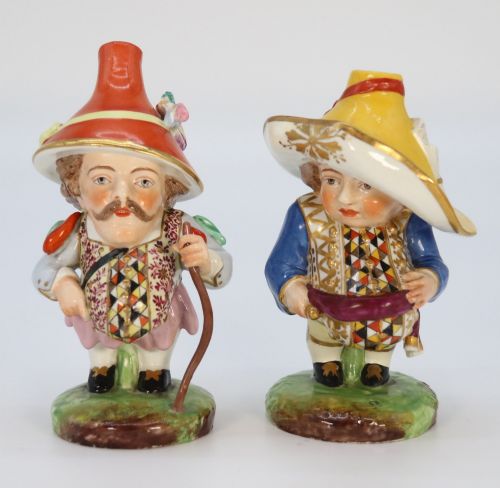
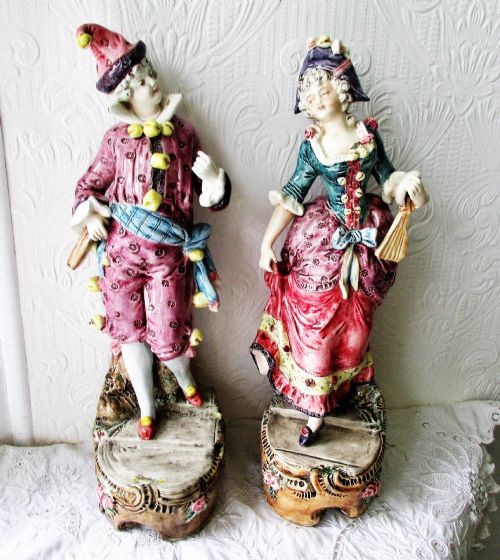
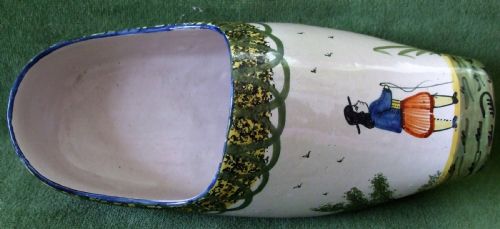
Buyers encounter subjects ranging from allegorical pairs and street vendors to realistic animalier studies and glazed earthenware sabots. Rococo revival and Art Deco movements dominate the aesthetic, reflecting changing tastes across French production centres.
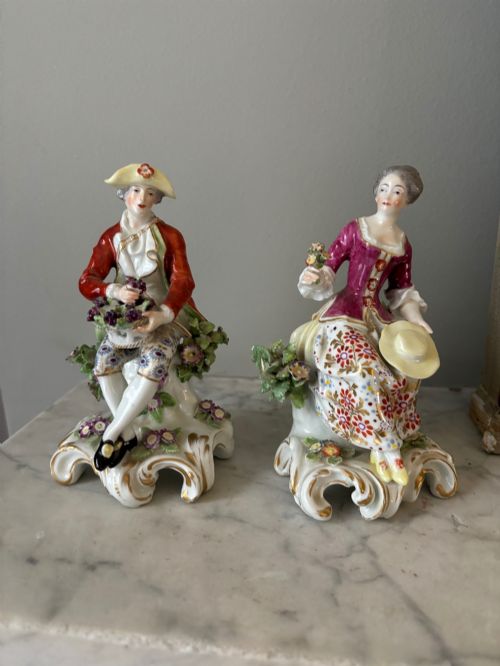
Figurines and decorative busts serve primarily as mantel ornaments and cabinet displays rather than utilitarian vessels. Many pieces adopt styles inspired by earlier English factories, while remaining distinctly continental in execution.
How they were made
Makers utilised slip casting and hand-modelling techniques to shape earthenware, stoneware, and porcelain bodies before applying intricate glazes or leaving surfaces as unglazed bisque. Soft-paste and hard-paste porcelain required careful kiln firing to achieve stability and detail.
Listings feature nineteenth-century French porcelain figures, Art Deco ceramics, and regional earthenware pieces from Quimper and Bavent.
What varies in quality
Modelling precision distinguishes superior examples from standard commercial output, particularly in the rendering of hands, facial expressions, and clothing folds. Crisp definition in the mould work determines how sharply the underlying ceramic form reads.
Finishing details such as the delicacy of the enamel painting, the application of gold leaf, and the cleanliness of the glaze separate ambitious studio work from mass production. The presence of clear factory marks or artist signatures adds confidence to the physical quality of the piece.
Berthe Savigny·Edme Samson·Vion & Baury·Letu & Mauger·Eugene Clauss
The French Ceramic Ornaments Glossary
- Bisque porcelain
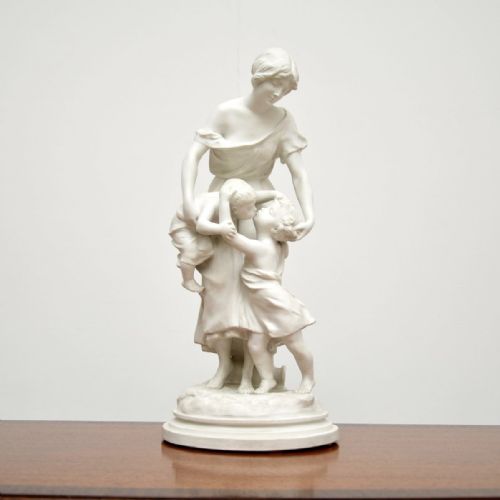
- Un-glazed porcelain fired once to create a matte, marble-like surface with a soft texture. This finish highlights fine sculptural details without the distraction of a glossy coat.
- Faience
- Tin-glazed earthenware produced across France, known for its opaque white background and hand-painted surface decoration. It offers a warm, absorbent ceramic body distinct from vitreous porcelain.
- Earthenware
- Porous ceramic pottery fired at lower temperatures than stoneware or porcelain, requiring a protective glaze to hold liquids. It forms the robust body of many regional folk art pieces.
- Gold leaf
- Extremely thin sheets of beaten gold applied to ceramic surfaces for ornamental trim or highlighting. It provides a reflective contrast against painted glazes and white bisque bodies.
- Soft-paste porcelain
- An artificial porcelain compound composed of white clay, glass, and ground minerals, fired at lower heats than hard-paste. It possesses a warm visual quality prized by collectors.
French Ceramic Ornaments: Frequently Asked Questions
How do I date these figures?
Dating relies on identifying factory marks, stylistic traits of periods like Rococo Revival or Art Deco, and the specific composition of the ceramic body.
Examination of the base and glaze wear helps confirm whether a piece originates from the nineteenth century or later revival periods.
Are these pieces functional?
Most items function purely as decorative ornaments, including figural groups, portrait busts, and sculptural animals designed for display.
Exceptions such as decorative sabots or ewers served minor decorative or container purposes rather than heavy daily use.
How should I clean porcelain figures?
Dusting gently with a soft, dry brush prevents accumulation without risking delicate painted details or projecting ceramic fingers.
Harsh chemical cleaners or soaking should be avoided, particularly on bisque porcelain or pieces decorated with gold leaf.
What is the difference between bisque and porcelain?
Porcelain is fired at high temperatures with a vitreous, glass-like body that is typically covered in a transparent glaze.
Bisque is porcelain left entirely unglazed after its initial firing, presenting a matte, porous finish that resembles carved marble.